Review Trezor 2026
Founded in 2013 · Czech Republic, Prague
TL;DR
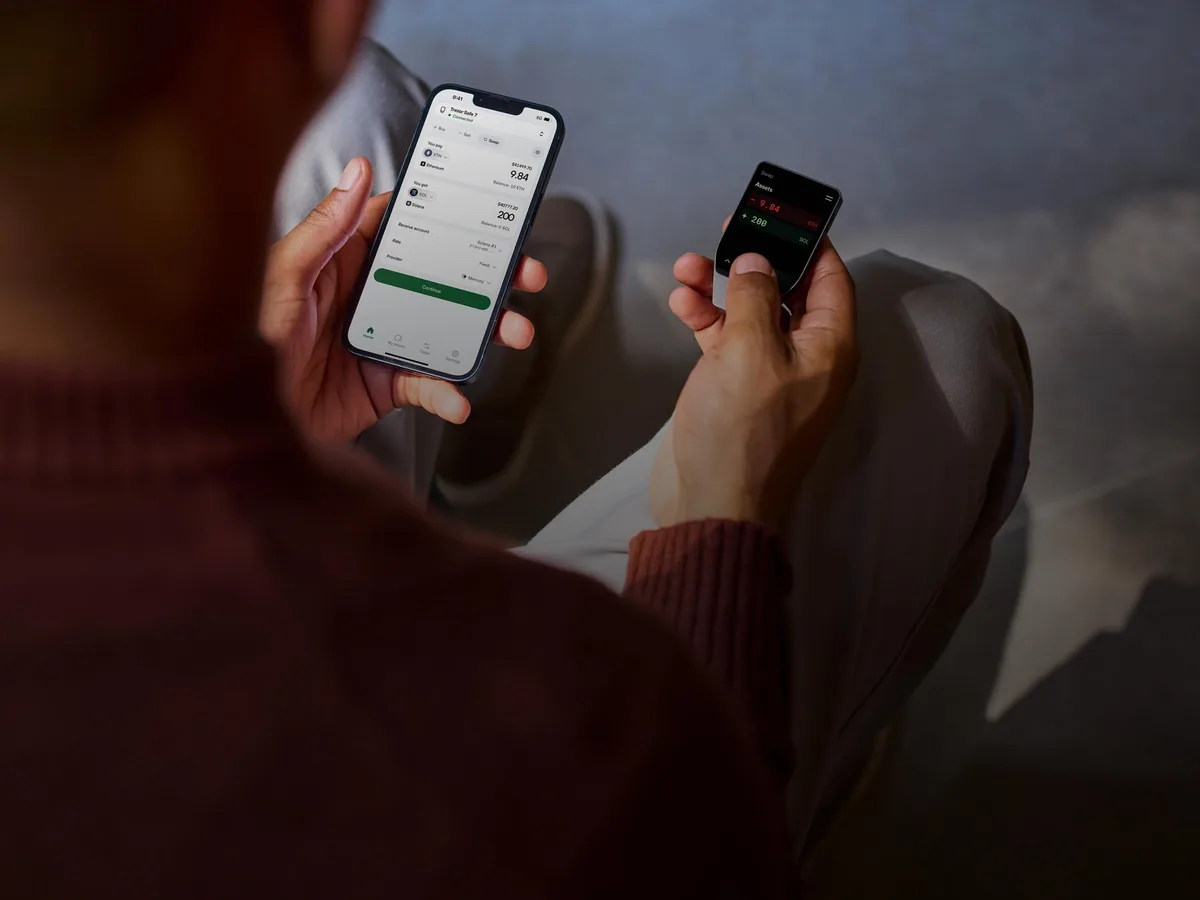
Trezor Safe 3 ($79) and Safe 5 ($169) are Ledger's main competitors, built around open-source. Secure Element EAL6+, Shamir Backup, support for Bitcoin, Ethereum, and 1,000+ altcoins. No Solana, Cosmos, or Tron support: if those are in your portfolio, go with Ledger.
The only top-2 wallet with fully open-source firmware. The Secure Element EAL6+ arrived with the Safe lineup in 2024, closing the main argument critics had against earlier models.
Go to TrezorWhat is Trezor
Trezor is the oldest hardware wallet brand, launched in 2013 by SatoshiLabs in Prague. The first mass-market wallet in the industry, fully open-source (firmware and the Suite app). The 2024 Safe lineup added a certified Secure Element EAL6+ (Infineon), bringing the security level up to Ledger's while keeping the open architecture.
Who it's for
Users who choose a hardware wallet based on reproducible builds and open-source code. The core audience is in the EU and US, holding BTC, ETH, and main EVM coins. For Solana, Cosmos, or Tron, options are limited since Trezor does not support those networks.
Problem it solves
The main question about hardware wallets for the past five years has been trust in closed-source firmware. Trezor Safe is fully reproducible: an independent auditor can build the firmware from source and verify the binary. The Secure Element chip itself is proprietary (Infineon), but the critical signing operations remain open-source.
Pros and cons
Pros
- +Fully open-source firmware and Trezor Suite
- +Secure Element EAL6+ in Safe 3 and Safe 5 (added in 2024)
- +Shamir Backup: split your seed into N-of-M shares
- +Hidden wallets with passphrase (25th word): built-in protection against physical coercion
- +1,000+ coins and tokens supported in Trezor Suite and third-party wallets
- +Tropic Square: an in-house open-source Secure Element project for the next generation
Cons
- –No Solana, Cosmos, Tron, or Polkadot: a large slice of altcoins is off the table
- –No Bluetooth, USB-C only (some see this as a plus)
- –Safe 5 costs more than the Ledger Flex at a similar screen size
- –Trezor Suite has fewer DeFi integrations than Ledger Live
Pricing
- ·Secure Element EAL6+
- ·Shamir Backup
- ·BTC/EVM/Cardano
- ·USB-C
- ·1.54-inch color touchscreen
- ·Haptic feedback
- ·All Safe 3 features
- ·Anodized casing
- ·2018 generation
- ·No Secure Element
- ·Relevant only for existing owners
Competitors and alternatives
The direct competitors are the Ledger Nano S Plus ($79) and Nano X ($149). Ledger uses a closed architecture but supports more networks and adds Bluetooth on the Nano X. Tangem Wallet 2.0 ($69 for 3 cards) is a seedless option for beginners who do not want to manage a Shamir Backup.
What users say
The main negative is the December 2024 supply chain attack, which was detected and contained within 48 hours. Critics also point to the physical access vulnerability found by Kraken Security Labs in 2020, though it requires having the device in hand plus specialized equipment. Support on Reddit r/TREZOR typically responds within 24 to 48 hours; quality is average.
Why we included it
Our pick for BTC maximalists and EU users who value auditable source code. If your portfolio is BTC, ETH, and a few EVM altcoins, the Safe 3 at $79 is the minimum you need and it is enough. For Solana or a multi-chain setup, the Ledger Nano X fits better.
FAQ
Safe 3 vs Nano S Plus: which one to buy at $79?
Trezor Safe 3 if open-source code matters more than Solana or Cosmos support. Ledger Nano S Plus if you need all 5,500+ coins and DeFi integrations. Physical security is comparable: both carry EAL6+.
Does Trezor work with MetaMask?
Yes, Safe 3 and Safe 5 are fully compatible with MetaMask, Rabby, and Frame. Connect via USB-C and approve transactions on the device screen.
What if SatoshiLabs shuts down?
A hardware wallet does not depend on the company to keep running. The device plus your seed phrase give you access to your funds through any compatible wallet: Electrum for BTC, MyEtherWallet for ETH. You can recover without Trezor Suite.
Do I need to update the firmware?
Yes, every three to six months. New versions add token support and fix reported vulnerabilities. The firmware is signed by the developer, and the device verifies the signature before installing.
Ready to try Trezor?
Using our link is free for you. We receive a small bonus from the service.
Go to Trezor