
Review Claude Code 2026
Founded in 2025 · USA, San Francisco (Anthropic)
TL;DR
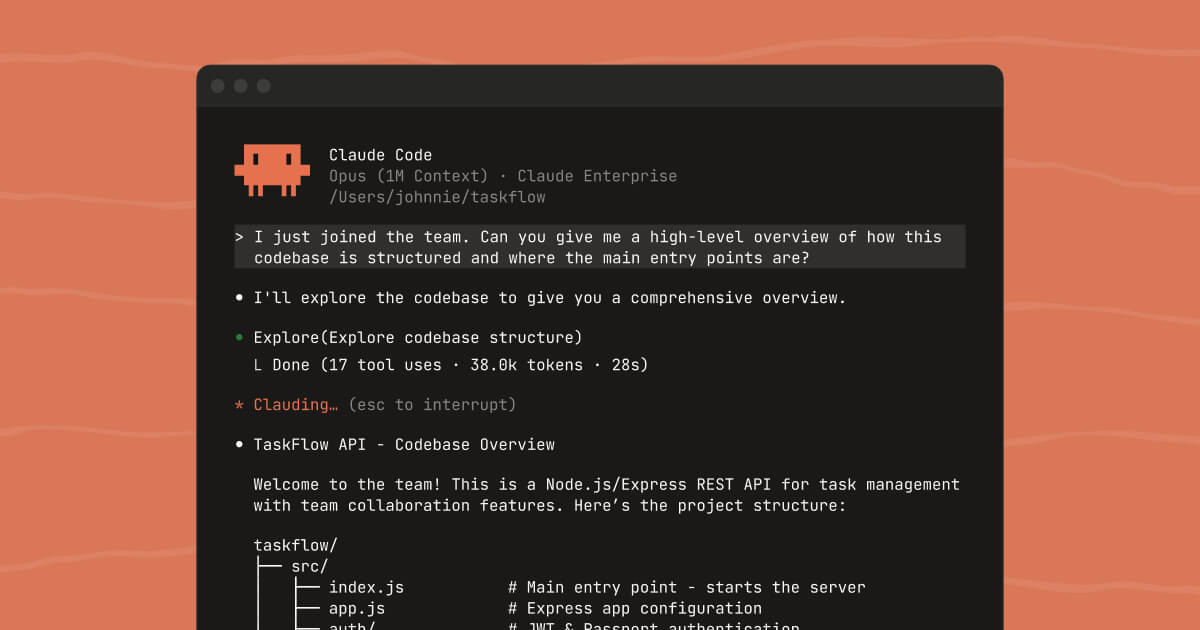
Claude Code is a CLI agent from Anthropic for writing code. It runs in the terminal or inside your IDE (VSCode, JetBrains). It understands project structure, edits multiple files in one step, runs commands and tests, and makes commits. A solid fit for crypto developers: price scrapers, trading bots, Solidity smart contracts, portfolio dashboards. Plans: Pro $20/month (Sonnet 4), Max $100–$200/month (Opus + Sonnet). Free trial included.
A strong tool for developers who work in the terminal and write real production code. The agent understands the entire project context, reads and edits files directly, runs tests, and commits to git. Downsides: costs more than Copilot, requires a separate Anthropic account, and some privacy limitations on lower tiers.
Go to Claude Code
What is Claude Code
Claude Code is an interactive AI agent for software development, built by Anthropic. You start it with the `claude` command inside any project: the agent reads your files, understands the context, and executes tasks given in plain language. It integrates with VSCode and JetBrains, and runs on MCP servers (Model Context Protocol) to connect external tools: GitHub, Postgres, Slack, Playwright. Launched in 2025 with Claude Sonnet 4 and Opus 4. Anthropic was founded in 2021 by former OpenAI researchers and focuses on AI safety alongside its commercial products.
Who it's for
Developers who want to speed up repetitive work: refactoring, writing tests, fixing bugs, running database migrations. Especially useful for crypto projects: scraping exchange data, automating Telegram posts, building Pine Script indicators, writing Solidity contracts, integrating Web3 libraries. Works well for solo developers and small teams. Larger teams (100+ engineers) need the Enterprise plan with SSO and audit logs.
Problem it solves
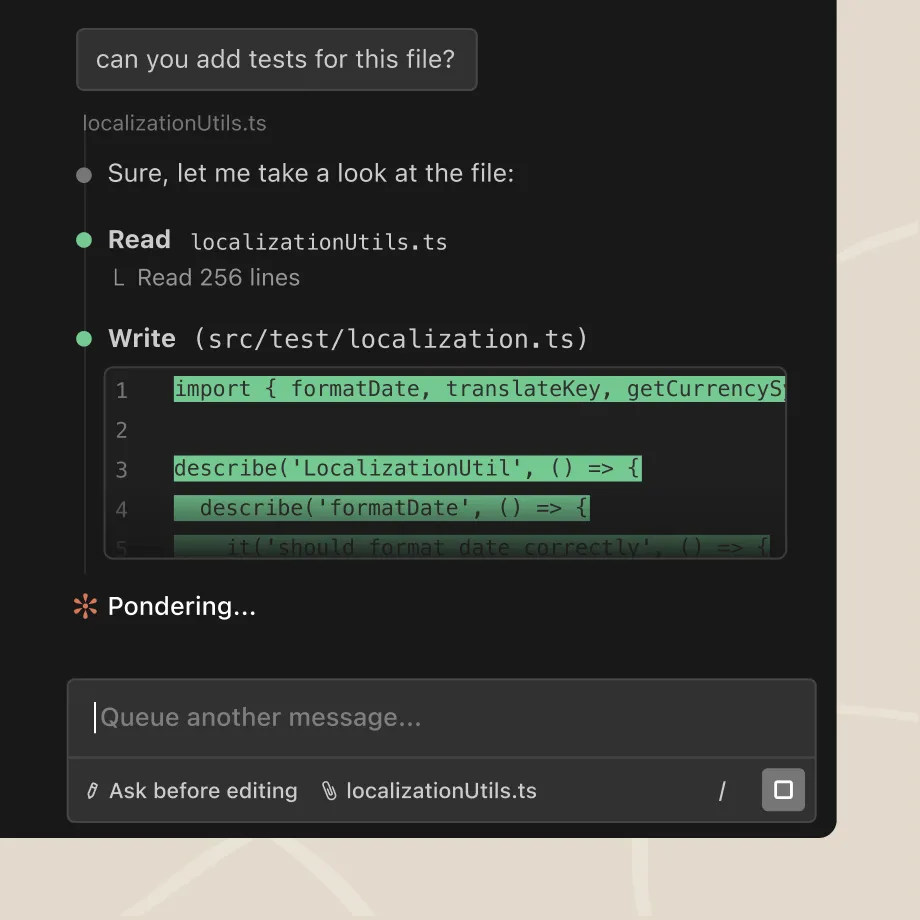
A standard AI plugin in your IDE suggests the next line of code but cannot see the whole project and takes no real actions. Claude Code reads files on demand, edits dozens of them in a single step, runs npm commands, executes tests, and opens pull requests. It saves hours on boilerplate work (database migrations, adding i18n keys, type refactoring) and on debugging (the agent reads logs, runs curl requests, and traces the root cause itself).
Pros and cons
Pros
- +Works with the entire project: reads any file, searches through code, understands structure and dependencies
- +Takes actions, not just suggestions: runs commands, edits files, makes git commits
- +MCP support for connecting external services: GitHub, Postgres, Slack, Playwright, Sentry, Linear
- +Integrates with VSCode and JetBrains, works in any terminal on macOS, Linux, and Windows
- +Sub-agents: delegate subtasks to specialized agents (security audit, database optimizer, frontend)
- +Hooks: automatic actions triggered by events (for example, running a linter after every edit)
- +Plan mode: the agent shows a plan of action before executing, so you can cancel or adjust it
- +Opus 4.7 model on Max plans – the most capable Anthropic model for complex tasks
- +Up to 1 million tokens of context – fits large codebases without splitting
Cons
- –No permanent free tier like GitHub Copilot Free
- –Pro at $20/month gives only Sonnet 4 with request limits; Opus 4.7 requires Max from $100/month
- –Code the agent reads is sent to Anthropic's servers – projects under NDA need the Enterprise plan with zero-data-retention
- –No line-by-line tab-completion like Copilot – Claude Code is designed for tasks, not inline suggestions
- –There is a learning curve: getting the most out of the agent means writing clear task descriptions and reviewing the output
- –It sometimes edits more than you asked for – checking the diff before committing is a must
Pricing
- ·Trial period up to 14 days
- ·Sonnet 4 with usage limits
- ·MCP servers not available on this tier
- ·Claude Sonnet 4
- ·Claude Code in terminal and IDE
- ·MCP servers
- ·Up to 5x more requests than Free
- ·Sonnet 4 + Opus 4.7
- ·5x the Pro request limit
- ·Covers active development for 4–6 hours a day
- ·Sonnet 4 + Opus 4.7
- ·20x the Pro request limit
- ·Full workday of coding through the agent
- ·SSO + SCIM
- ·Zero-data-retention
- ·Audit logs
- ·Team-level settings and hooks
Competitors and alternatives
Direct competitors: GitHub Copilot ($10/month base with Sonnet, but no terminal agent and no MCP), Cursor ($20/month – a VSCode fork with a built-in agent and tab-completion), Codeium/Windsurf ($15/month – cheaper but weaker on complex tasks). On raw model quality, Claude Code and Cursor with Opus are roughly equal; Cursor has stronger tab-completion while Claude Code handles terminal workflows and the MCP ecosystem better. For crypto development, Claude Code tends to win on scripting flexibility and native integrations with git, Postgres, and Playwright.
What users say
On Reddit r/ClaudeAI and Hacker News, the most common complaint is request limits: Pro at $20/month covers about 1–2 hours of active work per day before rate limiting kicks in. Max at $100/month extends that to 5–6 hours, and Max at $200/month covers a full day. Users also mention that Opus is 2–3x slower than Sonnet, and the lack of tab-completion is a recurring ask. Anthropic shipped Claude 4.7 in April 2026, with a noticeable jump in both speed and output quality.
Why we included it
Claude Code is a good fit for crypto developers and content teams who want to automate data collection, reporting, dashboards, and bots. Pro at $20 works for testing and one-off tasks (migrations, scrapers, bug fixes). Max at $100 is the practical choice for a one- or two-person project. Max at $200 makes sense for anyone who spends 8 hours a day giving the agent tasks in the terminal. Enterprise is only worth it if you have a closed codebase with legal restrictions. For people new to development, Claude Code is not the best starting point – you need to understand git, the file system, and how tests work. It is built for people who already write code by hand and want to go faster.
FAQ
How is Claude Code different from ChatGPT?
ChatGPT is a chat interface with a model, with no access to your files. Claude Code is an agent that reads and edits your code directly in the terminal or IDE, runs commands, and makes commits. The chat interface on claude.ai is a separate product and does not have file or command access.
Is it safe to send my code to Claude Code?
On Pro and Max plans, Claude Code sends code to Anthropic's servers for processing. By default, it is not used to train the models. Request logs are kept for 30 days for abuse prevention. For projects under NDA or with trade secrets, the Enterprise plan adds zero-data-retention and a data processing agreement.
Which plan should I start with?
Free for 14 days to see whether the tool fits your workflow. Pro at $20 for one to two months of regular use. Max at $100 once you realize Claude Code is handling 30–50% of your routine work and you keep hitting the Pro limits.
Does Claude Code support Solidity, Rust, and Python for crypto projects?
Yes, any text-based language. Solidity, Rust, Python, TypeScript, Go, Move, and Pine Script – the model knows the syntax and idioms. For less common languages (Cairo, Fe) the quality drops, but the agent can still work with them.
Is there a referral program?
Yes. Anthropic runs a referral program: a friend who signs up gets one free week of Claude Code, and you receive $10 in credit after their first payment. This is usage credit applied to your own subscription, not a revenue-share arrangement.
Can I cancel and get a refund?
You can cancel at any time in your account settings on console.anthropic.com. Refunds for an already-paid month are not available – the service stays active until the end of the billing period.
Ready to try Claude Code?
Using our link is free for you. We receive a small bonus from the service.
Go to Claude Code