Bitget’s hackers turn to Zcash after $50 million laundering route gets blocked

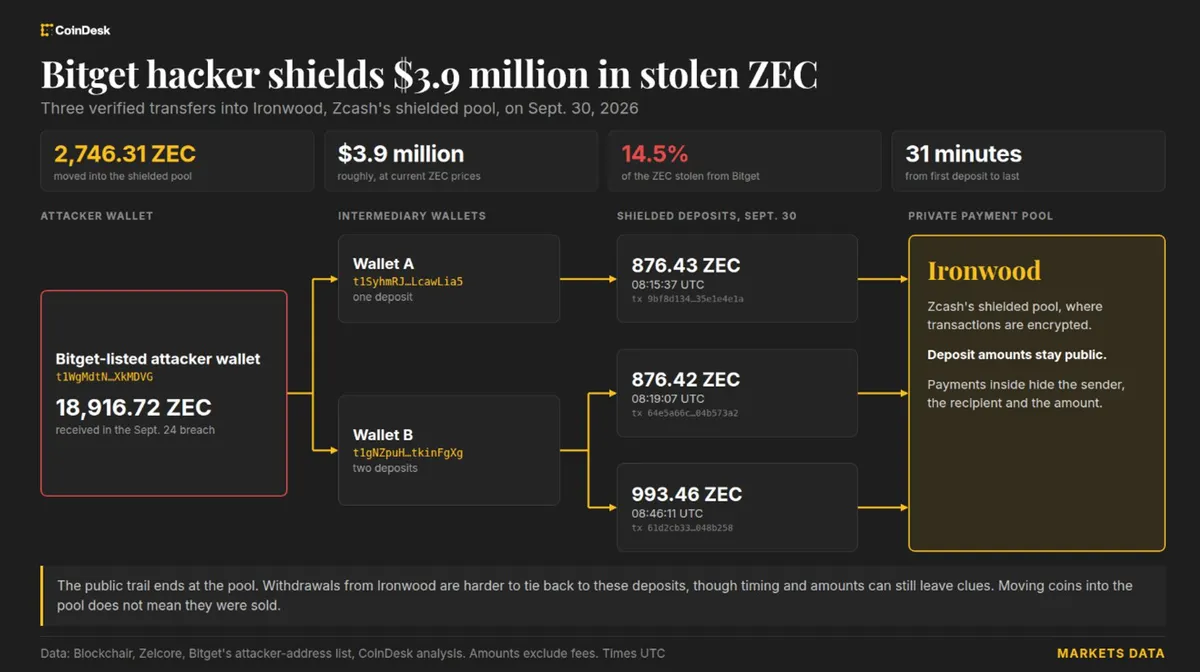
Following the $387.5 million breach at Bitget, the hackers are now utilizing Zcash's privacy features to obscure the trail of the stolen funds. This shift comes as various crypto firms have tightened their security measures, effectively blocking previous avenues for laundering the illicit gains. Recent on-chain analysis conducted by blockchain investigator ZachXBT revealed that approximately 2,746 ZEC, worth around $3.9 million, was transferred into Zcash’s Ironwood shielded pool across three separate transactions on Wednesday. This move highlights the evolving tactics employed by cybercriminals in the crypto landscape.
The Bitget breach, which has drawn significant attention, underscores the vulnerabilities that remain in the crypto industry despite ongoing advancements in security protocols. The incident has sparked a discussion about the effectiveness of current measures and the ongoing challenges faced by exchanges and wallets in safeguarding user assets. With hackers continuously adapting their strategies, the need for robust frameworks to counter such threats has become increasingly urgent.
The implications of this shift to Zcash are noteworthy for the cryptocurrency market. Zcash, being a privacy-focused coin, allows for enhanced anonymity, which may attract more illicit activities as hackers seek to obfuscate the origins of stolen funds. This could lead to increased scrutiny from regulators and law enforcement agencies, potentially impacting the broader adoption of privacy coins. As these developments unfold, it is essential for stakeholders to remain vigilant and proactive in addressing the risks associated with privacy-focused cryptocurrencies.
Industry experts have expressed concern over this trend, emphasizing the necessity for improved tracking technologies and collaborative efforts among crypto exchanges to share information on illicit activities. The ability of hackers to adapt quickly to changing circumstances poses a significant challenge for the sector. Some analysts suggest that the ongoing evolution of laundering methods could lead to stricter regulations, as authorities aim to mitigate the risks associated with the anonymity provided by certain cryptocurrencies.
Looking ahead, it will be crucial for crypto firms to enhance their security measures and implement advanced monitoring systems to detect suspicious activities. As the industry grapples with the implications of privacy coins in laundering schemes, discussions around regulatory frameworks and compliance will likely intensify. The outcome of these developments may shape the future landscape of both crypto security and regulatory practices.

CoinMagnetic Team
Crypto investors since 2017. We trade with our own money and test every exchange ourselves.
Updated: September 2026
From our insights:
Related news

Bitget hacker moves $3.8 million in ZEC to Zcash's Ironwood pool after swap rejection
$4 million in stolen Zcash moved to Ironwood, complicating recovery efforts

OpenAI, Google and Meta sign voluntary AI audit pact with no penalties

SlowMist traces Bitget hack activity to Aug. 31 zero-day exploit

Bitget CEO cites 2025 Bybit hack as precedent for $388 million breach recovery