$4 million in stolen Zcash moved to Ironwood, complicating recovery efforts
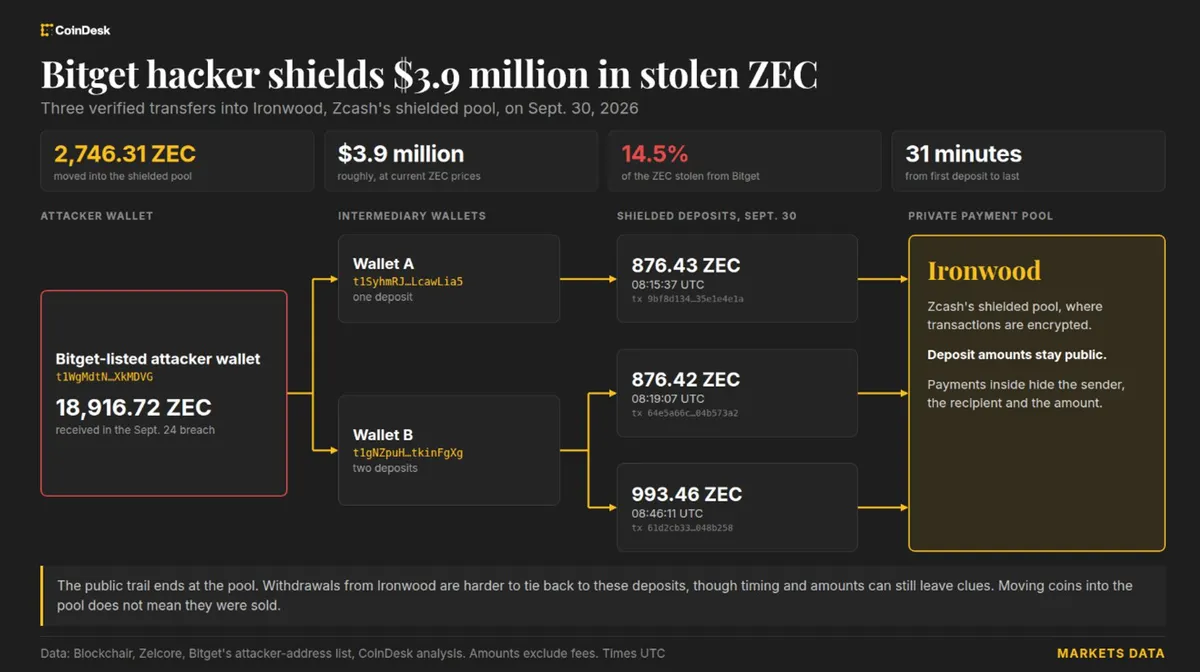
In a recent development, hackers responsible for the Bitget exchange breach have moved approximately $4 million worth of stolen Zcash (ZEC) into Ironwood, a privacy-focused platform designed to obscure transaction details. This transfer involved three separate transactions, which collectively account for around 15% of the stolen funds. By utilizing Ironwood, the hackers are effectively making it significantly more difficult for authorities and affected parties to trace the origins and destinations of the funds, complicating potential recovery efforts.
The hack on Bitget has raised concerns within the crypto community, particularly due to the increasing frequency and sophistication of cyberattacks targeting cryptocurrency exchanges. Bitget, a prominent player in the trading space, has experienced a breach that not only resulted in the loss of customer funds but also highlighted vulnerabilities within the security frameworks of digital asset platforms. As hackers continue to exploit these vulnerabilities, the need for robust security measures becomes even more pressing.
The implications of this transfer for the broader cryptocurrency market cannot be understated. When substantial amounts of stolen assets are moved into privacy-enhancing platforms like Ironwood, it raises alarms about the potential for these funds to re-enter circulation undetected. This not only undermines confidence in the security of exchanges but may also deter new investors from entering the market, fearing that their investments could be compromised by similar breaches.
Industry reactions to this incident have been mixed, with some experts emphasizing the need for enhanced security protocols and better tracking technologies to combat theft. Others have called for stricter regulations around privacy coins, which allow for anonymous transactions, arguing that such measures could help prevent the misuse of these technologies by malicious actors. The incident serves as a wake-up call for both exchanges and users to take security more seriously, reinforcing the importance of safeguarding digital assets.
Looking ahead, it remains uncertain how the situation will unfold. Authorities may ramp up their efforts to track and recover the stolen funds, potentially leading to more investigations into the use of privacy pools. Additionally, exchanges may consider implementing more stringent security measures in response to this breach, as well as collaborating with law enforcement to develop solutions for tracing stolen assets. The outcome of these developments could shape the future landscape of cryptocurrency security and regulation.

CoinMagnetic Team
Crypto investors since 2017. We trade with our own money and test every exchange ourselves.
Updated: September 2026
From our insights:
Related news

OpenAI, Google and Meta sign voluntary AI audit pact with no penalties

SlowMist traces Bitget hack activity to Aug. 31 zero-day exploit

Bitget CEO cites 2025 Bybit hack as precedent for $388 million breach recovery
NEAR Intents blocks $50 million linked to Bitget hackers, contrasts with THORChain

Bitget sees 5,000 BTC exit as hackers launder $387 million in stolen funds