Ripple chases AI’s machine economy as XRPL stablecoins near $1 billion

Ripple has recently reported a remarkable surge in stablecoin liquidity on its XRP Ledger (XRPL), which has nearly doubled over the past month. This significant growth positions the network within striking distance of achieving a $1 billion supply milestone. As Ripple aims to enhance its blockchain infrastructure for automated payments, the increase in stablecoin liquidity serves as a robust foundation. This development aligns with Ripple's broader strategy to tap into the emerging landscape of artificial intelligence, suggesting that the company is not just focusing on traditional payment solutions but is also looking toward the future of a machine economy.
To understand the significance of this development, it is essential to consider the context surrounding Ripple and the XRPL. The XRP Ledger has long been seen as a framework for facilitating fast and cost-effective cross-border payments. However, the recent advancements in stablecoin issuance on the platform signify a shift in Ripple's focus toward integrating innovative technologies such as artificial intelligence. As AI continues to shape various sectors, including finance, Ripple’s initiative to marry blockchain technology with AI-driven solutions could potentially redefine how automated transactions are executed.
This surge in stablecoin liquidity is noteworthy for the broader cryptocurrency market, as it highlights increased confidence in Ripple's blockchain capabilities. With stablecoins serving as vital bridges for transactions in the crypto space, their growth on the XRPL may attract more users and developers to the platform. Furthermore, achieving a $1 billion supply milestone could enhance Ripple's reputation and foster greater institutional interest, which may lead to increased market stability and liquidity in the long run.
Industry experts have begun to weigh in on Ripple's strategic pivot toward artificial intelligence. Some analysts believe that this move could position Ripple favorably against competitors in the blockchain and payment sectors. They suggest that integrating AI into automated payment processes could streamline operations, reduce costs, and improve efficiency. However, others remain cautious, noting that the success of this initiative will depend on how seamlessly Ripple can implement AI technology within its existing framework and whether it can effectively capture market share in an increasingly competitive environment.
Looking ahead, the next steps for Ripple will likely involve further development of its AI capabilities and continued efforts to increase stablecoin liquidity on the XRPL. As the company navigates this transition, it will be crucial to monitor how the market responds to these changes. If Ripple can successfully position itself as a leader in the intersection of blockchain and artificial intelligence, it may not only achieve its $1 billion stablecoin goal but also redefine the future of payment systems in a rapidly evolving technological landscape.

CoinMagnetic Team
Crypto investors since 2017. We trade with our own money and test every exchange ourselves.
Updated: June 2026
From our insights:
Related news

Solstice CEO predicts less volatile future for crypto cycles amid liquidity growth

Pragma flags 6 price feeds as critical risk following $3.5M Starknet lending exploit

Ethereum's $120 billion in staking masks underlying supply dynamics

NEAR price surges 80% weekly as Intents volume approaches $30 billion
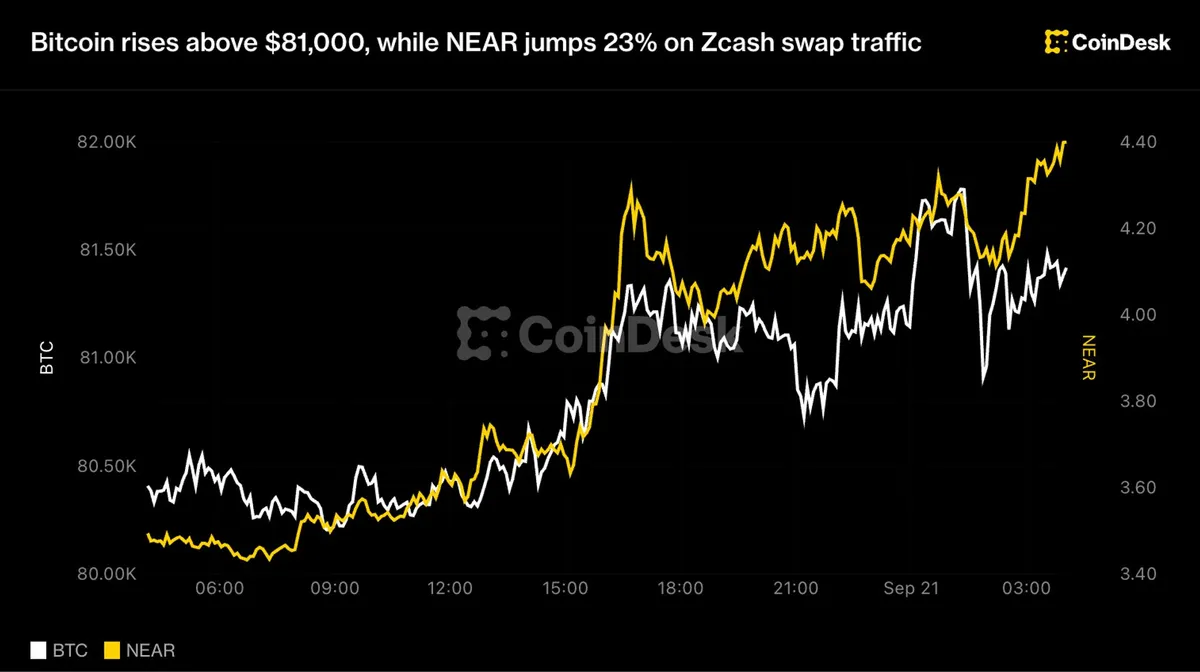
Bitcoin surpasses $81,000 as NEAR surges 23% amid Zcash swap activity