A needed $900B Treasury cash rebuild could quietly drain the liquidity Bitcoin needs

Bitcoin traders are currently facing a challenging landscape as recent economic data has shifted expectations around Federal Reserve interest rate policies. Over the past week, a series of robust labor statistics have led to a significant uptick in the odds of a rate hike by the end of the year, now sitting at approximately 85%. This shift has influenced the 10-year Treasury yield, which has surged close to 4.5%. Amidst this backdrop, the potential need for a $900 billion cash rebuild of Treasury reserves is emerging as a critical issue, one that could quietly siphon off the liquidity that Bitcoin and other cryptocurrencies require to thrive.
To understand the implications of this situation, it is essential to consider the broader economic context. The Federal Reserve's interest rate policies have a profound impact on liquidity in the financial markets, including the crypto space. As rates rise, traditional markets often experience a tightening of liquidity, as higher yields on Treasuries can divert investment away from riskier assets like Bitcoin. The proposed rebuild of Treasury cash reserves could exacerbate this trend, as it may necessitate the absorption of significant capital from the markets, potentially diminishing the funds available for speculative investments in cryptocurrencies.
The implications of this scenario for the Bitcoin market are substantial. As liquidity becomes constrained, the ability of investors to enter or exit positions in Bitcoin may be hampered, leading to increased volatility and a possible decline in prices. This situation could deter new investors from entering the market and may lead existing holders to reassess their positions in light of deteriorating market conditions. Furthermore, the interplay between rising Treasury yields and Bitcoin's performance could create a feedback loop, whereby increasing rates lead to declining prices, which in turn dampen investor sentiment further.
Reactions from industry experts have been mixed, with some expressing concern over the potential liquidity crunch while others remain optimistic about Bitcoin's long-term resilience. Many analysts emphasize the importance of monitoring economic indicators closely, as well as the Federal Reserve's upcoming policy decisions. Some suggest that Bitcoin's unique properties as a decentralized digital asset may help it weather these economic storms better than traditional assets; however, the immediate outlook appears cautious.
Looking ahead, market participants will be closely watching the Federal Reserve's moves, especially any signals regarding the timing and magnitude of potential rate hikes. Additionally, as discussions around the Treasury's cash rebuild evolve, it will be crucial for traders to assess how these developments impact liquidity in the broader financial ecosystem. In the short term, liquidity will remain a key focus, and its interplay with Bitcoin's price movements will likely dictate market sentiment as we approach year-end.

CoinMagnetic Team
Crypto investors since 2017. We trade with our own money and test every exchange ourselves.
Updated: June 2026
From our insights:
Related news

Solstice CEO predicts less volatile future for crypto cycles amid liquidity growth

Pragma flags 6 price feeds as critical risk following $3.5M Starknet lending exploit

Ethereum's $120 billion in staking masks underlying supply dynamics

NEAR price surges 80% weekly as Intents volume approaches $30 billion
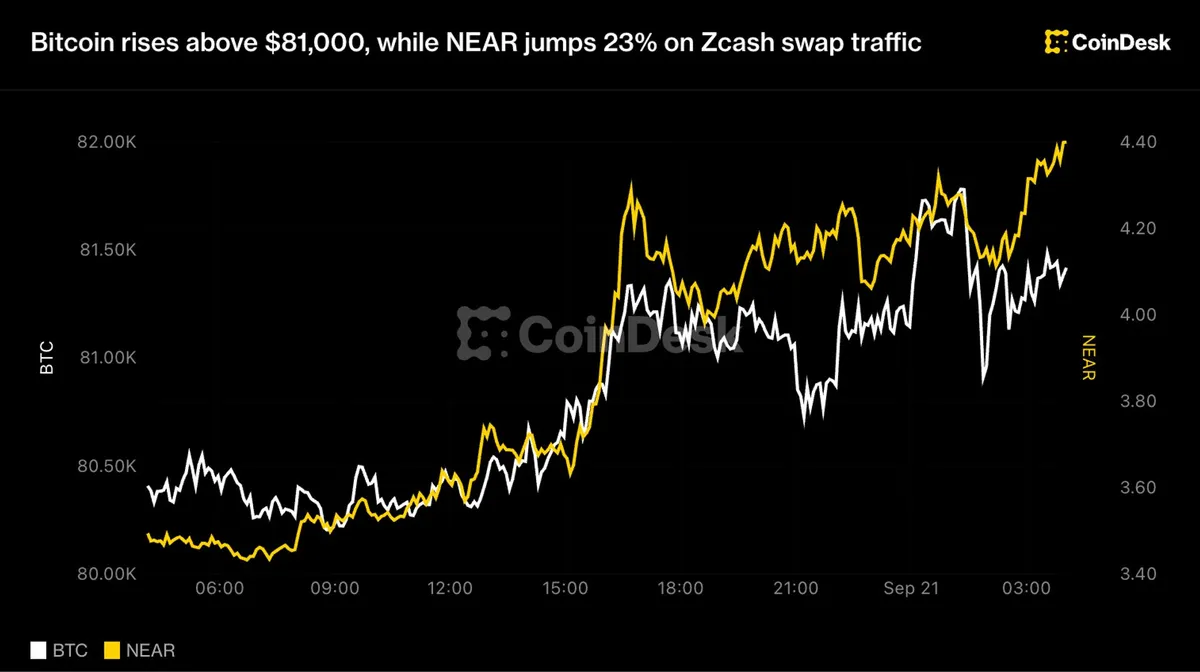
Bitcoin surpasses $81,000 as NEAR surges 23% amid Zcash swap activity