Tether launches decentralized local AI using Isaac Asimov’s Psychohistory straight out of Foundation
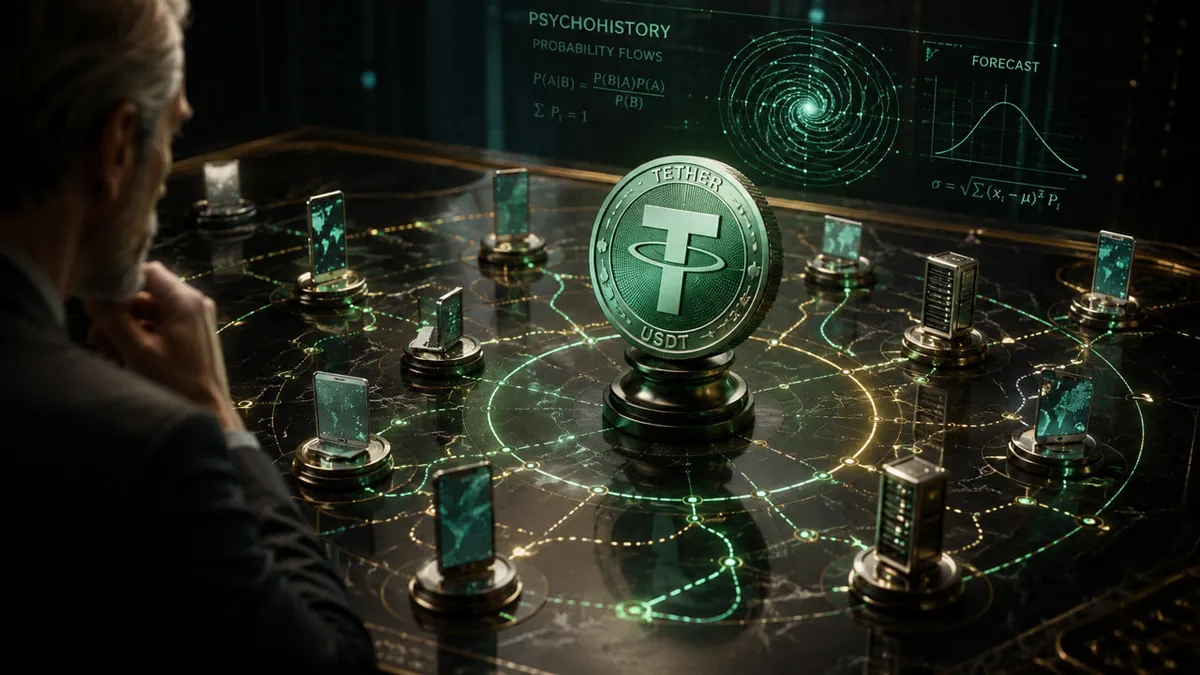
Tether has made headlines this week with the unveiling of its new project, QVAC, which introduces a decentralized local AI that draws inspiration from Isaac Asimov’s concept of Psychohistory. This innovative initiative aims to enhance the company’s stablecoin operations by integrating advanced artificial intelligence into its framework. Tether describes QVAC Psy as a family of foundational models designed to leverage the principles of Psychohistory–an intricate blend of mathematics, statistics, and social dynamics aimed at predicting the behavior of large groups. This ambitious project marks a significant departure from Tether's traditional focus on stablecoin issuance and reserve assets, signaling a bold move into the AI arena.
To understand the significance of this launch, it is essential to consider the historical context of Tether and the broader cryptocurrency market. Established in 2014, Tether has been a critical player in the stablecoin sector, providing liquidity and stability to the often-volatile crypto markets. The introduction of QVAC represents an evolution of Tether's strategy, aiming not only to maintain its dominance in stablecoins but also to embrace emerging technologies that could redefine its operational capabilities. By incorporating AI based on Psychohistory, Tether positions itself at the intersection of finance and advanced technology, reminiscent of the futuristic themes explored in Asimov's literary works.
The implications of Tether’s QVAC project for the cryptocurrency market are profound. By integrating AI into its stablecoin infrastructure, Tether could potentially enhance risk management, optimize liquidity, and offer predictive analytics that improve market efficiency. This strategic move may also set a precedent for other cryptocurrency firms to follow, encouraging a wave of innovation that could reshape the competitive landscape. Investors and stakeholders will be watching closely to see how this technology impacts Tether's performance and the broader adoption of AI within financial systems.
Industry experts have responded with a mixture of intrigue and skepticism regarding Tether's latest venture. Some see this as a natural progression for a company that has continually sought to innovate and maintain its market position. Others, however, caution against the complexities and ethical implications that come with deploying AI in financial contexts. While the potential for enhanced decision-making and predictive power is appealing, there are concerns about data privacy, algorithmic biases, and the broader ramifications of using AI in a decentralized financial ecosystem.
Looking ahead, Tether's QVAC initiative could herald a new era for both the company and the cryptocurrency sector. As the project unfolds, we anticipate further developments that will clarify how Tether plans to implement and manage this AI technology. The successful integration of Psychohistory principles may not only bolster Tether’s operational efficiency but also set a benchmark for the use of AI in the financial industry. As we continue to observe the unfolding narrative, it will be crucial to monitor both the technological advancements and the regulatory responses that will inevitably accompany such groundbreaking innovations.

CoinMagnetic Team
Crypto investors since 2017. We trade with our own money and test every exchange ourselves.
Updated: May 2026
From our insights:
Related news

Solo GP Jed Breed raises $15 million for his second early-stage crypto fund

Crypto industry may increase PAC spending after CLARITY vote failure

SEC's crypto counsel outlines strategy for custody of digital assets

Reap aims to enhance cross-border FX with non-USD stablecoins including peso

ECB and EU central banks propose liquidity thresholds for stablecoins