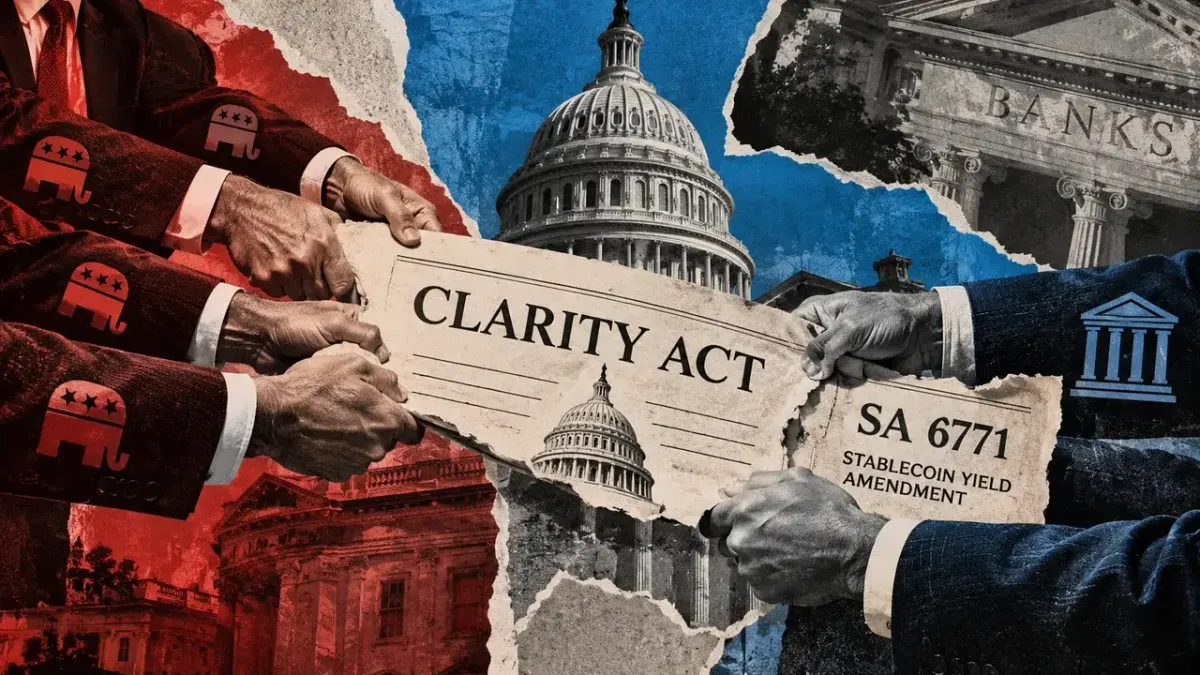
Crypto industry may increase PAC spending after CLARITY vote failure

The recent failure of the CLARITY vote has sparked discussions about the potential for increased political action committee (PAC) spending within the crypto industry as the 2026 elections approach. Advocates believe that this setback could motivate crypto stakeholders to intensify their efforts to influence key races in both the House and Senate. The CLARITY bill aimed to provide regulatory clarity for digital assets, and its failure has left many in the industry feeling the urgency to ensure their voices are heard in the political arena.
Historically, the crypto industry has been increasingly active in political funding, with growing recognition of the importance of regulatory frameworks that favor digital assets. The 2022 midterm elections saw significant contributions from crypto entities, which highlighted a trend of engaging with lawmakers to advocate for favorable policies. The upcoming 2026 elections, where control of the House and Senate will be contested, presents a crucial opportunity for the industry to push its agenda forward.
The implications of ramped-up PAC spending could be substantial for the crypto market. Increased political influence could lead to more favorable regulations, which in turn might boost investor confidence and foster innovation within the sector. Conversely, if the industry fails to effectively navigate this landscape, it could lead to more stringent regulations that may stifle growth and encourage capital flight to more crypto-friendly jurisdictions.
Industry experts are weighing in on the potential ramifications of the CLARITY vote failure. Some believe that it could galvanize the crypto community to unite and advocate more aggressively for their interests. Others caution that merely increasing financial contributions may not be enough; there needs to be a strategic approach that addresses the concerns of lawmakers and aligns with broader public interests. The outcome of this political engagement will likely shape the regulatory landscape for years to come.
Looking ahead, the crypto industry will need to carefully plan its approach in the lead-up to the 2026 elections. This may include building coalitions with other industries, fostering public awareness campaigns, and focusing on grassroots mobilization to ensure that the voices of both industry players and everyday crypto users are represented. As the political landscape continues to evolve, how effectively the crypto sector can adapt and respond will be critical to its future success.

CoinMagnetic Team
Crypto investors since 2017. We trade with our own money and test every exchange ourselves.
Updated: September 2026
From our insights:
Related news

Canada's major banks initiate tokenized deposit project for digital assets

Solo GP Jed Breed raises $15 million for his second early-stage crypto fund

SEC's crypto counsel outlines strategy for custody of digital assets

Reap aims to enhance cross-border FX with non-USD stablecoins including peso

ECB and EU central banks propose liquidity thresholds for stablecoins