Stablecoin market cap has shrunk by $10 billion since May, but analyst sees no reason to panic

The stablecoin market has witnessed a significant contraction, with its total market capitalization shrinking by approximately $10 billion since May. This downturn has been particularly pronounced in June, where the market lost around $7.7 billion, marking the largest dollar decline since the catastrophic Terra-Luna collapse in May 2022. Despite the alarming figures, analysts maintain that this is not a cause for immediate concern, suggesting that the market may rebound and resume its long-term growth trajectory.
To provide some context, the stablecoin market has experienced rapid growth over the past few years, driven by increasing demand for digital assets that offer price stability amidst the volatility of cryptocurrencies. The decline observed since May can be attributed to various factors, including regulatory scrutiny and shifting investor sentiment. As the overall cryptocurrency market has faced turbulence, many investors have opted to withdraw from stablecoins, leading to the recent downturn in market capitalization.
This contraction in the stablecoin market is noteworthy as it reflects broader trends within the cryptocurrency ecosystem. Stablecoins play a crucial role in providing liquidity and facilitating transactions, serving as a bridge between traditional finance and the crypto space. A significant reduction in their market cap could indicate declining confidence among investors, which may impact trading volumes and overall market dynamics. However, analysts believe that the fundamentals supporting the stablecoin market remain intact, suggesting that the current shrinkage may be a temporary phase rather than a signal of long-term decline.
Industry experts have voiced their opinions on this phenomenon, with many highlighting that past downturns have often preceded recoveries in the stablecoin sector. The sentiment among analysts seems to be cautiously optimistic, with some asserting that the market will see a resurgence as regulatory clarity improves and more use cases for stablecoins emerge. Additionally, the continued adoption of blockchain technology and decentralized finance (DeFi) could bolster demand for stablecoins, allowing them to regain their lost market capitalization over time.
As we look ahead, the future of the stablecoin market will likely hinge on several factors, including regulatory developments, technological advancements, and shifts in investor sentiment. If the market can navigate these challenges effectively and capitalize on growth opportunities, it may very well return to its upward trajectory. For now, while the recent contraction poses questions, the underlying support for stablecoins suggests that a rebound could be on the horizon, marking the next phase in this evolving landscape.

CoinMagnetic Team
Crypto investors since 2017. We trade with our own money and test every exchange ourselves.
Updated: July 2026
From our insights:
Related news

George Washington University physicists devise formula to forecast chatbot failure
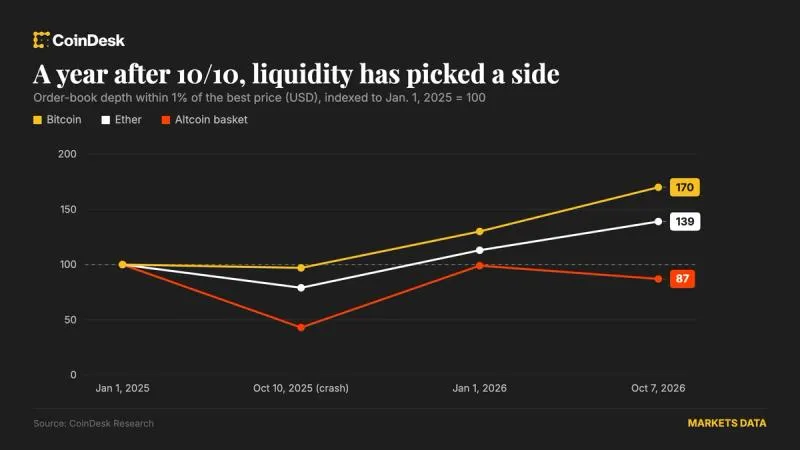
One year after 10/10 flash crash, bitcoin and ether liquidity have rebuilt, but altcoins still face risks

Tokenized commodities expand past gold into lending and oil markets

Justin Sun says Tron’s post-quantum cryptography has gone live on testnet

Traders adopt better risk tools one year after a $19 billion bitcoin flash crash