Michael Saylor posts cryptic Strategy chart after $216 million bitcoin sale: ‘Orange dots tell only part of the story’

Michael Saylor, co-founder of MicroStrategy, recently stirred up curiosity in the cryptocurrency community by posting a cryptic strategy chart on social media following the company's significant sale of $216 million in Bitcoin. The chart, adorned with orange dots, suggests that there is more to the story than what meets the eye. With Bitcoin currently trading around $64,000, MicroStrategy's holdings of 843,775 BTC, purchased at an average price of $75,476, place the company approximately $9.7 billion underwater. Saylor's enigmatic post has sparked discussions about the strategic rationale behind such a sale and what it could mean for MicroStrategy's future in the crypto space.
To understand the context of this development, it is essential to consider MicroStrategy's journey into Bitcoin. The company began accumulating Bitcoin in 2020, positioning itself as a pioneer in corporate cryptocurrency adoption. Saylor has been a vocal advocate for Bitcoin, often expressing his belief in its long-term value as a digital asset. However, the recent sale raises questions about whether this move reflects a shift in strategy or a tactical decision to manage liquidity in uncertain market conditions. As Bitcoin's price fluctuates, the implications of such large-scale sales can resonate throughout the market.
The implications of Saylor's actions on the broader cryptocurrency market cannot be overstated. MicroStrategy's aggressive investment strategy and subsequent sale serve as a barometer for institutional sentiment towards Bitcoin. Investors closely monitor such decisions, as they can influence market perceptions and trading behavior. Given the current price of Bitcoin, this sale might signal a cautious approach from Saylor, suggesting that even seasoned investors are reevaluating their positions amidst market volatility. The sale could also indicate a strategic pivot, perhaps to capitalize on future opportunities or to cover operational costs in a rapidly changing economic landscape.
Industry experts have expressed varied opinions on Saylor's recent move. Some analysts view the sale as a prudent step, allowing MicroStrategy to maintain liquidity while still holding a substantial Bitcoin position. Others speculate that this could signify a shift in Saylor's bullish stance, leading to concerns about potential market repercussions. The cryptic nature of the accompanying chart has further fueled speculation, with many interpreting it as a sign that Saylor and MicroStrategy are not done with their Bitcoin strategy but are instead recalibrating their approach to align with market dynamics.
Looking ahead, it remains to be seen how MicroStrategy will navigate its Bitcoin holdings and what further actions Saylor might take in response to the market conditions. The upcoming months could prove pivotal, as institutional interest in cryptocurrency continues to evolve and as Bitcoin's price reacts to broader economic indicators. Investors will undoubtedly keep a close eye on MicroStrategy, as the company's decisions could have cascading effects across the crypto landscape. The orange dots on Saylor's chart may only tell part of the story, but they have undeniably sparked intrigue and speculation about what lies ahead for both MicroStrategy and the broader cryptocurrency market.

CoinMagnetic Team
Crypto investors since 2017. We trade with our own money and test every exchange ourselves.
Updated: July 2026
From our insights:
Related news

George Washington University physicists devise formula to forecast chatbot failure
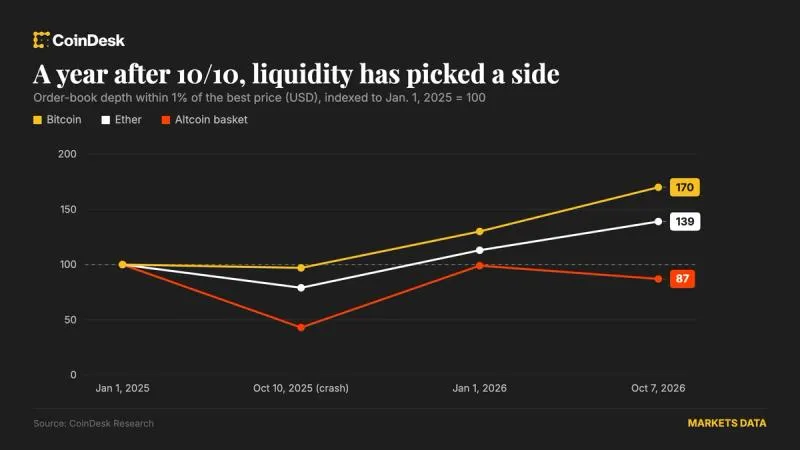
One year after 10/10 flash crash, bitcoin and ether liquidity have rebuilt, but altcoins still face risks

Tokenized commodities expand past gold into lending and oil markets

Justin Sun says Tron’s post-quantum cryptography has gone live on testnet

Traders adopt better risk tools one year after a $19 billion bitcoin flash crash