SEC's Hester Peirce argues decentralized DeFi shouldn't require legal exemptions
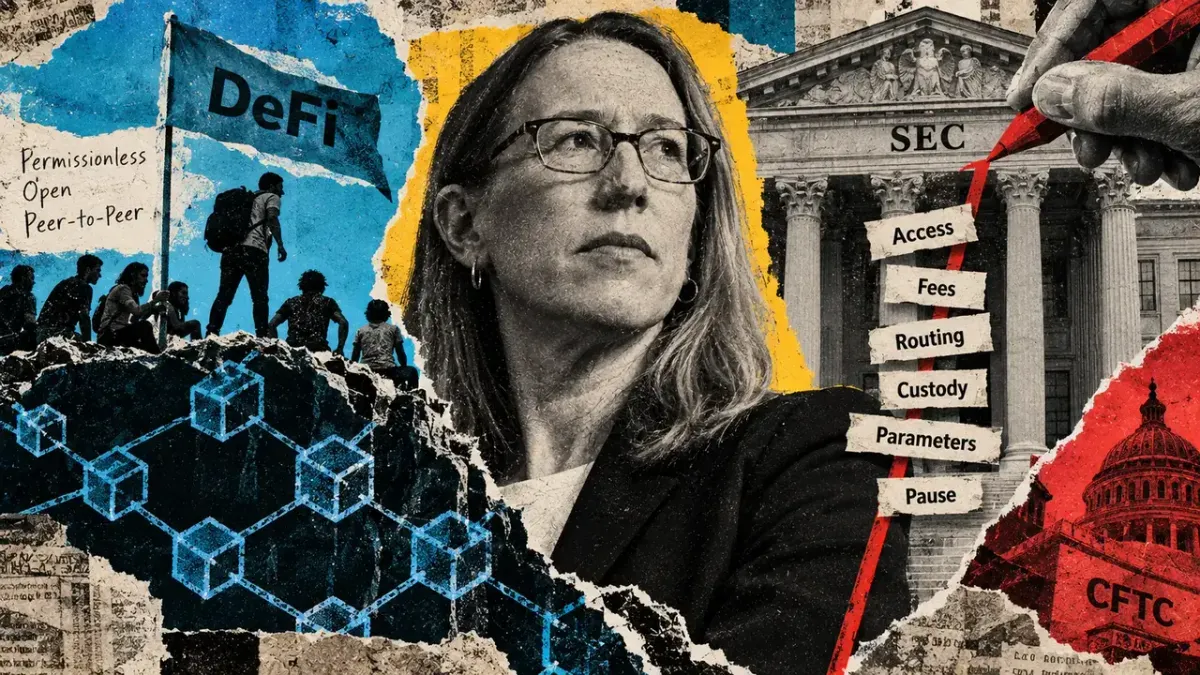
In a recent statement, SEC Commissioner Hester Peirce outlined her perspective on the necessity of legal exemptions for decentralized finance (DeFi) platforms. Peirce emphasized that truly decentralized DeFi systems operate independently of traditional financial regulations and do not need special legal protections. She argued that the existing regulatory frameworks, including those enforced by the SEC and the CFTC, are primarily focused on aspects such as custody, access, routing, and fees, which may not be applicable to fully decentralized networks. Her comments highlight a growing discourse around the regulatory landscape for DeFi, particularly as the space continues to evolve rapidly.
The context surrounding Peirce's remarks stems from ongoing debates about how best to regulate the burgeoning DeFi sector without stifling innovation. Historically, regulators have struggled to classify DeFi platforms, as they often lack centralized control and traditional corporate structures. The SEC and CFTC have been actively working on regulations that pertain to custody and access to assets, but their approaches vary significantly, which complicates the legal environment for emerging technologies in finance.
This discussion is critical for the market as it underscores the tension between innovation in DeFi and the regulatory frameworks that govern financial services. If Peirce's viewpoint gains traction, it could pave the way for a more lenient regulatory approach, allowing DeFi projects to flourish without the burden of compliance with conventional legal standards. Conversely, if regulators impose strict rules, it could stifle growth and limit the potential benefits that decentralized finance can bring to the broader financial ecosystem.
Industry reactions to Peirce's comments have been mixed. Some advocates for DeFi welcome her stance, arguing that it reflects a deeper understanding of the technology and its implications for financial autonomy. Others express concern that without regulatory clarity, the DeFi space could face challenges related to fraud, security, and consumer protection. Experts in the field are calling for a balanced approach that fosters innovation while ensuring adequate protections for users.
Looking ahead, the future of DeFi regulation remains uncertain. As discussions continue, stakeholders are keenly observing how regulators will respond to the growing demands for clarity and guidance in the DeFi space. The evolution of regulations will likely shape not only the future of decentralized finance but also the broader landscape of financial services in the coming years.

CoinMagnetic Team
Crypto investors since 2017. We trade with our own money and test every exchange ourselves.
Updated: September 2026
From our insights:
Related news
Strive increases bitcoin holdings by 1,355 as year-end treasury goal approaches
Senate's rejection of Clarity Act favors banks and offshore centers like Dubai
Coinbase expands IPO access to US customers with Oura allocation
Bessent emphasizes dollar strength amid concerns over U.S. economy
ECB launches Pontes platform for settling tokenized assets using central-bank money