Why bitcoin’s recent climb to $80,000 might just be a temporary liquidity squeeze

Bitcoin recently made headlines with its ascent to $80,000, a significant milestone that has stirred excitement among investors and traders alike. This surge, however, is being interpreted by many analysts as a potential result of a temporary liquidity squeeze rather than a sustainable rally. The rise in price comes in the wake of spot exchange-traded fund (ETF) outflows and a hawkish stance from the Federal Reserve, which together create a challenging environment for further upward momentum. The market appears to be at a crossroads, with many experts cautioning that this spike may not signal the beginning of a new bull market.
To understand the current market dynamics, it is essential to consider the broader economic context. The Federal Reserve's recent policy decisions have contributed to a tightening of liquidity in the financial markets. With interest rates remaining elevated and inflation concerns still prevalent, the central bank's approach has led to increased caution among investors. Additionally, spot ETF outflows indicate that institutional investors may be reallocating their capital away from Bitcoin, further complicating the landscape for cryptocurrency prices. As these factors converge, they form what some analysts are calling a "macro ceiling," limiting the potential for Bitcoin to break its previous all-time highs without significant external catalysts.
The implications of this situation for the cryptocurrency market are profound. Many traders and investors are now grappling with the reality that while Bitcoin may have reached new price levels, the underlying conditions do not necessarily support sustained growth. The combination of reduced liquidity and cautious institutional sentiment suggests that Bitcoin's newfound valuation could be fragile. As traders assess their positions, the potential for increased volatility looms large, highlighting the need for careful navigation in a market that is heavily influenced by macroeconomic factors.
Industry reactions to Bitcoin's price surge have varied, with some experts expressing optimism while others remain skeptical. Analysts point to the need for a major geopolitical shift or a significant change in monetary policy to reenergize the market and push Bitcoin beyond its current limits. Others argue that the recent price movement reflects a healthy correction rather than a full-blown rally, emphasizing the importance of market fundamentals over speculative trading. The diverse opinions underscore the complexity of the current market environment and the ongoing debates surrounding Bitcoin's true value proposition.
Looking ahead, the future trajectory of Bitcoin will largely depend on how macroeconomic conditions evolve. Investors will be keeping a close eye on the Federal Reserve's policy decisions and any geopolitical developments that could impact market sentiment. If liquidity remains constrained and institutional interest wanes, the path to new all-time highs may prove to be a formidable challenge. As we navigate this landscape, it will be crucial for market participants to remain vigilant and adaptable in the face of shifting economic realities.

CoinMagnetic Team
Crypto investors since 2017. We trade with our own money and test every exchange ourselves.
Updated: May 2026
From our insights:
Related news

Solstice CEO predicts less volatile future for crypto cycles amid liquidity growth

Pragma flags 6 price feeds as critical risk following $3.5M Starknet lending exploit

Ethereum's $120 billion in staking masks underlying supply dynamics

NEAR price surges 80% weekly as Intents volume approaches $30 billion
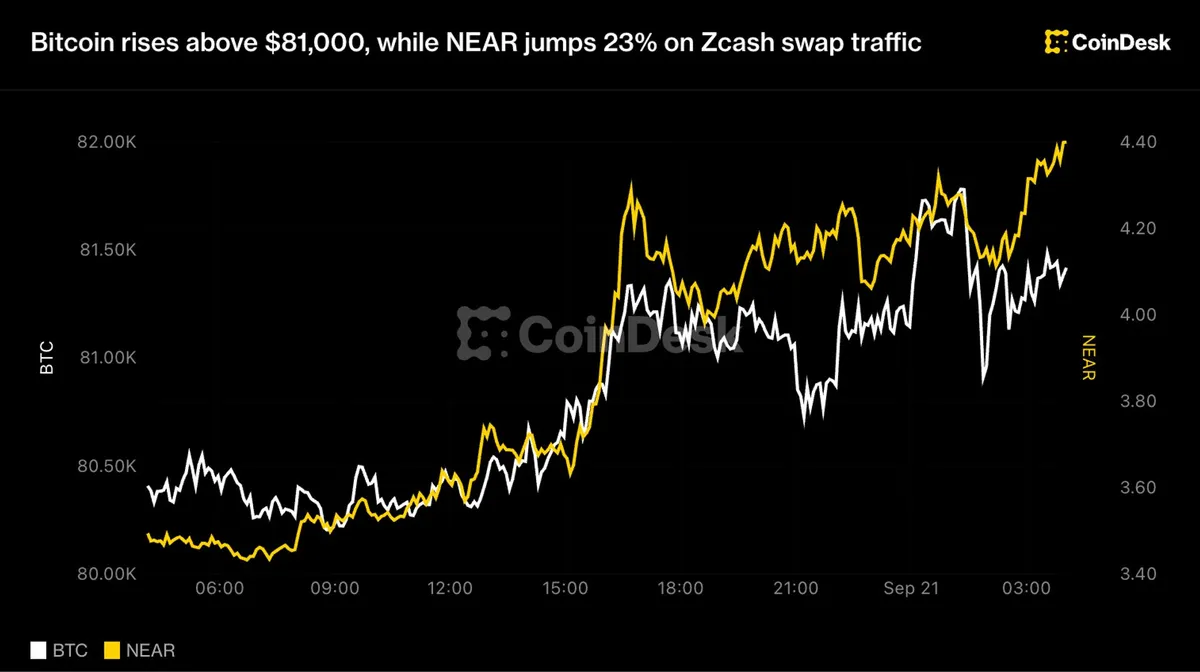
Bitcoin surpasses $81,000 as NEAR surges 23% amid Zcash swap activity