Ethereum's $120 billion in staking masks underlying supply dynamics

Recent analyses have highlighted the significant growth in Layer 2 (L2) solutions and the staggering $120 billion currently staked in Ethereum. This substantial staking amount indicates a robust interest in the network, but it also raises questions about the actual supply dynamics of Ethereum itself. While the growth of L2 solutions is often touted as a positive development for the Ethereum ecosystem, the interplay between staking and overall supply presents a more complex picture that ETH holders must navigate.
To understand the current state of Ethereum’s supply, it’s important to consider the historical context and the evolving landscape of the Ethereum network. Ethereum has undergone numerous upgrades aimed at improving scalability, security, and sustainability, particularly with the transition to a proof-of-stake model. This shift allows for more ETH to be staked, essentially locking up a significant portion of the supply. However, the uneven flows of exchange-traded funds (ETFs) and their implications on market liquidity and price dynamics continue to complicate the situation.
The implications for the cryptocurrency market are noteworthy. The large volume of staked ETH could create a supply shortage in the market, which, in theory, could drive prices up as demand outstrips available supply. However, the reality is that the benefits to individual ETH holders will heavily depend on a combination of ongoing purchases and network fees generated through transactions. This dynamic complicates the narrative surrounding Ethereum's value, as the perceived scarcity from staking must be balanced against actual market movements and liquidity.
Industry experts have provided mixed reactions to this duality of staking and supply. Some analysts emphasize the positive aspects of having a significant amount of ETH staked, suggesting it reflects a growing commitment to the network’s long-term success. Others, however, caution that the locked-up ETH may limit short-term market liquidity and could lead to volatility as investors react to shifts in ETF flows and market sentiment. This dichotomy has sparked discussions among crypto enthusiasts and investors about the sustainable growth of Ethereum and its implications for future price movements.
Looking ahead, it will be crucial for Ethereum stakeholders to monitor the balance between staking and market activity closely. As more users adopt L2 solutions and the staking landscape evolves, the true supply dynamics of Ethereum may become clearer. Understanding these trends will be essential for navigating the complexities of investing in Ethereum and assessing its potential for future growth.

CoinMagnetic Team
Crypto investors since 2017. We trade with our own money and test every exchange ourselves.
Updated: September 2026
From our insights:
Related news

NEAR price surges 80% weekly as Intents volume approaches $30 billion
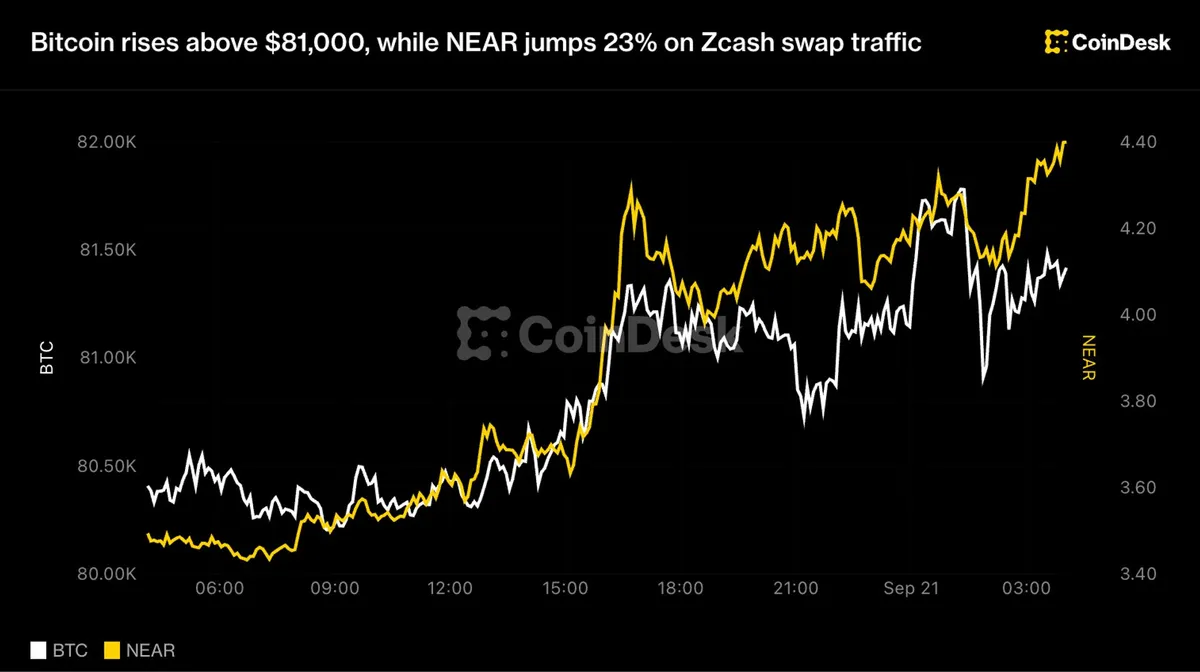
Bitcoin surpasses $81,000 as NEAR surges 23% amid Zcash swap activity

EU MiCA review raises concerns over staking yields and network security

XRPL leverages mathematical proofs to secure its upcoming lending market

Hyperliquid's new lending feature coincides with HYPE's ATH above $90