US Treasury yields surge to new highs as liquidity tightens, pushing Bitcoin back below $82,000 resistance

Recent market movements have seen US Treasury yields surge to new highs, significantly impacting the cryptocurrency landscape. Bitcoin, which had recently approached the $82,000 resistance level, has now retreated, trading at approximately $79,083. This decline of over 3% underscores how quickly the bond market has reasserted its influence over crypto trading dynamics. The tightening of liquidity has played a critical role in this shift, overshadowing recent progress in regulatory developments that many in the crypto industry had viewed positively.
To understand the current situation, it’s essential to consider the broader economic context. The surge in Treasury yields typically signals a tightening of monetary policy, which can lead to reduced liquidity in financial markets. This environment often complicates the investment landscape for risk assets, including cryptocurrencies. Despite lawmakers advancing significant regulatory bills aimed at providing clarity for the crypto space, the immediate impact of rising yields has overshadowed these developments, leading traders to reassess their positions.
This shift in market sentiment is particularly crucial for Bitcoin, as it has often been seen as a hedge against inflation and a store of value. The recent decline below the $80,000 mark may influence not just investor psychology but also market dynamics as a whole. A sustained retreat could trigger further selling pressure, especially if yield trends continue upward. Investors and analysts are closely monitoring these developments, as shifts in Treasury yields often correlate with broader risk sentiment in equity and crypto markets.
Reactions from industry experts highlight a mix of concern and cautious optimism. Many analysts acknowledge that while rising yields pose a challenge, regulatory clarity could ultimately benefit the cryptocurrency sector in the long run. Some experts suggest that this moment could serve as a stress test for Bitcoin and other cryptocurrencies, determining their resilience in the face of traditional market forces. Others argue that the crypto market's fundamentals remain strong, indicating that this downturn may be temporary.
Looking ahead, market participants are likely to keep a close eye on both Treasury yield movements and potential regulatory developments. As liquidity continues to tighten, the interplay between traditional financial instruments and cryptocurrencies will be critical to watch. Traders and investors will need to navigate this evolving landscape carefully, as the outcome of these dynamics could shape the future trajectory of Bitcoin and the broader crypto market.

CoinMagnetic Team
Crypto investors since 2017. We trade with our own money and test every exchange ourselves.
Updated: May 2026
From our insights:
Related news

Solstice CEO predicts less volatile future for crypto cycles amid liquidity growth

Pragma flags 6 price feeds as critical risk following $3.5M Starknet lending exploit

Ethereum's $120 billion in staking masks underlying supply dynamics

NEAR price surges 80% weekly as Intents volume approaches $30 billion
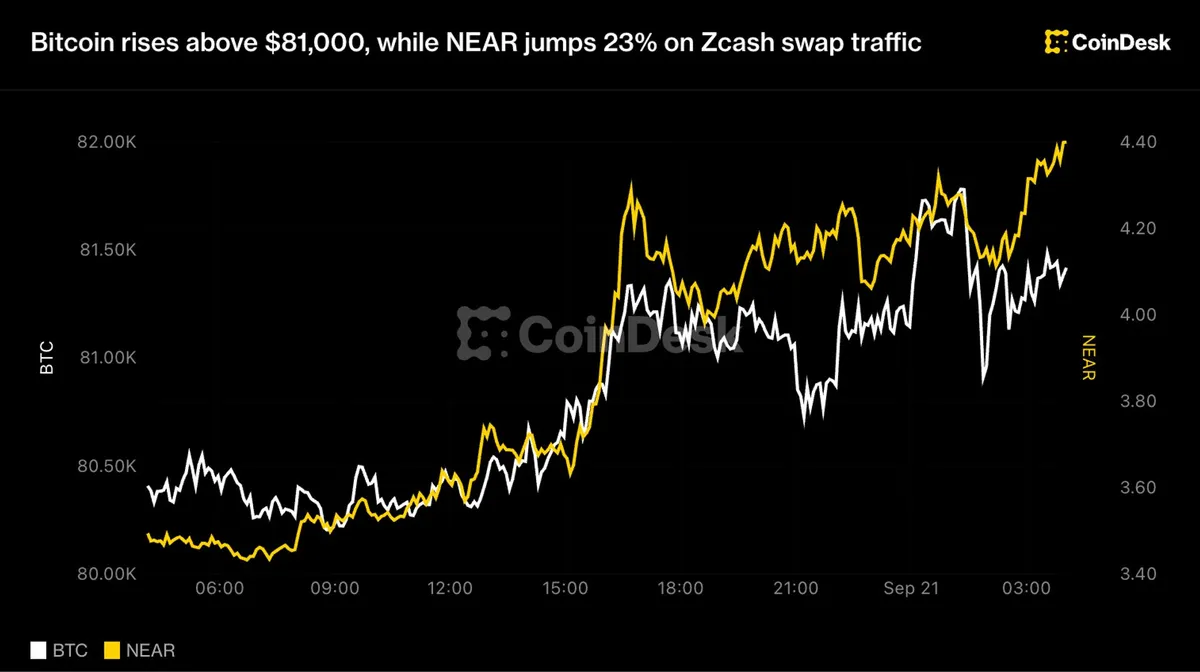
Bitcoin surpasses $81,000 as NEAR surges 23% amid Zcash swap activity