Delaware Life Insurance reveals $17 billion in related-party holdings, raising concerns
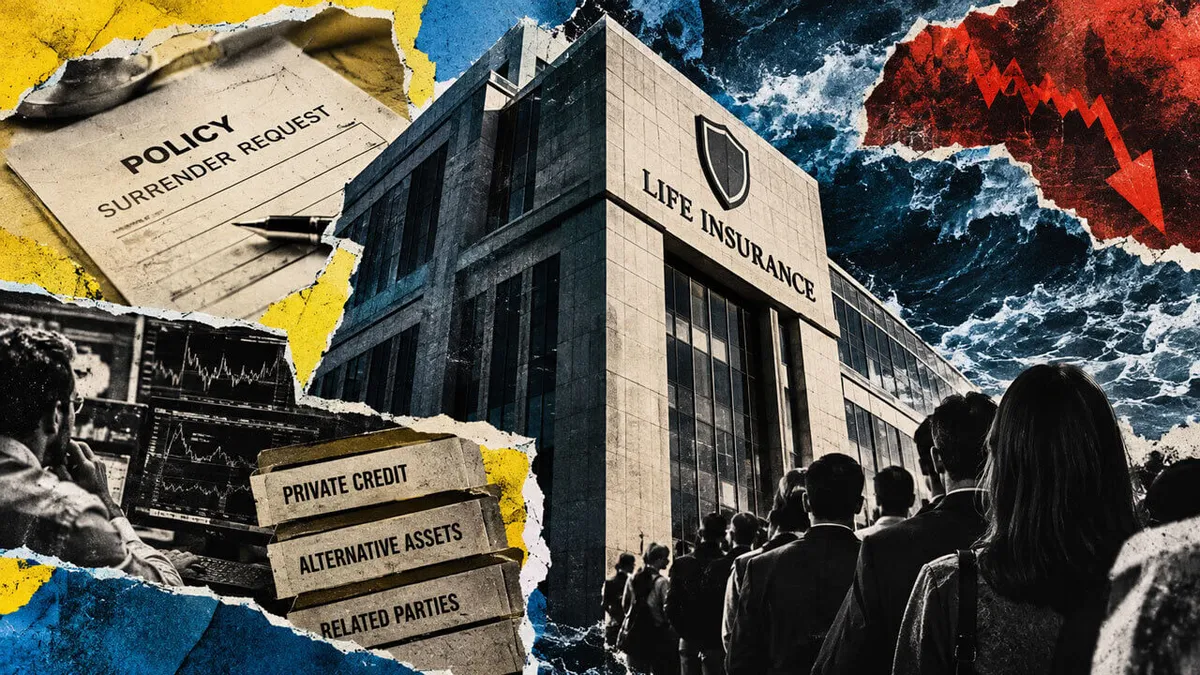
Delaware Life Insurance Company has recently made a significant adjustment to its 2025 balance sheet that has sent shockwaves through the financial community. The insurer corrected its annual filing, revealing that approximately $17 billion of its investments are classified as related-party holdings. This figure represents around 39% of its total invested assets, a stark contrast to the previous version, which indicated only about $1.4 billion or 3% classified as such. This revelation not only raises eyebrows but also casts a shadow over the stability of the insurance sector as a whole.
The background of this situation goes beyond just one insurance company. The concept of shadow banking has been a concern in financial markets for years, especially as traditional banking systems face various challenges. Insurance companies, typically seen as conservative financial institutions, are now being scrutinized for their investment practices. The sudden shift in Delaware Life’s asset classification highlights potential fragilities that could exist within the insurance industry, which had previously escaped the intense regulatory spotlight that banks often endure.
This development matters significantly for the market as it brings to light the interconnectedness of various financial sectors and the potential for systemic risk. If insurance companies begin to face liquidity issues or a loss of confidence, it could trigger a chain reaction similar to what has been observed in traditional banking systems during times of crisis. Investors and regulators alike are now on alert, as the implications of these changes could ripple through markets, affecting not just insurers but also the broader economy.
Industry reaction has been mixed, with some experts warning of the dangers posed by these hidden risks while others suggest that this is a necessary correction that will lead to greater transparency in the long run. Analysts argue that while related-party investments can sometimes indicate strong relationships and stability, they also raise questions about potential conflicts of interest and the overall risk profile of the companies involved. As discussions unfold, it is clear that the insurance sector may require closer oversight to prevent similar surprises in the future.
Looking ahead, the focus will likely shift to regulatory responses to this issue. As the implications of Delaware Life’s adjustments become clearer, regulatory bodies may feel compelled to examine the practices of insurance companies more closely. This could lead to new guidelines or reforms aimed at increasing transparency and reducing systemic risk in the insurance sector. Investors and policyholders alike will be watching closely to see how these developments unfold in the coming months.

CoinMagnetic Team
Crypto investors since 2017. We trade with our own money and test every exchange ourselves.
Updated: August 2026
From our insights:
Related news

Former FTX Europe chief targets U.S. tokenized stock trading with new SEC exemption

US digital economy expansion strains power grid and forces tough choices

Sahil Arora plans new celebrity token schemes using the Fomo launchpad

Payward targets Saldo Bank acquisition to secure EU banking and lending rights
Qivalis secures Dutch central bank approval to roll out euro stablecoin