Strive says digital credit selloff was a liquidation event, not a credit crisis

In a recent statement, a representative from Strive addressed the recent selloff in digital credit products, clarifying that this event should be viewed as a liquidation rather than an indication of a broader credit crisis. The executive emphasized that while the market experienced significant turbulence, the fundamental credit characteristics of these digital assets remain stable. The selloff, which saw prices drop sharply, has raised concerns among investors and market participants, but the Strive team believes this is a natural part of the market's maturation process rather than a signal of systemic failures.
To understand the context, it is crucial to consider that the digital credit market is still in its infancy, evolving rapidly alongside the broader cryptocurrency landscape. Over the past few years, there has been a surge in interest and participation in digital credit products, as investors seek innovative ways to leverage their crypto holdings. This growth has not come without its challenges, as the market grapples with issues such as liquidity, regulatory uncertainties, and the integration of traditional financial principles into a decentralized framework. The recent selloff is viewed by some as a stress test for these young markets, highlighting both vulnerabilities and resilience.
The implications of this selloff for the market are significant. While some fear that it indicates a loss of confidence in digital credit products, the Strive executive's comments suggest that such fears may be overstated. If the underlying fundamentals are indeed intact, this could present a buying opportunity for investors looking to capitalize on a market that has overreacted to short-term volatility. Furthermore, a clearer understanding of these dynamics might encourage more institutional players to enter the space, potentially stabilizing the market in the long run.
Industry experts have responded with a mix of caution and optimism. Some analysts agree with Strive's assessment, noting that selloffs are often part of market cycles and can serve as necessary corrections. Others, however, express concern over the long-term viability of digital credit products, particularly if they are not supported by robust regulatory frameworks. The diversity of opinions reflects the complexity of the digital credit landscape and the varying interpretations of market signals.
Looking ahead, the future of digital credit products will likely depend on how the market absorbs this recent selloff and the lessons learned from it. As participants adapt to the evolving environment, it will be crucial for stakeholders to engage in dialogues about best practices, risk management, and regulatory compliance. The coming months could see increased scrutiny and perhaps the establishment of clearer standards, which may ultimately fortify the market and restore confidence among investors.

CoinMagnetic Team
Crypto investors since 2017. We trade with our own money and test every exchange ourselves.
Updated: June 2026
From our insights:
Related news
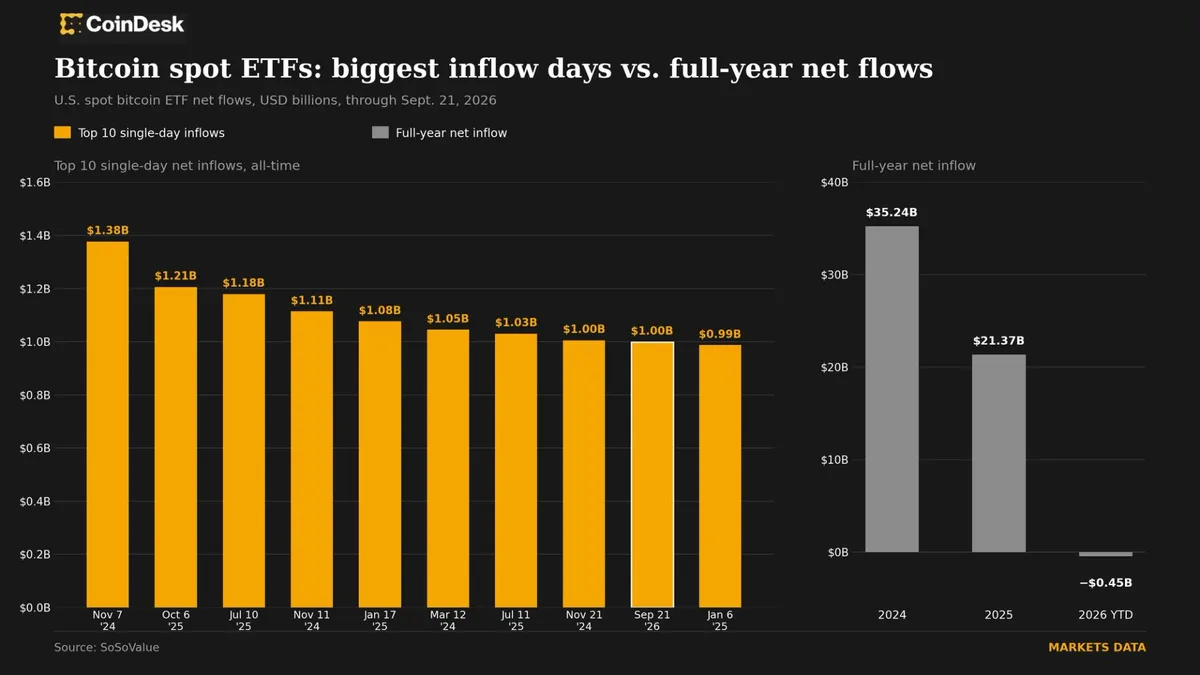
Spot bitcoin ETFs see nearly $1 billion inflow as bitcoin hits January highs

US spot Bitcoin ETFs see nearly $1 billion inflow, highest since October 2025

Bitcoin's rise to $86,000 restores profitability for ETF investors

Apple and Google seek crypto experts, signaling potential stablecoin initiatives

ECB initiates bond purchases using its own funds in crypto-linked system