Three networks halt operations but recovery of stolen funds varies
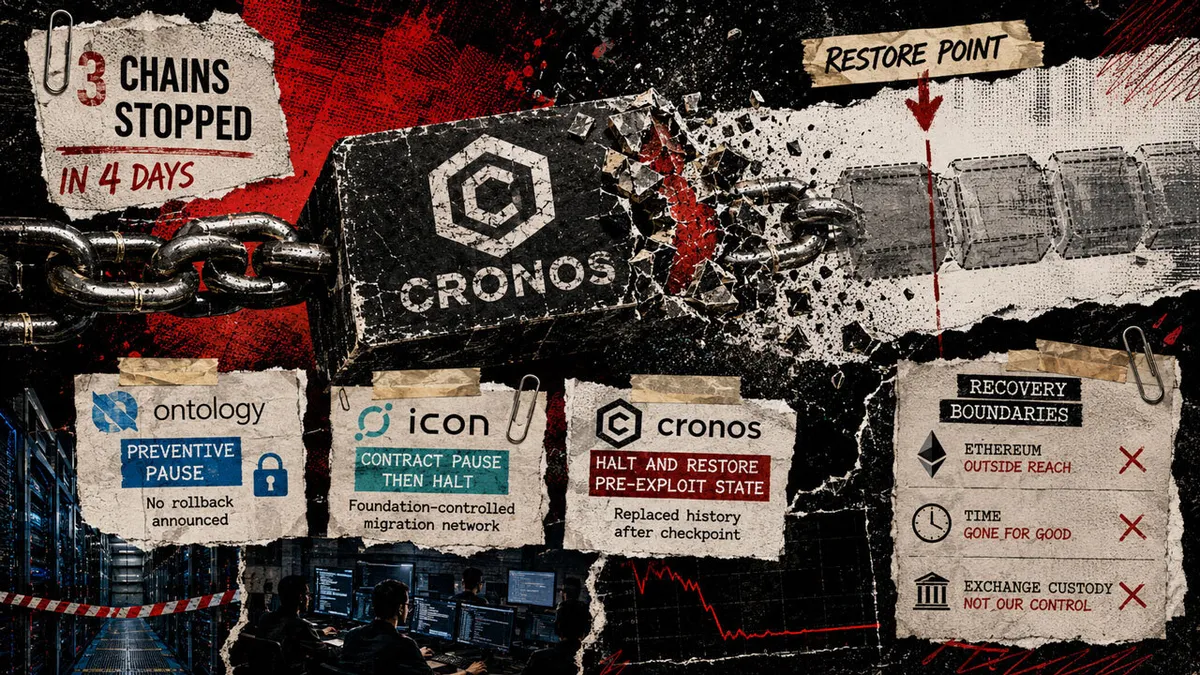
In a notable turn of events, three blockchain networks–Cronos, Ontology, and ICON–decided to halt their operations in response to security breaches, illustrating the complexities involved in managing emergency situations in the cryptocurrency space. Cronos managed to restore its pre-exploit state, while Ontology paused operations before confirming any losses. Conversely, ICON experienced a more challenging situation, as it halted its network only after assets had already reached exchanges, raising questions about the effectiveness of these emergency measures.
The context of these incidents highlights the varying approaches that blockchain networks can take when faced with security threats. Each of the three networks employed emergency powers to mitigate potential losses, but the outcomes were dramatically different. Cronos' quick restoration demonstrates a proactive response, while Ontology's preemptive pause suggests a strategy focused on prevention. In contrast, ICON's experience serves as a cautionary tale about the limitations of halting operations once assets have been compromised.
The implications for the market are significant, as these events underline the inherent risks associated with blockchain technology and the potential for loss when security is breached. Investors and users may become increasingly wary of the capabilities and responses of blockchain networks in the face of such incidents. The uncertainty around asset recovery also raises questions about the reliability of these systems, which could affect overall confidence in the cryptocurrency ecosystem.
Industry reactions have varied, with experts weighing in on the effectiveness of each network's response. Some believe that Cronos set a strong precedent for how to manage such crises, while others criticize ICON's handling of the situation, emphasizing the importance of timely interventions. Experts also point out that these events highlight the need for more robust security measures and clearer protocols for emergency situations across the industry.
Looking ahead, it is likely that we will see more discussions around best practices for emergency responses among blockchain networks. The varying outcomes from these three cases may prompt networks to reassess their security strategies and improve their capabilities for asset recovery. As the industry continues to evolve, these lessons could lead to stronger safeguards and a more resilient ecosystem for all participants.

CoinMagnetic Team
Crypto investors since 2017. We trade with our own money and test every exchange ourselves.
Updated: September 2026
From our insights:
Related news

Untethered jailbreak on iPhone 18 Pro survives reboot at Hexacon event

Scammer gets scammed in Ledger spy-chip exploit, loses almost $5 million in bitcoin

Hacken data shows Bitget and Liquid exploits drive Q3 crypto losses near $1.2B

AI researchers urge strict internet isolation for advanced models

Aptos deploys Encrypted Mempool to neutralize frontrunning and sandwich exploits