2026 sees six US bank failures, but assets drop to $1.43 billion
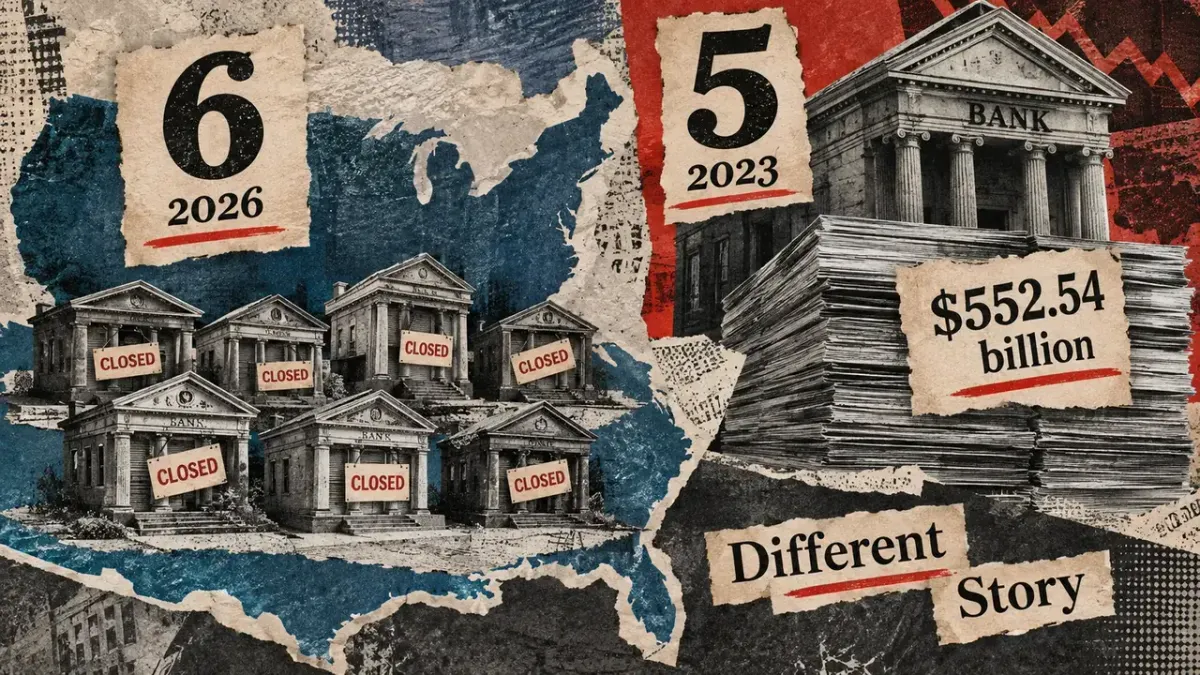
As of 2026, six banks in the United States have failed, marking one more failure than in the entirety of 2023. This statistic might evoke memories of the banking crisis that significantly impacted markets just a few years ago, particularly with the collapse of notable institutions like Silicon Valley Bank. However, a closer examination reveals that these six banks collectively held approximately $1.43 billion in assets, a stark contrast to the roughly $552.54 billion in assets of the banks that failed in 2023. This discrepancy prompts a deeper consideration of what these failures mean in the current economic landscape.
The context surrounding these bank failures is crucial. In 2023, the banking sector faced extreme volatility, largely driven by rising interest rates and economic uncertainty. The failures during that period were characterized by a much larger scale and had significant repercussions not only for the banks involved but for the wider financial system. In contrast, the current failures in 2026 have occurred in a more controlled environment, with regulators having implemented measures to mitigate risks following the lessons learned from previous crises.
The implications of these recent bank failures on the market could be seen as relatively contained. With the total assets involved being significantly lower than those in 2023, the potential for widespread panic or systemic risk appears diminished. This might provide a degree of reassurance to investors and the public, suggesting that the current banking landscape is more resilient than it was just a few years ago. However, it also raises questions about the underlying reasons for these failures and whether they might signal issues within specific sectors of the economy.
Industry reactions to the latest bank failures have been mixed. Some experts emphasize the importance of viewing these events within the larger context of the financial system's stability, highlighting that the regulatory frameworks now in place have likely helped to prevent more severe repercussions. Others caution that any bank failure, regardless of size, should be taken seriously as it could indicate vulnerabilities in certain markets. The general consensus seems to be that while the situation is not as dire as in 2023, continuous vigilance is essential.
Looking ahead, the financial community will be keen to monitor any further developments. Analysts will likely focus on the economic conditions that contributed to these bank failures and whether they are indicative of broader trends in the banking sector. Additionally, regulatory bodies may reinforce existing measures or introduce new ones to foster confidence and stability in the financial landscape, ensuring that the lessons of the past are not forgotten.

CoinMagnetic Team
Crypto investors since 2017. We trade with our own money and test every exchange ourselves.
Updated: October 2026
From our insights:
Related news

Key senators exit as Congress prepares to reset crypto legislation efforts

Community banking group challenges OCC's crypto trust bank charters in lawsuit

Court ruling ends LIBRA memecoin lawsuit, leaving investors in limbo

New SEC crypto rules threaten small advisers, but big firms win

Stablecoin issuers have replaced 40% of China’s lost US Treasury demand