SEC warning over crypto yield vaults puts DeFi’s secret human controllers in the crosshairs
The recent warning issued by the U.S. Securities and Exchange Commission (SEC) regarding crypto yield vaults has stirred significant discussions within the decentralized finance (DeFi) community. The SEC highlighted concerns about the human controllers behind these yield-generating vaults, emphasizing that while the decentralized nature of DeFi often obscures oversight, there are still individuals or entities that can be held accountable. This regulatory stance aligns with the SEC's broader mission to ensure investor protection and market integrity, suggesting that the agency is keenly focused on the intersection of traditional finance principles and the rapidly evolving crypto landscape.
To understand the implications of this warning, it is crucial to contextualize the SEC's approach to DeFi. Historically, the SEC has been cautious but clear about its stance on cryptocurrencies and related financial products. The commission has consistently indicated that many crypto assets could qualify as securities under U.S. law, which would subject them to stringent regulatory requirements. Yield vaults, often seen as innovative financial instruments that allow users to earn returns on their crypto holdings, are now under scrutiny as they blur the lines between traditional investments and decentralized finance. This evolving regulatory landscape reflects the SEC's ongoing efforts to adapt its frameworks to new financial technologies while ensuring that investor protections remain intact.
The SEC's warning is significant for the market as it introduces a layer of uncertainty around the operational models of DeFi projects. Investors and users of yield vaults may face increased scrutiny, potentially leading to a decline in participation in these platforms. Moreover, the warning could prompt developers to alter their strategies to comply with regulatory standards, potentially stifling innovation. This regulatory pressure might also lead to increased consolidation within the DeFi sector, as smaller projects may struggle to navigate compliance issues while larger, more established players have the resources to adapt.
Reactions from industry experts and stakeholders have been mixed. Some view the SEC's warning as a necessary step towards greater accountability in DeFi, arguing that having identifiable parties responsible for operations can enhance investor confidence. Others, however, express concern that such regulatory measures may contradict the foundational principles of decentralization and autonomy that underpin the DeFi movement. Experts warn that over-regulation could stifle innovation and drive projects to jurisdictions with more favorable regulatory environments, potentially resulting in a fragmented global crypto landscape.
Looking ahead, it will be interesting to see how the DeFi community responds to the SEC's warning. Developers may need to reassess their operational models and consider implementing more transparent governance structures to mitigate regulatory risks. Additionally, as regulatory scrutiny intensifies, we may witness a shift towards greater collaboration between DeFi projects and regulatory bodies to find a balance that protects investors while preserving the core principles of decentralization. The outcome of this dynamic will likely shape the future of DeFi and its integration into the broader financial ecosystem.

CoinMagnetic Team
Crypto investors since 2017. We trade with our own money and test every exchange ourselves.
Updated: July 2026
From our insights:
Related news

Heatbit integrates 20 mining chips into an $899 water heater element

Lionel Messi chess advertisement featuring ChatGPT sparks viral debate over AI board setup and opening moves

A16z expands focus from crypto to AI and emerging tech investments

Uniswap v4 deploys aggregator hooks to route trades across external platforms
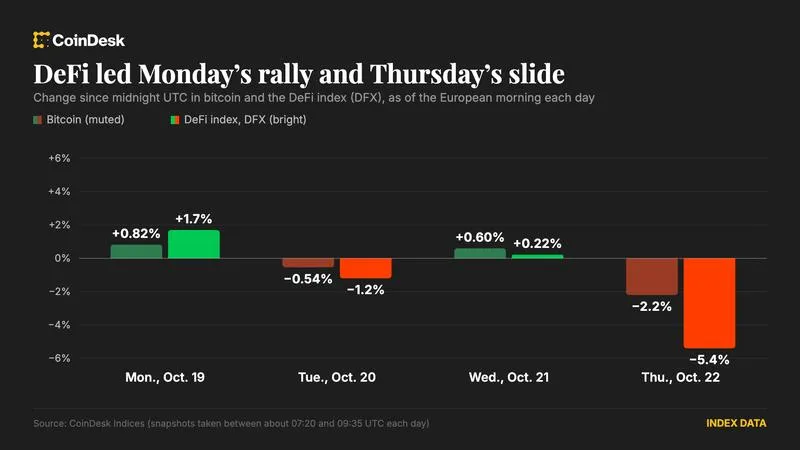
Bitcoin drops to around $81,600 amid renewed AI skepticism, DeFi tokens fall