Poolin was bitcoin's biggest mining pool and now it's filing for bankruptcy
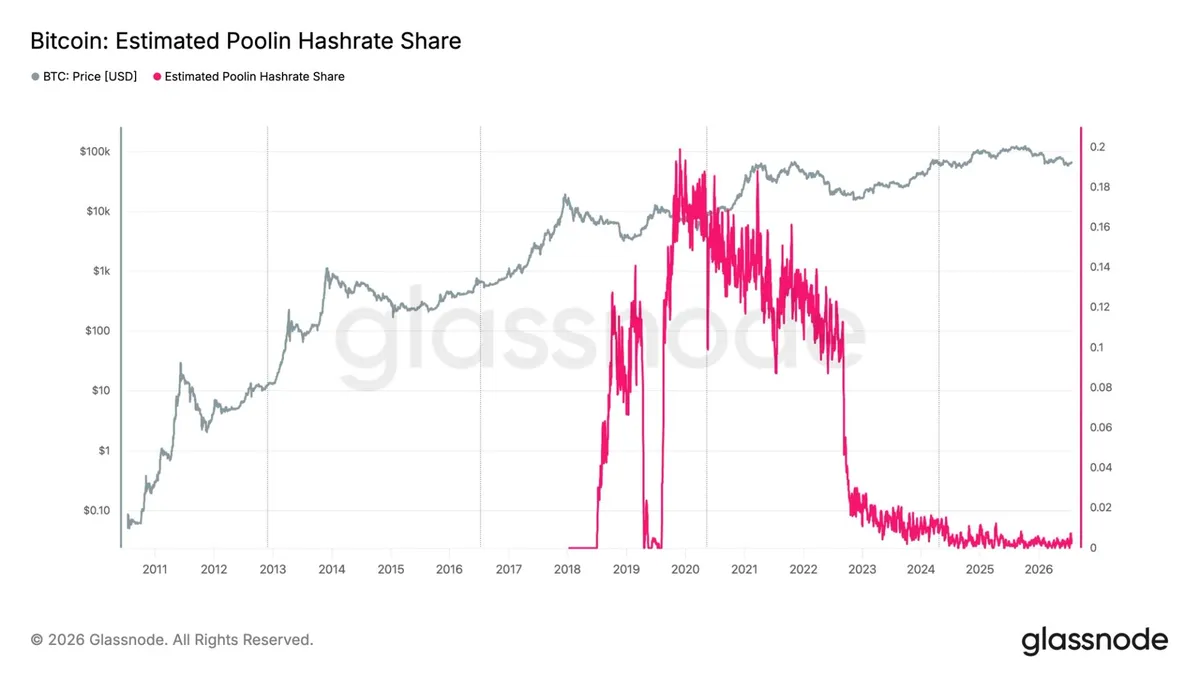
Poolin, once a titan in the Bitcoin mining sector, is now facing bankruptcy. The Singapore-based company, which at its peak controlled nearly 20% of Bitcoin's global hashrate, has announced plans to file for bankruptcy protection. In a startling turn of events, Poolin is reportedly carrying a debt of approximately $173 million as it attempts to navigate this financial turmoil. The company's struggles illustrate the challenges within the cryptocurrency mining industry, particularly in the wake of fluctuating market conditions and rising operational costs.
Contextually, Poolin emerged as a dominant player in the Bitcoin mining landscape during a time of significant growth for the cryptocurrency. Established in 2017, the company capitalized on the rapid expansion of Bitcoin’s popularity and the subsequent increase in mining activities. However, the landscape has shifted dramatically over the past year, with Bitcoin's price volatility, changes in mining difficulty, and heightened competition from other mining pools contributing to Poolin's financial downfall. The company's filing for bankruptcy serves as a stark reminder of the challenges that can arise in the crypto mining sector, especially when external market factors come into play.
This development is significant for the broader cryptocurrency market as it underscores the vulnerabilities within the mining ecosystem. Poolin's collapse could have ripple effects on other mining operations and the overall sentiment in the market. Investors and stakeholders may view this news as a signal of instability, potentially leading to increased caution in investments related to mining operations. Additionally, the loss of a major player like Poolin could affect Bitcoin's hashrate and, consequently, its security and transaction processing times.
Industry reactions to Poolin's bankruptcy have been varied, with some experts expressing concern over the implications for the mining sector as a whole. Analysts have pointed out that the company’s struggles may prompt other mining pools to reassess their operational strategies and financial management. On the other hand, some industry insiders have suggested that this could lead to consolidation within the market, as smaller players may seek to join forces or as larger entities look to acquire distressed assets. The situation has sparked discussions around the sustainability of mining operations and the need for a more resilient infrastructure in the face of market fluctuations.
Looking ahead, it remains to be seen how Poolin’s bankruptcy will play out and what it means for its employees, creditors, and investors. The company’s decision to sell off its remaining assets could provide some liquidity, but it also highlights the urgency of addressing the financial instability that has plagued the mining industry. As the market continues to evolve, the fate of Poolin may serve as a cautionary tale for other miners, emphasizing the importance of effective risk management and adaptability in a rapidly changing environment.

CoinMagnetic Team
Crypto investors since 2017. We trade with our own money and test every exchange ourselves.
Updated: July 2026
From our insights:
Related news

Mining difficulty climbs as smaller operators absorb abandoned equipment

Crypto miners pivot to GPU rentals as neoclouds power the artificial intelligence boom

CryptoQuant links surging Bitcoin hashrate to institutional public miner return

Microsoft scraps Nscale AI chip deal in the U.K. as power grid delays hit 2030s

Tokenized stocks sustain trading momentum after Wall Street closing bells