Perplexity's AI Agent Now Has a Brain That Learns From Its Own Mistakes
Perplexity has recently unveiled a groundbreaking update to its AI agent that significantly enhances its functionality–this new feature is dubbed the "Brain." This self-improving memory layer allows the AI to analyze its previous actions, tracking what strategies were successful and which ones fell short. By doing this overnight, the agent can refine its approach for future tasks, ultimately making them faster and more cost-effective. This innovation marks a notable advancement in AI capabilities, as it enables the agent to learn from its own mistakes, a characteristic that is crucial for any intelligent system.
To understand the significance of Perplexity's development, it's essential to consider the broader context of AI evolution. In recent years, AI systems have increasingly focused on machine learning and data analysis, but the capacity to self-correct has remained a challenge. Traditional models often required extensive tuning and human intervention to improve performance. With the introduction of the Brain, Perplexity is setting a new standard for autonomous learning, showcasing a shift towards AI systems that can grow and adapt independently–representing a critical step in creating truly intelligent agents.
This innovation matters significantly for the market as it could level the playing field among AI developers. Companies that integrate self-improvement capabilities into their systems may gain a competitive edge, as their products can become more efficient over time without the need for constant oversight. Additionally, this could lead to a broader adoption of AI technologies across various sectors, including finance, healthcare, and logistics, where optimization and cost reduction are paramount. As businesses look to enhance their operational efficiency, Perplexity's advancements may catalyze further investments in AI-driven solutions.
Industry reactions to this development have been largely positive, with experts praising Perplexity for pushing the boundaries of what AI can achieve. Many analysts suggest that this self-learning capability could inspire other companies to innovate in similar ways. However, some caution that while autonomous learning is promising, it also raises ethical considerations regarding accountability and decision-making. The potential for AI to make mistakes without human oversight calls for a balanced approach as the technology continues to evolve.
Looking ahead, the next steps for Perplexity may include further refining the Brain's learning algorithms and expanding its applications across different domains. The company could also focus on addressing the ethical implications of self-learning AIs to ensure that they are used responsibly. As the technology develops, we anticipate seeing how other firms respond to this challenge and whether they adopt similar self-improvement features in their own AI systems. The future of AI appears to be one of continuous learning and adaptation, and Perplexity is at the forefront of this exciting evolution.

CoinMagnetic Team
Crypto investors since 2017. We trade with our own money and test every exchange ourselves.
Updated: June 2026
From our insights:
Related news

ZetaChain votes to shut down Layer 1 network and move ZETA to Solana

Solana reduces block times by 17% with latest upgrade, boosting transaction freshness

Optimism secures upgrade for Superchain to enable interoperability
Solana boosts transaction size by 3x amid surge in network activity
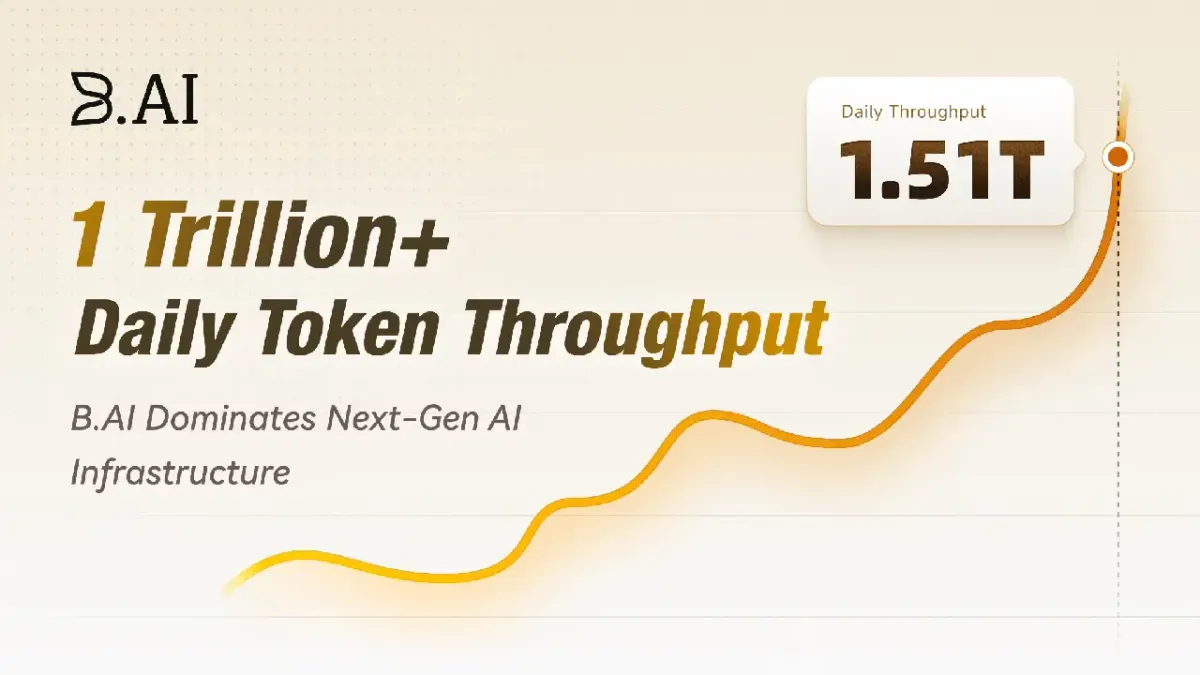
B.AI achieves record 1.51 trillion tokens daily throughput for AI infrastructure