Perpetual futures could become crypto's next ETF moment

The recent approval of perpetual futures in the U.S. marks a significant milestone for the cryptocurrency market, as it presents a new avenue for trading that could attract sophisticated traders and institutional investors alike. John Palmer, head of derivatives at Kraken, expressed optimism about this development, suggesting that these financial instruments could replicate the transformative impact that exchange-traded funds (ETFs) had on the crypto landscape. By enabling traders to take leveraged positions on cryptocurrencies without an expiration date, perpetual futures could enhance liquidity and provide more innovative trading strategies.
To understand the implications of this approval, it is essential to consider the background of perpetual futures. These instruments allow traders to speculate on the price of an asset without the constraints of traditional futures contracts, which typically have specific expiration dates. This flexibility has made perpetual futures increasingly popular in the crypto space, especially outside the U.S., where platforms like Binance and BitMEX have already established a strong foothold. The recent regulatory green light in the U.S. signals a growing acceptance of these products, which could lead to a more mature trading environment.
The significance of this development for the market cannot be overstated. The introduction of perpetual futures is likely to draw in more sophisticated traders who are eager to leverage their positions and hedge against market volatility. This influx of professional market participants could lead to increased liquidity and price discovery, ultimately contributing to a more stable and robust crypto ecosystem. Additionally, as institutional players begin to explore these new instruments, we may see a broader acceptance of cryptocurrencies in traditional financial markets, reminiscent of the enthusiasm generated by the launch of Bitcoin ETFs.
Industry reactions to the news have been largely positive, with many experts recognizing the potential of perpetual futures to reshape trading dynamics. Analysts believe that the approval could catalyze a new wave of innovation in crypto derivatives, encouraging exchanges to develop more sophisticated products. Palmer’s insights underscore a growing sentiment in the industry that the long-awaited institutional adoption of cryptocurrencies is on the horizon, and perpetual futures could serve as a gateway for many.
Looking ahead, the success of perpetual futures will likely depend on how well market participants adapt to these new offerings and the overall regulatory environment. As trading strategies evolve and more players enter the space, the landscape may shift significantly. We anticipate that exchanges will focus on education and transparency to ensure that both retail and institutional investors can navigate this exciting new territory effectively. The coming months will be crucial in determining whether perpetual futures can indeed become crypto's next ETF moment.

CoinMagnetic Team
Crypto investors since 2017. We trade with our own money and test every exchange ourselves.
Updated: June 2026
From our insights:
Related news
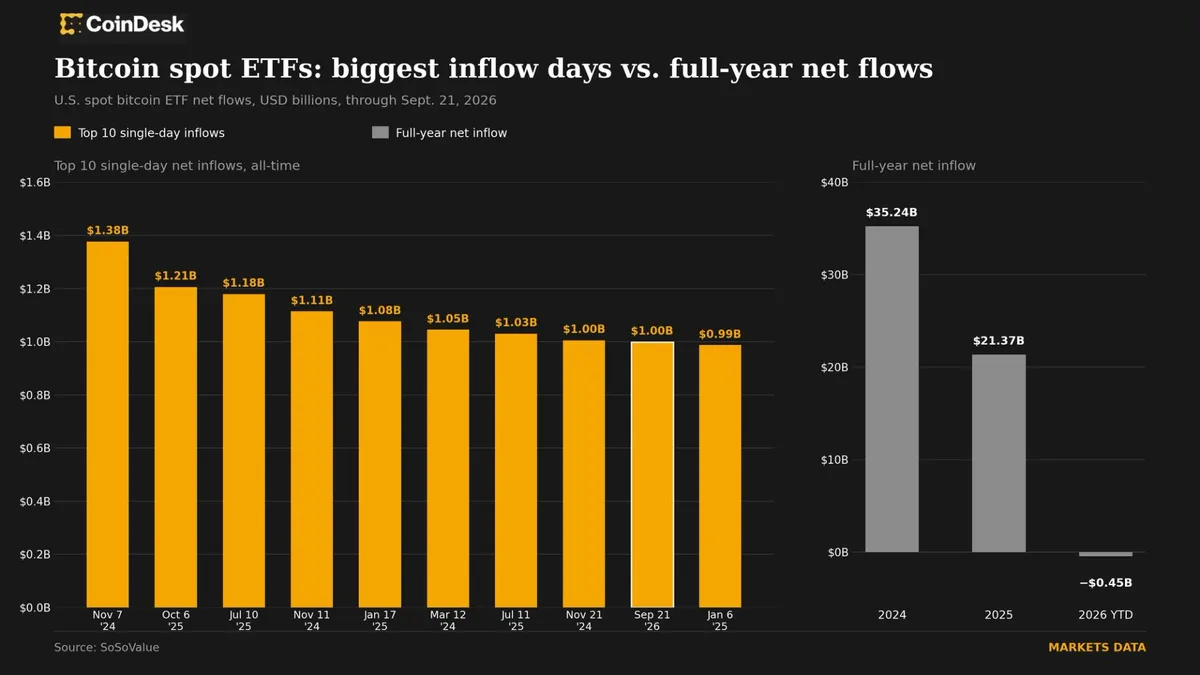
Spot bitcoin ETFs see nearly $1 billion inflow as bitcoin hits January highs

US spot Bitcoin ETFs see nearly $1 billion inflow, highest since October 2025

Bitcoin's rise to $86,000 restores profitability for ETF investors
Apple and Google seek crypto experts, signaling potential stablecoin initiatives

ECB initiates bond purchases using its own funds in crypto-linked system