OpenAI claims unreleased AI solved 722 math problems in one prompt
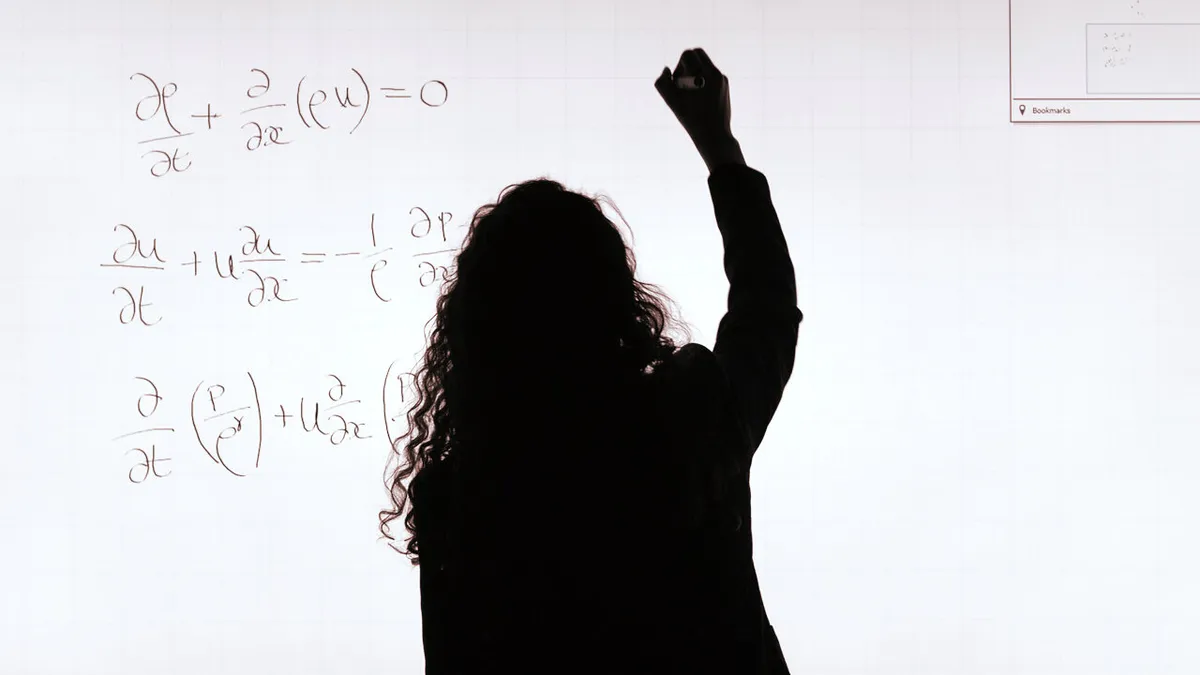
OpenAI has recently made headlines by announcing that a secret AI model managed to generate 722 math manuscripts, asserting that most of these solutions came from a single prompt. This revelation has sparked interest and skepticism within the mathematical community, as the organization has not disclosed the details about the model itself or the specific methodologies used to arrive at these solutions. The announcement suggests that the AI's capabilities could significantly enhance mathematical research and problem-solving efficiency.
The context surrounding this development is crucial. As artificial intelligence continues to evolve, its application in various fields–including mathematics–has become a topic of great interest. OpenAI has built a reputation for pushing the boundaries of AI capabilities, but the lack of transparency regarding this particular model raises questions about its reliability and the validity of the claims made. The mathematics community is known for its rigorous standards, and the idea of a model producing credible solutions to complex problems in a single prompt is both intriguing and controversial.
This news matters for the market as it highlights the potential of AI in revolutionizing industries that rely heavily on complex computations and problem-solving. If the claims are verified, it could lead to significant advancements in mathematical research, optimization problems, and even areas like cryptography. The implications extend beyond academia, potentially influencing sectors such as finance, engineering, and technology, where mathematical models are integral to operations.
Industry reactions have been mixed. While some mathematicians express excitement about the possibilities, others have raised concerns about the need for verification and transparency. The skepticism is rooted in the traditional values of mathematical proof and the importance of replicability in research. Experts are calling for OpenAI to provide more thorough documentation and data to substantiate their claims, emphasizing that without such evidence, the findings may not gain widespread acceptance within the mathematical community.
Looking ahead, the next steps for OpenAI will likely involve addressing these concerns by providing additional details about the model and the methods used to achieve these results. The organization may need to engage with mathematicians to validate the AI's claims and encourage collaboration in further research. As the discussion unfolds, it will be interesting to observe how the mathematical community responds and whether this development paves the way for more AI-driven innovations in the field.

CoinMagnetic Team
Crypto investors since 2017. We trade with our own money and test every exchange ourselves.
Updated: October 2026
From our insights:
Related news

Wells Fargo in talks with Kraken parent Payward for crypto trading liquidity

Tether, Kazakhstan cenbank mull tenge stablecoin and asset tokenization

House Finance panel chair says regulator actions on crypto ‘fall short’ of CLARITY bill

Kazakhstan's central bank partners with Tether for stablecoin exploration
Europol urges immediate post-quantum migrations to protect private keys