Institutional crypto investors rush to pull funds from exchanges after Binance hack

We are watching a significant wave of capital movement across the digital asset sector as institutional players swiftly pull their funds off centralized trading platforms. This sudden shift follows the recent multibillion-dollar breach at Binance, which has immediately rattled large-scale holders and risk management desks alike. Rather than leaving their capital exposed on exchanges, these deep-pocketed investors are actively opting for self-custody solutions and cold storage to safeguard their holdings against potential contagion.
This reactionary behavior highlights a persistent vulnerability in the centralized exchange model, where systemic risk can spread rapidly through the broader market ecosystem. Historically, major security incidents involving top-tier platforms tend to trigger immediate liquidity crunches and widespread panic, forcing both retail and institutional participants to reassess where they store their assets. The scale of the current outflow indicates that confidence in third-party custody is facing a severe test.
For the broader market, this mass migration of funds could lead to a temporary contraction in exchange liquidity, potentially amplifying near-term price volatility. When institutions pull billions in capital off trading venues, order books can thin out, making spot markets more sensitive to large trades. At the same time, this trend reinforces the core ethos of cryptocurrency decentralization, pushing the industry further toward non-custodial infrastructure and decentralized finance alternatives.
Industry analysts and security experts are currently divided on the long-term impact of these withdrawals, with some viewing it as a healthy maturation of risk management practices, while others warn of lingering reputational damage for centralized operators. Risk officers across major funds are reportedly updating their compliance frameworks and counterparty risk assessments to account for the heightened threat environment. Many commentators note that transparency and proof-of-reserves audits will no longer suffice without simultaneous overhauls of internal security protocols.
As we look ahead, the focus will undoubtedly shift to how centralized exchanges respond to this liquidity and trust deficit. Platforms will likely need to implement more rigorous cryptographic verifications and insurance funds to win back institutional capital. Meanwhile, the ongoing migration to self-custody suggests that hardware wallet providers and decentralized alternatives will capture an increasing share of market attention in the coming weeks.

CoinMagnetic Team
Crypto investors since 2017. We trade with our own money and test every exchange ourselves.
Updated: October 2026
From our insights:
Related news

Binance hacker fragments 18,270 bitcoins across 19 addresses as funds remain unfrozen

Lazarus Group suspected in nearly $6 billion Binance hack, researchers say

Binance co-ceo promises full reimbursement as hack triggers bnb selloff
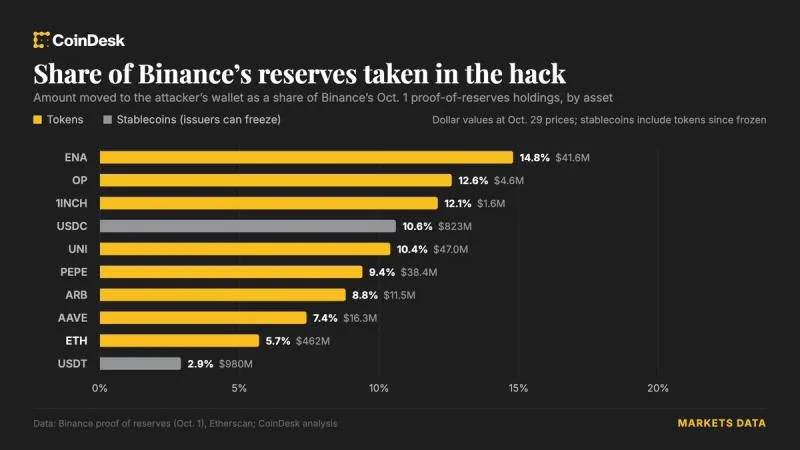
Binance reserve data confirms drained wallets directly backed customer assets
Binance hack may involve private key ‘misuse,’ not theft: Blockaid CEO