Binance hack may involve private key ‘misuse,’ not theft: Blockaid CEO
Recent security analyses surrounding the recent Binance incident point toward a sophisticated attack vector that relies on the manipulation of transaction-signing infrastructure rather than a straightforward private key breach. According to Blockaid CEO Ido Ben-Natan, the mechanics behind the security breach indicate that attackers likely leveraged compromised or misused signing mechanisms to authorize unauthorized transfers. This nuanced distinction shifts the focus from traditional wallet compromises to the vulnerabilities inherent in operational transaction workflows and backend authorization systems.
This emerging pattern draws immediate parallels to previous high-profile security incidents, most notably the recent Bybit hack. In both cases, the operational frameworks used by major centralized platforms to handle automated or high-volume transaction approvals appear to have been targeted by malicious actors. Security researchers and blockchain analysts are increasingly finding that modern attacks on centralized exchanges bypass standard perimeter defenses by subverting the internal tools trusted to sign and broadcast blockchain transactions.
For the broader cryptocurrency market, these findings carry significant weight regarding how centralized platforms manage their internal security hygiene. As exchanges continue to scale their operations, the infrastructure responsible for transaction signing remains a high-value target for sophisticated threat actors. Market participants are once again reminded that even the most robust cold storage solutions cannot entirely mitigate risks if the operational software and signing environments utilized by staff or automated systems are compromised from within or manipulated through authorization flaws.
Industry experts and cybersecurity firms have responded to the Binance disclosure by emphasizing the urgent need for enhanced visibility into transaction-signing pipelines. Many security professionals argue that traditional monitoring tools are no longer sufficient to catch nuanced misuses of administrative and operational privileges. The focus is rapidly shifting toward behavioral analysis of signing infrastructure and stricter multi-layered verification protocols for all outgoing transactions originating from institutional platforms.
As the investigation into the Binance incident continues to unfold, industry stakeholders will be closely watching for further technical disclosures from security vendors and exchange representatives. The insights provided by firms like Blockaid are expected to drive a broader review of transaction-signing architectures across the wider digital asset ecosystem. Platforms are likely to face increased pressure to adopt advanced validation frameworks that can detect and prevent unauthorized transaction authorizations before funds leave their reserves.

CoinMagnetic Team
Crypto investors since 2017. We trade with our own money and test every exchange ourselves.
Updated: October 2026
From our insights:
Related news
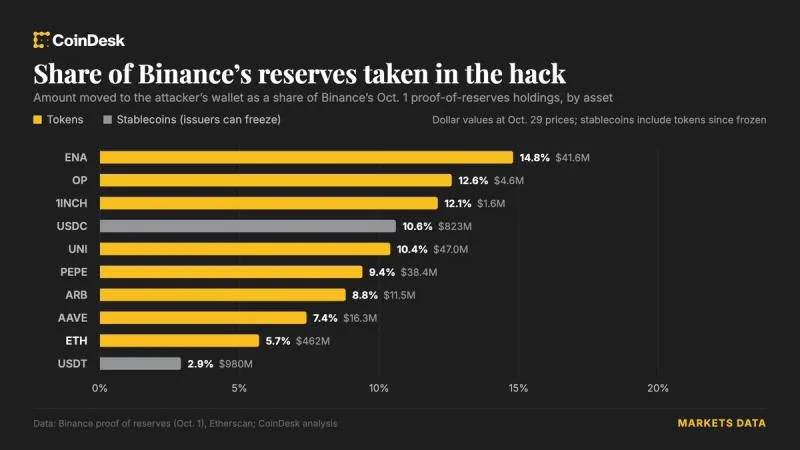
Binance reserve data confirms drained wallets directly backed customer assets
Binance probes $5.8 billion in suspicious outflows amid Tether and Circle actions
Binance faces $5.57 billion suspected drain as issuers freeze $1.8 billion

Binance probes Ethereum wallet breach as stablecoin issuers freeze $2.36 billion

Binance security breach triggers crypto market sell-off with BNB down 6 percent