How prices from the future fooled a crypto oracle into paying out up to $24 million
In a surprising turn of events, a crypto oracle known as Ostium reportedly fell victim to a sophisticated manipulation scheme that involved future-dated price reports. The incident has led to a staggering payout of up to $24 million, raising concerns about the reliability and security of oracle systems in the cryptocurrency space. According to the available information, unauthorized price data was able to circumvent standard checks, allowing the oracle to process these erroneous reports as valid. As a result, significant funds were disbursed without proper verification, leaving many in the industry questioning the safeguards in place.
The use of oracles in blockchain technology has become increasingly vital, as they serve as intermediaries that provide real-world data to smart contracts. This incident highlights a critical vulnerability in an ecosystem that relies heavily on accurate data feeds. Historically, oracles have faced scrutiny over their potential to be manipulated, but this event underscores the need for stronger verification mechanisms. As Ostium prepares to release its final loss accounting and conduct a postmortem analysis, stakeholders are anxious to learn how such a breach was possible and what measures can be implemented to prevent future occurrences.
This incident has significant implications for the broader cryptocurrency market. The trust placed in oracle systems is essential for the functioning of decentralized finance (DeFi) platforms, insurance protocols, and other applications that rely on accurate external data. A breach of this magnitude could instill doubt in the reliability of oracles, potentially leading to decreased usage of these systems and a slowdown in innovation within the space. Furthermore, the fallout may prompt regulators to take a closer look at how oracles are governed, which could shape future industry standards and practices.
Reactions from industry experts have varied, with many expressing concern over the robustness of current oracle solutions. Some have called for more decentralized approaches to data validation, emphasizing that reliance on a single entity can create significant risks. Others have pointed to the need for enhanced monitoring tools and real-time data verification methods to catch discrepancies before they lead to substantial losses. This incident serves as a wake-up call for the entire crypto ecosystem, highlighting the importance of due diligence and the need for continuous improvement in security measures.
Looking ahead, the crypto community is likely to see a renewed focus on developing more resilient oracle systems. As Ostium conducts its internal review and releases its findings, other oracle providers may also take the opportunity to assess their own vulnerabilities. We anticipate discussions on industry-wide standards for data integrity and verification processes, which could lead to the implementation of new technologies designed to bolster trust in oracles. The outcome of this incident may ultimately shape the future of not only oracles but the entire landscape of decentralized applications reliant on accurate data feeds.

CoinMagnetic Team
Crypto investors since 2017. We trade with our own money and test every exchange ourselves.
Updated: July 2026
From our insights:
Related news

Bitcoin falls below $81,000 as Asian equities see sharp declines

Crypto market wipeout triggers nearly $1 billion in liquidations across majors
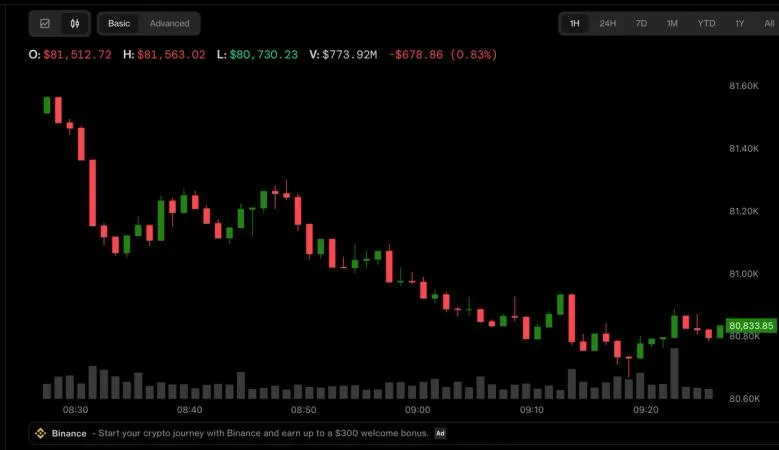
Federal Reserve rate fears pressure bitcoin alongside an 8 percent Kospi drop

Developer replicates Microsoft Office suite using Anthropic AI tool

Illinois groups seek summary judgment to permanently block 0.2% crypto tax