Financial systems evolve from Hawala to Swift amid security challenges

The evolution of financial systems has been marked by a continuous effort to move money safely and efficiently, a journey that spans over a millennium. From the ancient Hawala system, which relied on trust and personal networks, to the modern SWIFT network that facilitates international bank transfers, the mechanisms of monetary exchange have undergone significant transformations. Despite these advancements, the ongoing battle to ensure safety in financial transactions has become increasingly complex, as the demand for faster, frictionless transfers has opened doors to high-tech exploits and cyber threats.
Hawala originated in the 8th century and has been used widely across the Middle East and South Asia, allowing individuals to transfer money without the need for physical cash movement. This system, based on trust and social connections, set the stage for more formalized banking systems. In the 1970s, SWIFT emerged as a global messaging platform, ushering in an era of electronic communication between banks. While these systems have significantly improved transaction speeds and accessibility, they have also faced challenges from technological advancements that criminals exploit.
The implications of this evolution for the market are profound. As financial systems become more interconnected and digital, the potential for cyberattacks increases. Data breaches, fraud, and hacking incidents pose significant risks not just to individual users but also to the integrity of financial institutions. The need for robust security measures and regulations has never been more critical, as the financial sector navigates the delicate balance between innovation and safety.
Industry experts have pointed out that while the transition to digital solutions has streamlined processes, it has also created vulnerabilities that must be addressed. Many believe that collaboration between financial institutions and cybersecurity firms is essential to develop comprehensive strategies to combat these threats. Additionally, regulators are increasingly focusing on establishing frameworks that mitigate risks associated with digital transactions, ensuring that consumer protection remains a priority amidst the rapid evolution of financial technology.
Looking ahead, the financial industry must continue to adapt to the challenges posed by emerging technologies. As we move further into a digital age, the need for innovative solutions that prioritize both efficiency and security will shape the future of financial transactions. Institutions may need to invest in advanced technologies such as blockchain and AI to enhance security measures while maintaining the speed and convenience that modern consumers demand.

CoinMagnetic Team
Crypto investors since 2017. We trade with our own money and test every exchange ourselves.
Updated: August 2026
From our insights:
Related news

Aptos deploys Encrypted Mempool to neutralize frontrunning and sandwich exploits

UK Freezes $12M London Penthouse of Alleged Prince Group Finance Chief
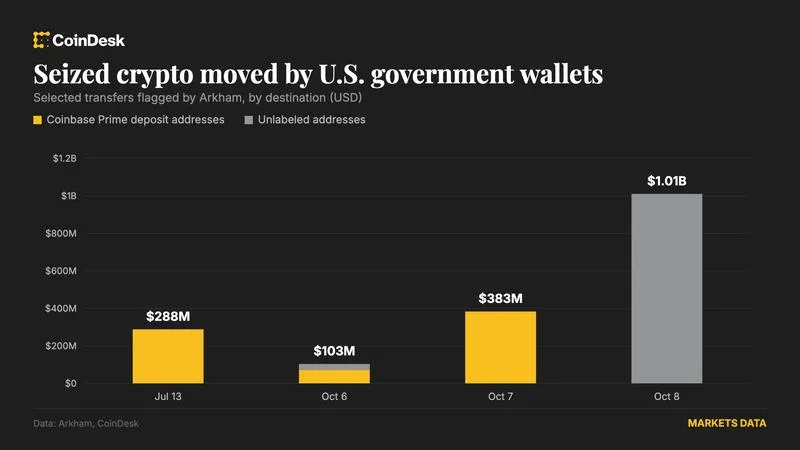
U.S. government moves $1 billion in bitcoin from Bitfinex hack wallet, no sale indicated

US government shifts $1B in Bitcoin following $770M Bitfinex recovery

Crypto lending surges 55% since July amid rising AI hack risks