For pension funds, tokenization’s real play is balance-sheet management, Fidelity’s Lai says

Fidelity International’s Giselle Lai recently emphasized that the most significant and promising application of tokenization for pension funds lies in balance-sheet management rather than merely providing around-the-clock liquidity. In her view, tokenization can streamline processes and enhance efficiency in managing assets, which is crucial for large institutional investors. Lai’s insights underline a shift in focus from traditional liquidity benefits of tokenized assets to the operational advantages they can offer in terms of financial management and reporting.
Historically, the concept of tokenization–transforming physical or traditional assets into digital tokens–has been associated with the promise of increased liquidity in markets that have long been characterized by inefficiencies. However, as the financial landscape evolves, experts like Lai are recognizing the broader implications of tokenization, particularly in the realm of institutional finance. As pension funds and large financial institutions grapple with complex asset portfolios and regulatory challenges, the potential for tokenization to simplify balance-sheet management is becoming increasingly relevant.
This perspective is particularly important as the market navigates through a period of heightened scrutiny and regulatory developments around digital assets. Traditional systems of asset management can often be cumbersome, involving multiple intermediaries and lengthy processing times. By adopting tokenized assets, institutions can improve transparency, reduce operational costs, and achieve more agile responses to market changes. This could fundamentally alter how pension funds manage their portfolios, potentially leading to more efficient capital allocation and better risk management practices.
Industry reactions to Lai’s comments have been largely positive, with many financial experts acknowledging the importance of focusing on operational efficiencies in the adoption of tokenization. Some analysts have pointed out that this approach may reposition tokenization as a strategic tool rather than just a technological innovation. Institutions that embrace this mindset may be better equipped to leverage the benefits of digital assets in a way that aligns with their long-term financial strategies.
Looking ahead, the discussion around tokenization and balance-sheet management is likely to gain traction as more institutions explore the practical applications of this technology. As regulatory frameworks continue to mature, the adoption of tokenized funds may become more widespread, paving the way for innovative financial products that can cater to the specific needs of large investors. The evolution of this space will be critical to watch, as it could redefine the operational landscape for pension funds and other institutional investors in the coming years.

CoinMagnetic Team
Crypto investors since 2017. We trade with our own money and test every exchange ourselves.
Updated: July 2026
From our insights:
Related news
Standard Chartered offers RLUSD custody in Dubai and plans LMAX collateral link

Genesis Digital pivot to AI is backed by an $894 million fundraise secured by SWI
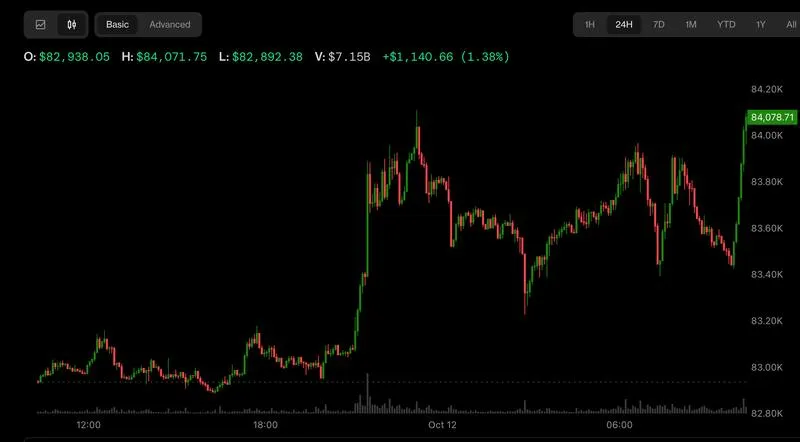
Bitcoin holds above $84,000 despite last week seeing over $600 million in ETF outflows
Bain Capital Crypto backs Bitcoin-native insurer in $37.5 million round

Spot ether funds log nine days of consecutive outflows as solana ends its run