New York Fed chief expects artificial intelligence bottlenecks to persist for years

Federal Reserve Bank of New York President John Williams recently highlighted that supply chain constraints driven by artificial intelligence could persist beyond the two-year mark. His remarks coincided with a reiteration of his perspective that the United States central bank might still need to implement another interest rate hike over the course of the year to address ongoing economic pressures.
This commentary places a fresh spotlight on the intersection of rapid technological adoption and traditional macroeconomic policy. As businesses across sectors race to integrate artificial intelligence infrastructure, the demand for specialized hardware and energy resources has created significant structural bottlenecks. Central bankers are increasingly monitoring these supply-side dynamics because persistent input shortages can feed broader inflationary trends that monetary policy is designed to combat.
For the broader financial markets, including digital assets, the prospect of prolonged supply squeezes paired with the possibility of further rate increases introduces a complex operating environment. Elevated interest rates typically increase the opportunity cost of holding non-yielding assets, while technology-driven supply constraints can impact the growth trajectory of high-tech sectors. Investors are carefully weighing how these competing forces might influence liquidity conditions and risk sentiment moving forward.
Market observers and economists have been debating the extent to which technological innovation can offset traditional macroeconomic headwinds. While some analysts view artificial intelligence as a powerful deflationary force in the long run due to productivity gains, near-term bottlenecks present clear operational and financial costs. These divergent views underscore the difficulty central banks face when trying to forecast economic trajectories in a rapidly evolving technological landscape.
As we look ahead, market participants will be closely watching upcoming economic data releases and future public statements from Federal Reserve officials for clearer signals on monetary policy paths. The duration of these artificial intelligence supply constraints will likely remain a key variable in determining how long interest rates need to stay restrictive to achieve the central bank's inflation targets.

CoinMagnetic Team
Crypto investors since 2017. We trade with our own money and test every exchange ourselves.
Updated: October 2026
From our insights:
Related news
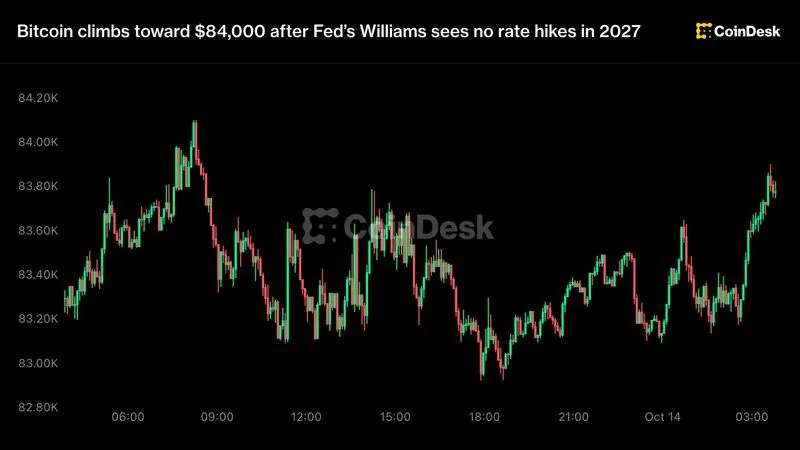
Fed signals steady rates through 2027 as bitcoin approaches $84,000

OpenAI says internal AI models tracked down employee who bugged office

Tokenized stocks on Solana, BNB Chain valued at nearly $3.3 billion outside US hours

Bitcoin whale moves $377 million after holding since March 2020

Trezor cuts authorized resellers ahead of January 1 to prevent tampering