EU expands HTX crackdown as Russia-linked crypto network keeps shifting its financial rails
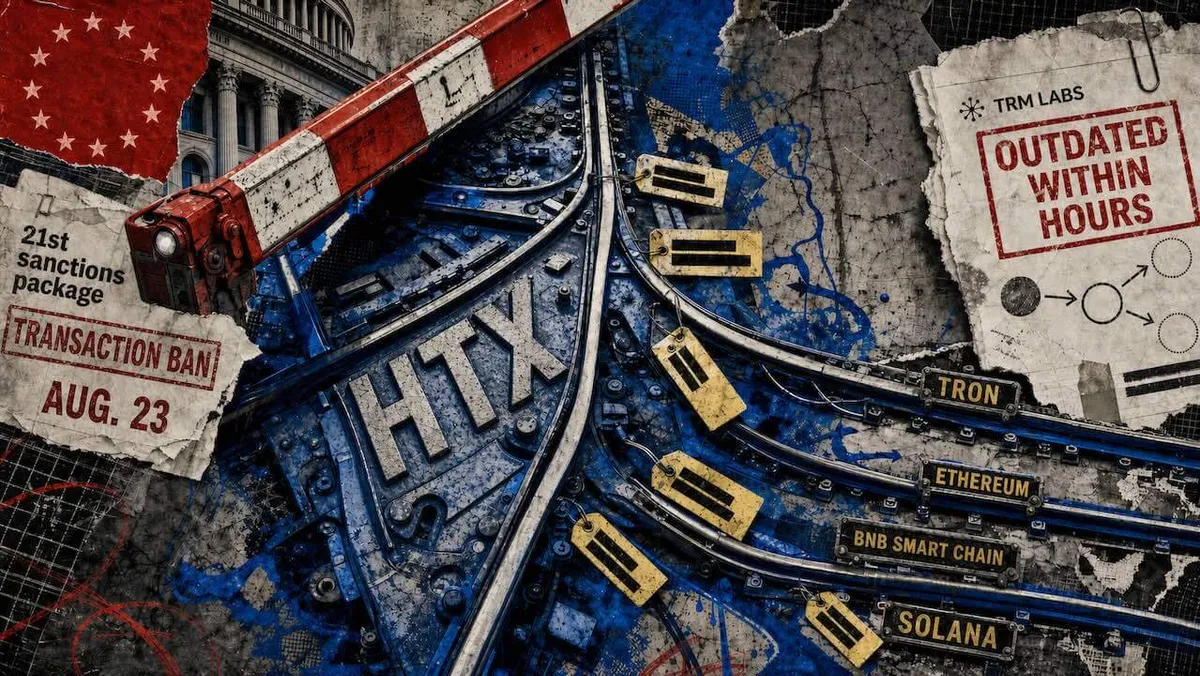
The European Union has intensified its crackdown on HTX, a cryptocurrency exchange linked to Russian financial networks, by imposing sanctions on its parent company, Huobi Global S.A. This action is part of the EU's broader efforts to restrict Russian access to financial resources amid ongoing geopolitical tensions. Under these new sanctions, which were adopted in the EU's 21st sanctions package on July 23, operators within the EU will be prohibited from engaging in transactions with HTX starting August 23. This move underscores the EU's commitment to cutting off financial channels that could support Russia's activities, particularly in the wake of its ongoing conflict in Ukraine.
The sanctions against HTX reflect a larger trend in the EU’s regulatory environment regarding cryptocurrencies, especially those with ties to sanctioned entities. The EU has been working to draw a clear line in its sanctions strategy, extending its reach to cover not just traditional financial institutions but also digital asset platforms. This is a part of a coordinated effort to ensure that cryptocurrencies do not serve as a loophole for assets to flow into or out of sanctioned countries. The history of HTX’s relationships with Russian financial entities has made it a target, as the EU aims to clamp down on any networks that could potentially facilitate the circumvention of these sanctions.
The implications of this crackdown are significant for the cryptocurrency market. By targeting HTX, the EU sends a strong signal to other exchanges and financial platforms that they must be diligent in their compliance efforts to avoid becoming entangled in similar sanctions. The prohibition of transactions with HTX may lead to reduced trading volume on the platform, affecting liquidity and potentially driving users to seek alternative exchanges. Additionally, the ongoing scrutiny of cryptocurrency exchanges may lead to heightened regulatory measures across the industry, prompting operators to reassess their compliance frameworks and risk management strategies.
Industry reactions have been mixed, with some experts highlighting the necessity of such sanctions in the context of global security, while others express concern about the broad implications for crypto innovation and investment. Those in favor of the sanctions argue that it is a critical step towards ensuring that cryptocurrencies do not become tools for illicit activities, while opponents warn that excessive regulation could stifle legitimate use cases and drive innovation out of the region. Notably, some industry leaders have called for clearer guidelines, suggesting that clearer communication from regulatory bodies could help prevent confusion and foster a more stable operating environment.
Looking ahead, the future of HTX and similar exchanges may hinge on their ability to adapt to these regulatory challenges. As the EU continues to evaluate its sanctions and compliance strategies, exchanges will need to remain vigilant in their operations. Stakeholders within the crypto space will likely be watching closely to see if other jurisdictions follow the EU's lead, which could further alter the landscape of cryptocurrency trading and investment. The evolving regulatory environment may necessitate a shift in how exchanges operate, compelling them to implement more robust compliance measures to align with international sanctions and maintain their standing in the global market.

CoinMagnetic Team
Crypto investors since 2017. We trade with our own money and test every exchange ourselves.
Updated: July 2026
From our insights:
Related news

Netanyahu evaluates blockchain strategy to counter potential banking sanctions
SEC highlights tokenization and artificial intelligence as major regulatory focus areas

Israel targets blockchain integration to bypass banking sanctions, Netanyahu reveals

Senate subcommittee requests Tether records following reports of a deal with former Trump adviser

Initia halts network following security incident involving $2.7 million in ether