Crypto steadies as Iran-U.S. pause sends oil tumbling, lifts risk assets
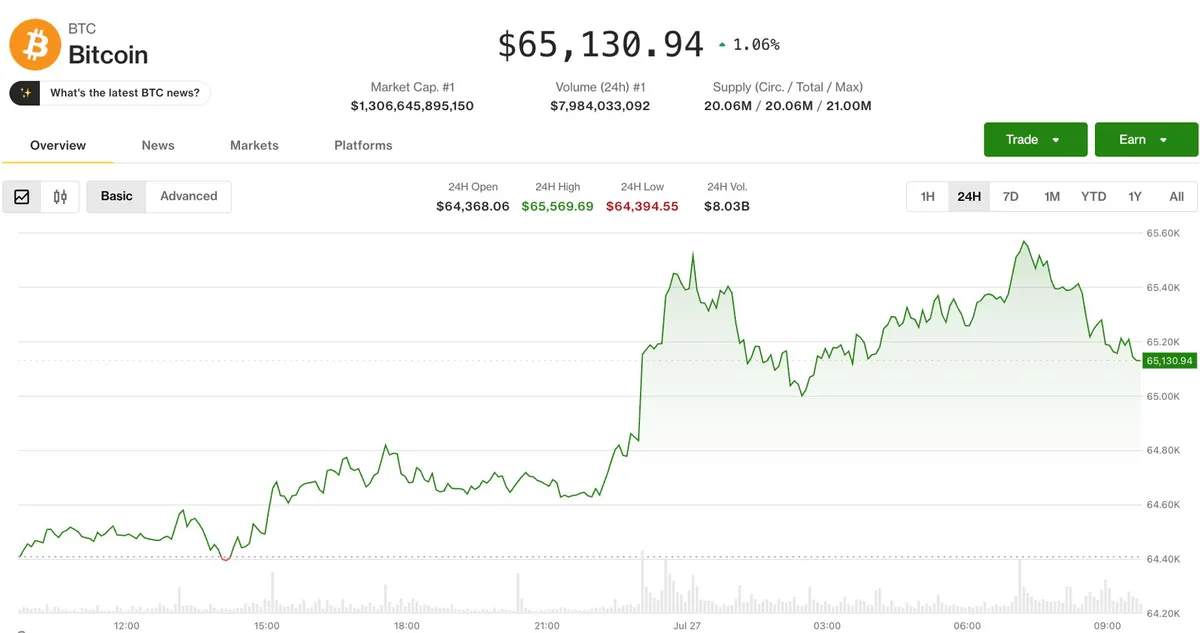
In a significant development in the global financial landscape, Brent crude oil prices experienced a sharp decline of 7% following a pause in hostilities between the United States and Iran in the Strait of Hormuz. This easing of tension not only impacted the oil market but also provided a conducive environment for risk assets, including equities and decentralized finance (DeFi) tokens. As the dust settled, Bitcoin maintained its position near the $65,000 mark, creating a sense of anticipation ahead of a crucial Federal Reserve decision scheduled for Wednesday.
The backdrop to this situation involves ongoing geopolitical tensions in the Middle East, particularly around the Strait of Hormuz, a vital artery for global oil supply. The recent escalation between the U.S. and Iran had raised fears of potential disruptions in oil shipments, consequently driving prices up. However, with the announcement of a pause, market sentiment shifted dramatically. Investors are now reassessing their positions, leading to a ripple effect across various asset classes, including cryptocurrencies, which have historically shown sensitivity to broader market trends.
This pause in hostilities is significant for the cryptocurrency market, as it suggests a potential stabilization of global risk factors that have been pivotal in influencing investor behavior. The decline in oil prices often signals a shift in monetary policy expectations, particularly with the Fed's upcoming decision. Should the Federal Reserve opt for a more dovish stance, it could further boost risk assets, including Bitcoin, which has been viewed as a hedge against inflation and economic uncertainty.
Industry experts have responded positively to this development, with many emphasizing the interconnectedness of traditional and digital assets. Analysts suggest that the recent stability in oil prices could enhance investor confidence in the crypto space, particularly as Bitcoin approaches its all-time highs. Some commentators highlight that this moment could mark a turning point for DeFi tokens, which are gaining traction as alternatives to traditional financial systems amid fluctuating global markets.
Looking ahead, all eyes will be on the Federal Reserve's decision and its implications for the market. If the Fed signals a continuation of accommodative policies, we may witness an influx of capital into risk assets, further solidifying the upward momentum in the crypto market. Conversely, any hawkish signals could introduce volatility. As the landscape evolves, the interplay between geopolitical events and market sentiment will remain a critical factor shaping the future of cryptocurrencies and other risk assets.

CoinMagnetic Team
Crypto investors since 2017. We trade with our own money and test every exchange ourselves.
Updated: July 2026
From our insights:
Related news

Heatbit integrates 20 mining chips into an $899 water heater element

Lionel Messi chess advertisement featuring ChatGPT sparks viral debate over AI board setup and opening moves

A16z expands focus from crypto to AI and emerging tech investments

Uniswap v4 deploys aggregator hooks to route trades across external platforms
Bitcoin drops to around $81,600 amid renewed AI skepticism, DeFi tokens fall