Fake GIWA blockchain scam lures 1,333 wallets to steal $2 million
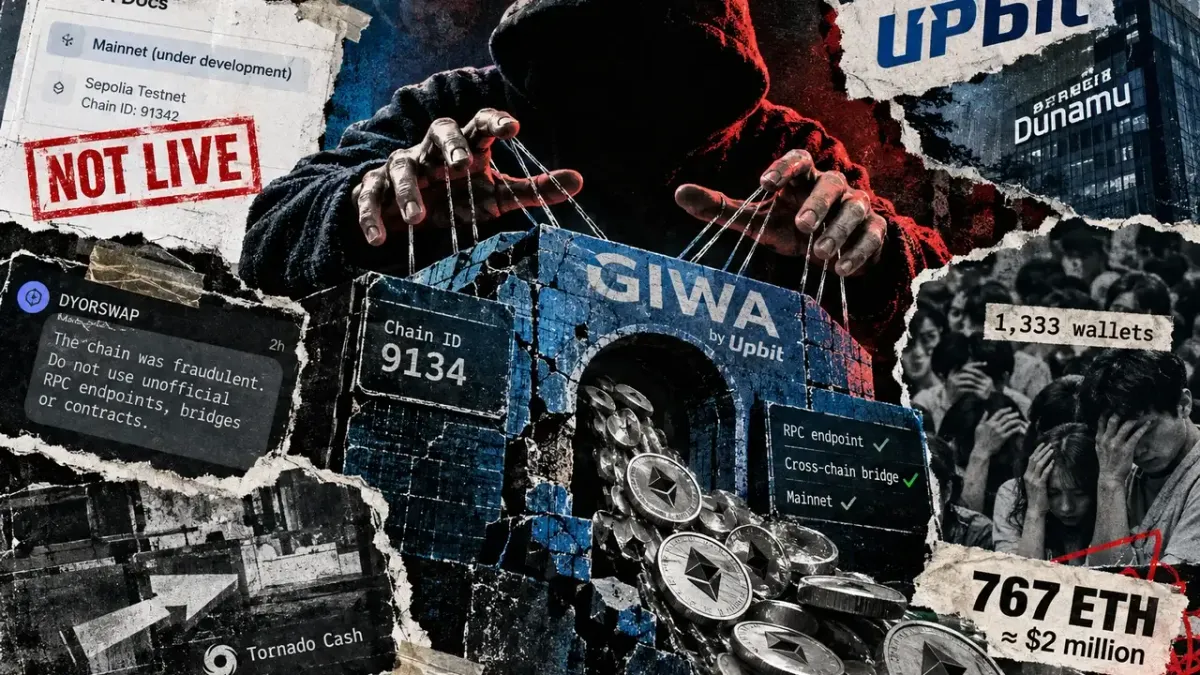
Scammers have successfully created a counterfeit version of the Upbit-backed GIWA blockchain, leading to the theft of over $2 million. By luring unsuspecting users into depositing 767 ETH, the fraudsters managed to drain almost all of these funds from a total of 1,333 wallets. The fake network was designed to mimic GIWA's anticipated Ethereum Layer 2 mainnet, complete with an RPC endpoint, a cross-chain bridge, and a Chain ID of 9134, which is the identifier associated with the legitimate GIWA blockchain.
The GIWA blockchain has been anticipated within the crypto community, particularly due to its support from reputable exchanges like Upbit. This context made the fraudulent operation more believable, as potential victims would see the connection and perhaps assume that they were engaging with a legitimate project. The scammers not only replicated the technical aspects of the blockchain but also capitalized on the excitement and anticipation surrounding GIWA, allowing them to deceive a significant number of users.
This incident raises serious concerns about the security and integrity of blockchain projects, particularly those that are in development or awaiting launch. As the cryptocurrency market matures, the emergence of sophisticated scams like this one poses a threat to investor confidence. The ability of scammers to create convincing replicas of legitimate projects can lead to substantial financial losses, as seen in this case. The theft of $2 million also highlights the need for increased vigilance among investors, as they must be cautious of where they are depositing their funds.
Industry reactions have been swift, with experts condemning the deceptive practices used by these scammers. Many emphasize the importance of due diligence and thorough research before engaging with new blockchain projects. Cryptocurrency advocates are also calling for stronger regulatory measures to protect investors from similar schemes in the future. The incident serves as a reminder of the vulnerabilities present in the rapidly evolving crypto landscape, underscoring the need for both technological solutions and community awareness to combat fraud.
Looking ahead, it is crucial for the industry to address these vulnerabilities through education and improved security measures. Projects like GIWA may need to implement more robust verification processes to help distinguish between legitimate platforms and fraudulent clones. Additionally, community-driven initiatives to report and flag suspicious activities could play a significant role in preventing future scams, fostering a safer environment for all crypto participants.

CoinMagnetic Team
Crypto investors since 2017. We trade with our own money and test every exchange ourselves.
Updated: September 2026
From our insights:
Related news

Bitcoin ETFs draw $2.4B in biggest inflow week since October 2025

South Korea considers easing market maker restrictions after JPYC spikes

Vitalik Buterin says Hegotá could be Ethereum’s last ‘normal’ fork
Bitcoin and Nasdaq futures drop amid Trump's Iran strike comments

September 30 marks $202 billion US Treasury settlement that may impact Bitcoin