Crypto advocacy group challenges Senator Warren's claims on OCC charters

In a recent development, The Digital Chamber, a prominent crypto advocacy group, has taken a stand against claims made by Senator Elizabeth Warren of Massachusetts. The senator asserted that the Office of the Comptroller of the Currency (OCC) may have breached U.S. banking laws by approving charters for cryptocurrency companies. In response, The Digital Chamber has called on the OCC to defend its charter applications, emphasizing the importance of regulatory clarity and support for the burgeoning digital asset sector.
Senator Warren's remarks are part of a broader critique of the cryptocurrency industry, which she has often characterized as lacking adequate oversight and posing risks to the financial system. Her concerns have been echoed by various lawmakers and regulators who advocate for stricter regulations within the sector. The OCC, under the leadership of its current and previous administrations, has sought to create a framework that allows crypto businesses to operate within the traditional banking system. This backdrop highlights the ongoing tension between traditional financial institutions and the rapidly evolving world of digital assets.
The implications of this dispute are significant for the cryptocurrency market. Should the OCC be forced to retract its approvals or face increased scrutiny, it could lead to uncertainty for crypto firms that rely on these charters to operate legally within the U.S. Such a scenario might stifle innovation and investment in the sector, which has already faced challenges from regulatory bodies. Conversely, if the OCC stands firm in its decisions, it could bolster confidence among crypto businesses and investors, potentially leading to a more robust market.
Industry reactions to Senator Warren's claims have been mixed, with many experts supporting The Digital Chamber's call for OCC clarification. Some believe that a clear defense of the charters could serve as a precedent for future regulatory actions, setting a standard for how digital assets are treated within the financial system. Others express concern that continued political pressure on regulators may result in overly restrictive policies that could hinder the growth of the cryptocurrency ecosystem.
Looking ahead, it remains to be seen how the OCC will respond to these challenges. The agency's next steps will be crucial in determining the regulatory landscape for cryptocurrency companies in the U.S. as they navigate an increasingly complex environment. The ongoing dialogue between lawmakers, regulatory bodies, and industry advocates will likely shape the future of crypto regulation and its impact on the broader financial industry.

CoinMagnetic Team
Crypto investors since 2017. We trade with our own money and test every exchange ourselves.
Updated: May 2026
From our insights:
Related news

Reap aims to enhance cross-border FX with non-USD stablecoins including peso

ECB and EU central banks propose liquidity thresholds for stablecoins
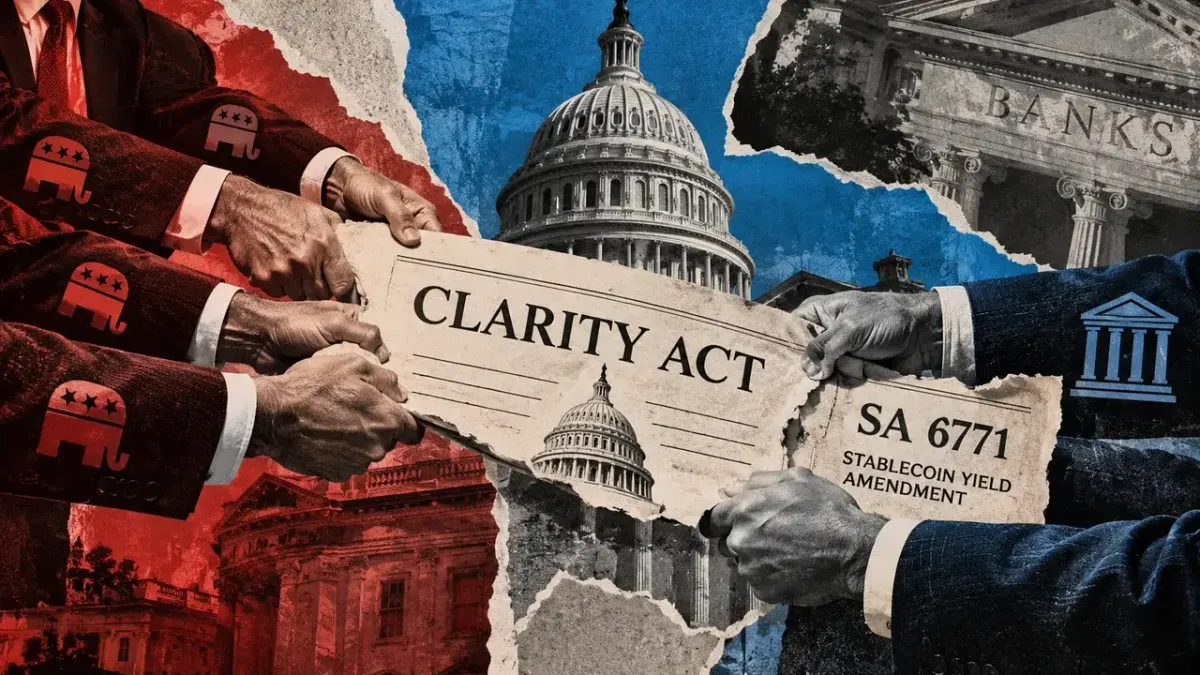
Four GOP senators backing CLARITY Act seek changes to stablecoin provisions
US investigates Binance for potential Iran-linked trading violations

Crypto sector emerges as top donor with $206 million in midterms backing