$130 million in Bitcoin losses from Coldcard crisis expose self-custody risks
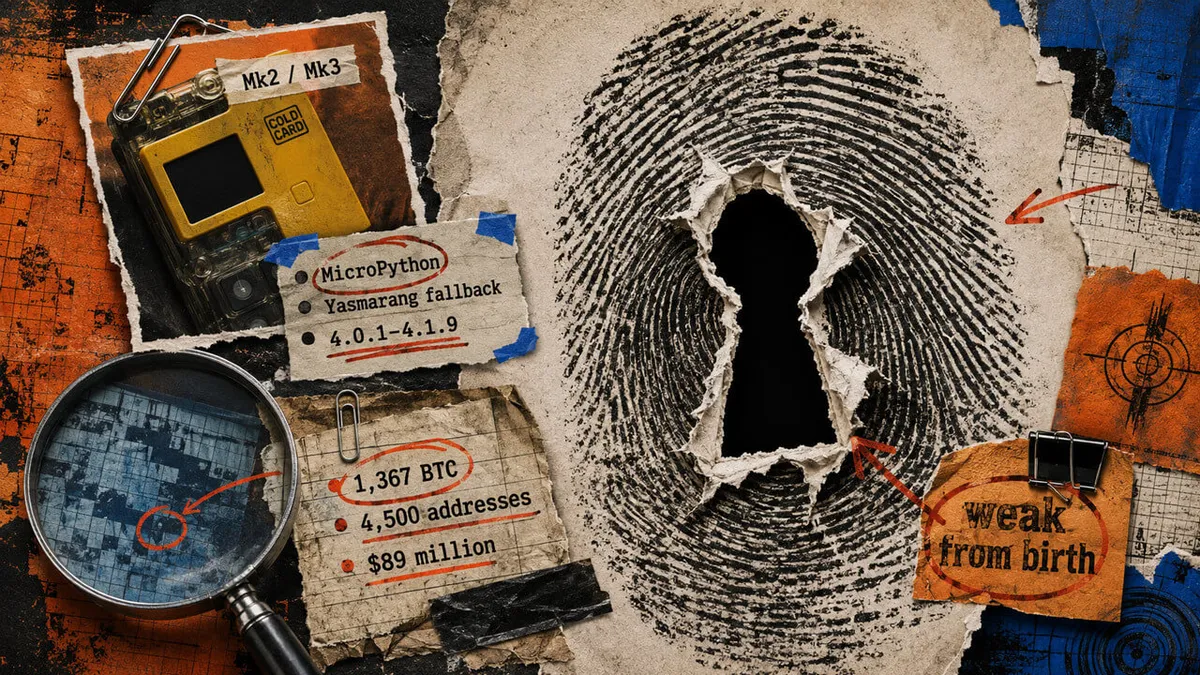
Recent developments have unveiled a significant crisis for users of Coinkite's Coldcard wallets, with losses estimated to exceed $130 million. This situation stems from a firmware defect identified by Block's Bitcoin Engineering and Security team, along with independent Bitcoin Core developers. The flaw is particularly concerning as it compromised the wallet's random-number generation before any user even interacted with a seed phrase, thus highlighting a critical vulnerability in self-custody practices.
The Coldcard wallets are traditionally regarded as a secure means of storing Bitcoin, with their design emphasizing the principle of “not your keys, not your coins.” However, this incident has raised important questions about the reliability of trusting a single device to generate cryptographic keys. The bug redirected the device's random-number generation from its intended STM32 hardware source to MicroPython's capabilities, resulting in potential exploitation and loss of user funds.
This crisis is significant for the broader market as it underscores the vulnerabilities that can arise even in well-regarded security solutions. The loss of $130 million not only impacts the affected users but also shakes investor confidence in Bitcoin self-custody methods. As more users turn to hardware wallets for their security, incidents like this can lead to increased scrutiny and demand for even stronger security measures across the industry.
Industry reactions have been mixed, with experts urging users to reevaluate their reliance on hardware wallets without considering the underlying software. Some have emphasized the importance of diversifying security measures and being vigilant about firmware updates. The incident serves as a reminder that while hardware wallets can enhance security, they are not infallible, and users must remain proactive in protecting their assets.
Looking ahead, it will be crucial for Coinkite to address these vulnerabilities and restore user trust in their devices. The industry will likely see a push towards more rigorous testing and validation processes for hardware wallet firmware. As the dust settles, the Coldcard crisis may catalyze broader discussions on self-custody practices and the importance of robust security protocols in the crypto space.

CoinMagnetic Team
Crypto investors since 2017. We trade with our own money and test every exchange ourselves.
Updated: August 2026
From our insights:
Related news

Bitcoin crosses $80,000 as Solana and Hyperliquid surge despite Clarity Act delays

Cyberattack on Haruko affects 15 clients, including smaller hedge funds
Banks now account for 23% of EU MiCA crypto providers as their numbers double

CFTC files crypto asset rulemaking with White House, pressing ahead without Congress

Zcash upgrade aims for November launch to triple payment speed