China found a $125 billion escape valve for an economy running out of momentum
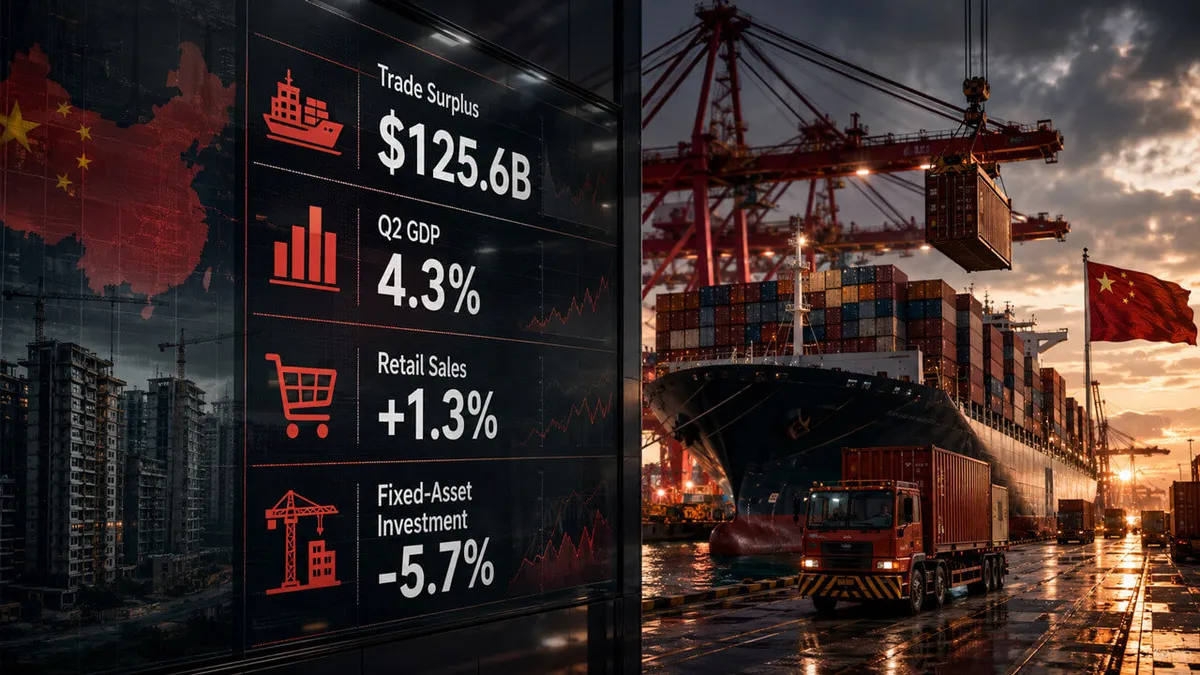
China's recent economic data reveals a complex picture, highlighting both strengths and weaknesses as it grapples with slowing momentum. In June, trade numbers showcased a notable $125 billion surplus, primarily driven by robust exports, particularly in high-value industrial goods. These figures suggest that while China's factories continue to find buyers in international markets, domestic demand remains lackluster. The juxtaposition of strong trade figures against sluggish internal consumption underscores a critical issue–the country's economy is increasingly reliant on foreign markets, leaving it vulnerable to external shocks.
The context of this situation is rooted in China's long-standing economic strategies and recent challenges. Over the past few years, the nation has been transitioning from an investment-driven model to one that emphasizes consumption. However, the shift has not been smooth. Factors such as lingering effects from the COVID-19 pandemic, supply chain disruptions, and a real estate market crisis have contributed to weakened domestic demand. As a result, while exports continue to thrive, the lack of robust internal consumption poses a significant risk to sustainable economic growth.
This disconnection between export strength and domestic demand is crucial for market observers. For investors, the data presents a mixed bag–on one hand, the trade surplus indicates that Chinese manufacturing remains strong and competitive; on the other hand, the underlying issues with domestic consumption could signal a slowdown in economic activity in the future. Analysts are closely watching these trends, as prolonged weakness in domestic demand could lead to broader economic instability and impact global markets, particularly those reliant on Chinese trade.
Industry reactions to these developments have been varied. Some experts express cautious optimism, suggesting that the focus on exports could drive innovation and efficiency within Chinese industries. Others, however, warn of the risks associated with over-reliance on external markets, particularly in a global landscape that is increasingly uncertain. Economic analysts are urging the Chinese government to implement policies that stimulate domestic consumption, thereby creating a more balanced economic environment that can withstand external shocks.
Looking ahead, the question remains: what measures will the Chinese government take to address these imbalances? There are calls for targeted fiscal policies aimed at boosting consumer confidence and spending, which could help bridge the gap between export strength and domestic weakness. As the world watches closely, the next steps China takes will not only determine its own economic trajectory but could also have significant implications for global economic dynamics.

CoinMagnetic Team
Crypto investors since 2017. We trade with our own money and test every exchange ourselves.
Updated: July 2026
From our insights:
Related news

Crypto PACs escalate spending against Sherrod Brown in Ohio Senate race

Border payments via stablecoins cut traditional wire costs by 84 percent

White House AI accord audits face limits if testers cannot choose targets

Ledger faced tampering warnings months prior to security crisis

Deutsche Bank targets Asian markets for its upcoming German crypto custody rollout