Chainlink’s latest stablecoin push targets the capital stuck in bank FX settlement
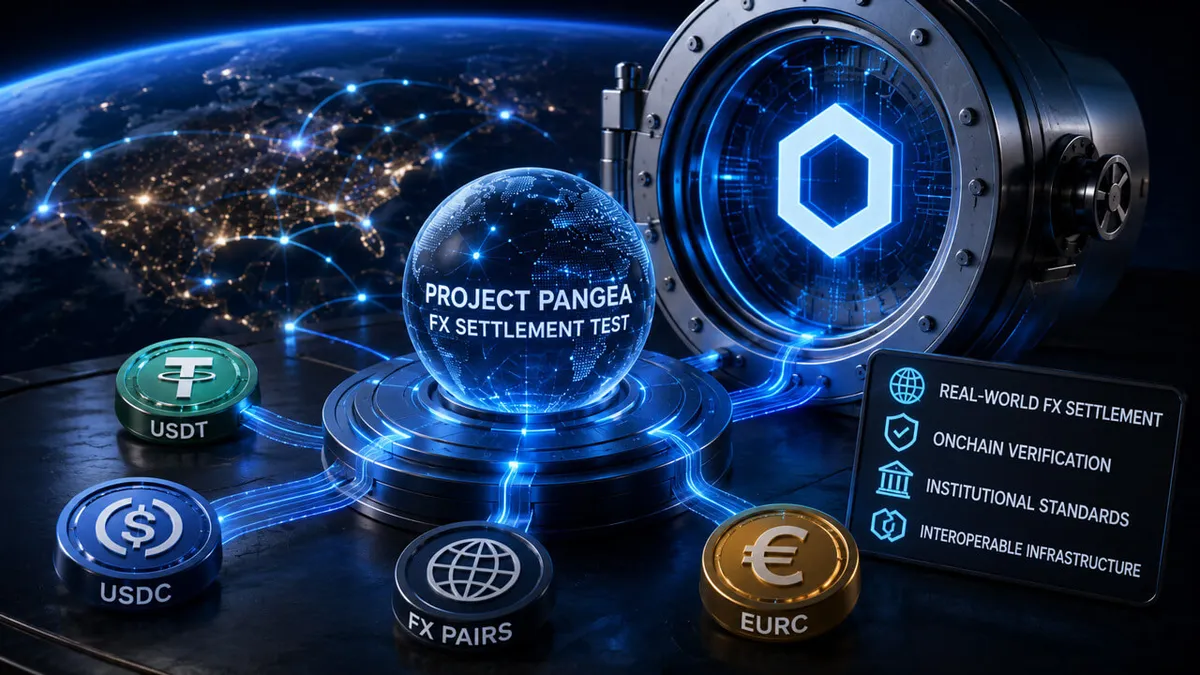
Chainlink has recently announced a significant initiative aimed at streamlining foreign exchange (FX) settlements for banks by leveraging stablecoins. This new framework is designed to facilitate T+0 payment-versus-payment settlements, which would allow transactions to be completed instantly, thereby reducing the capital that is currently tied up in traditional banking processes. By integrating with the existing Swift network and adhering to ISO 20022 standards, Chainlink aims to provide a familiar environment for banks while simultaneously introducing the efficiencies of blockchain technology.
To understand the relevance of this initiative, we must consider the existing challenges in the FX settlement landscape. Currently, transactions can take days to clear, which results in substantial capital being held in limbo during the settlement period. This inefficiency not only ties up resources but also exposes banks to various risks, including liquidity and credit risks. By adopting a T+0 model, Chainlink is positioning itself as a transformative force in an industry that has largely remained unchanged for decades, paving the way for faster and more secure transactions.
The implications of Chainlink’s approach could be profound for the broader financial market. With the introduction of real-time settlements, banks could reduce their operational costs and improve liquidity management. This could also lead to increased participation in the FX market, as smaller institutions might find it easier to engage without the burdens of prolonged settlement times. Furthermore, the integration of blockchain technology into these systems could enhance transparency and security, which are critical components for any financial transaction.
Reactions from industry experts have been largely positive, highlighting the potential for Chainlink's framework to revolutionize FX settlements. Many analysts see this move as a step towards bridging the gap between traditional finance and the emerging world of digital assets. Some industry insiders have noted that while the adoption of such technology may face initial resistance from established banks, the long-term benefits of efficiency and reduced risk could eventually outweigh the inertia of traditional practices.
Looking ahead, the success of Chainlink’s initiative will depend on its ability to gain traction among banks and financial institutions. As the industry begins to explore the possibilities of real-time settlements, we expect further developments and partnerships to emerge. The path to widespread adoption may be gradual, but the potential benefits for the FX market and the broader financial ecosystem are clear. As we continue to monitor this space, it will be interesting to see how traditional banks adapt to these innovations and whether other players in the blockchain space will follow suit.

CoinMagnetic Team
Crypto investors since 2017. We trade with our own money and test every exchange ourselves.
Updated: June 2026
From our insights:
Related news

Kalshi case could clarify sports betting regulations if SCOTUS accepts it
Trump's July purchase of Strategy shares could be worth up to $100K

‘Not behind closed doors’: Senate Banking Democrats call for prediction markets hearing as GOP meets privately with Kalshi

Canada's six largest banks collaborate on digital-dollar transfer system

Stablecoins hold nearly $200 billion in US debt, but money funds bought the surge