Cardano whales now hold 67% of ADA supply in highest share since 2020

Recent data reveals that wallets holding at least one million ADA tokens now control an impressive 67% of the total Cardano supply, amounting to approximately 25.09 billion tokens. This marks the highest concentration of ADA held by these so-called "whales" since July 2020. Interestingly, this surge in whale ownership comes at a time when Cardano's total value locked (TVL) has significantly declined, plummeting to $137 million from its peak of $686 million in December 2024. These contrasting trends highlight a complex narrative unfolding within the Cardano ecosystem.
To better understand this situation, it's essential to delve into the backdrop of Cardano's market evolution. Since its inception, Cardano has gained recognition for its unique proof-of-stake consensus mechanism and emphasis on scalability and sustainability. However, over the past year, the platform has faced challenges that have affected its adoption and overall market performance. The decline in TVL suggests that many users may be losing interest in utilizing Cardano's decentralized finance (DeFi) capabilities, despite the increase in whale holdings, which could indicate a shift in investor sentiment.
The implications of increased whale activity in the Cardano ecosystem are significant. Typically, when a large percentage of tokens are concentrated in the hands of a few wallets, it raises concerns about market stability and price volatility. Whales can exert considerable influence over token prices through strategic buying or selling. As they accumulate ADA, it could signal confidence in the long-term prospects of the platform. However, it also raises questions about the potential for sudden market shifts if these large holders decide to liquidate their positions.
Industry experts have varied opinions on this development. Some analysts view the accumulation of ADA by whales as a bullish sign, suggesting that these investors may foresee a future rebound in Cardano's market performance. Others express caution, warning that the decline in TVL may be a red flag for the overall health of the network. The sentiment appears to be mixed, with some advocating for a closer examination of Cardano's fundamentals and its ability to attract and retain users in the DeFi space.
Looking ahead, the situation for Cardano appears to be in a state of flux. The balance between whale accumulation and declining TVL will be vital to monitor in the coming months. If whale investors continue to hold or increase their stakes, it could lead to a price rebound, provided that Cardano's utility and adoption improve. Conversely, if the trend of declining TVL persists, it may prompt further scrutiny of the network's viability, influencing both whale behavior and broader market dynamics. The path forward for Cardano remains uncertain, but the heightened whale activity adds an intriguing layer to its ongoing story.

CoinMagnetic Team
Crypto investors since 2017. We trade with our own money and test every exchange ourselves.
Updated: May 2026
From our insights:
Related news

Solstice CEO predicts less volatile future for crypto cycles amid liquidity growth

Pragma flags 6 price feeds as critical risk following $3.5M Starknet lending exploit

Ethereum's $120 billion in staking masks underlying supply dynamics

NEAR price surges 80% weekly as Intents volume approaches $30 billion
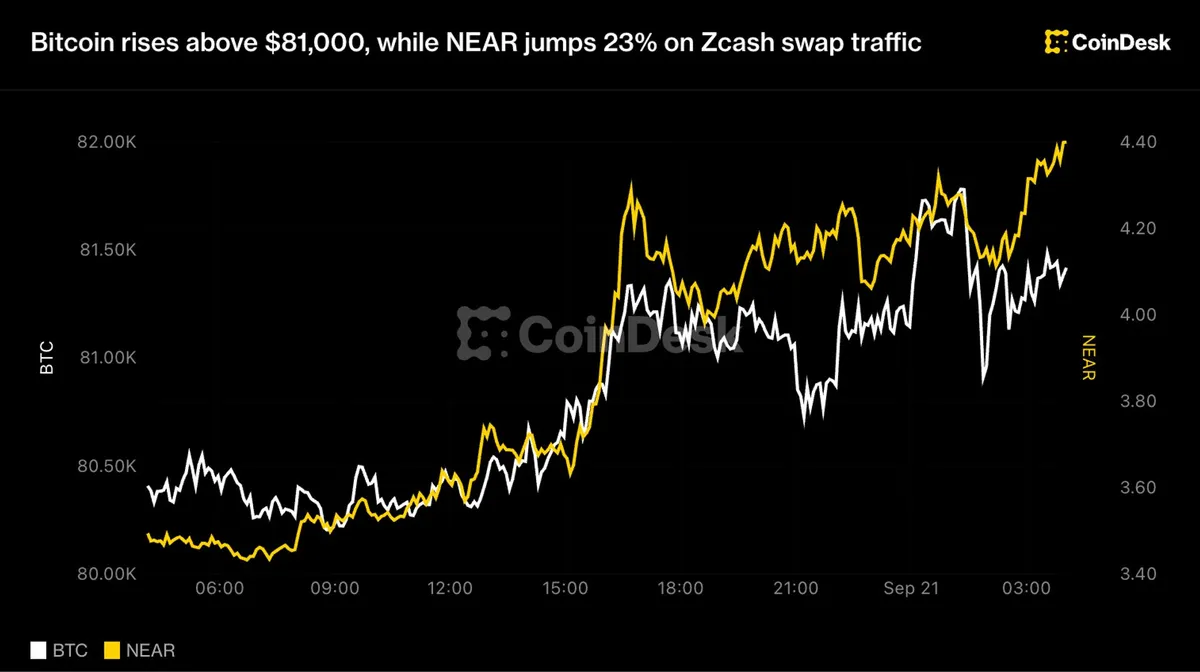
Bitcoin surpasses $81,000 as NEAR surges 23% amid Zcash swap activity