BlackRock's new bitcoin ETF lets institutions earn from volatility. There's a catch.

BlackRock has recently introduced a new Bitcoin exchange-traded fund (ETF) that allows institutional investors to capitalize on the inherent volatility of the cryptocurrency market. This innovative financial instrument is designed to offer exposure to Bitcoin while enabling institutions to earn from price fluctuations. However, there is a catch: the ETF is structured in a way that may limit the potential returns for investors who are hoping to benefit from the extreme volatility that often characterizes Bitcoin's price movements. The fund aims to attract institutional money, which has been a significant focus for BlackRock as it seeks to solidify its position in the rapidly evolving cryptocurrency landscape.
The introduction of this Bitcoin ETF is a significant milestone for the crypto market, as BlackRock is one of the largest asset management firms globally. The company's foray into digital assets underscores a broader trend of traditional financial institutions embracing cryptocurrencies. In recent years, regulatory bodies have become more accommodating to crypto investment products, paving the way for established firms to launch ETFs that cater to institutional investors. This development reflects a growing acceptance of Bitcoin and other cryptocurrencies as a legitimate asset class.
This new ETF matters for the market as it could potentially drive significant capital inflows from institutional investors who have been hesitant to enter the crypto space. The ability to earn from volatility may also attract a new demographic of investors who are looking for diversified exposure to digital assets without having to navigate the complexities of direct cryptocurrency ownership. Furthermore, the ETF structure allows for easier trading on traditional exchanges, which could enhance liquidity in the Bitcoin market and contribute to price stabilization over the long term.
Industry reactions to BlackRock's new ETF have been mixed. Some experts view it as a positive development that could enhance the legitimacy of Bitcoin and attract more institutional interest. Others express concerns about the limitations imposed by the ETF's structure, suggesting that it may not fully capture the potential upside of Bitcoin's price swings. Market analysts are closely monitoring how this product performs and whether it meets its objectives, as the success or failure of the ETF could influence future offerings and the overall trajectory of institutional investment in cryptocurrencies.
Looking ahead, the launch of BlackRock's Bitcoin ETF could set a precedent for other asset management firms considering similar products. If the ETF performs well and attracts significant capital, we may see a wave of new crypto-focused investment vehicles emerge, further integrating digital assets into the traditional financial system. As the market evolves, stakeholders will need to remain vigilant regarding regulatory developments and market dynamics that could impact the performance of such investment products.

CoinMagnetic Team
Crypto investors since 2017. We trade with our own money and test every exchange ourselves.
Updated: June 2026
From our insights:
Related news
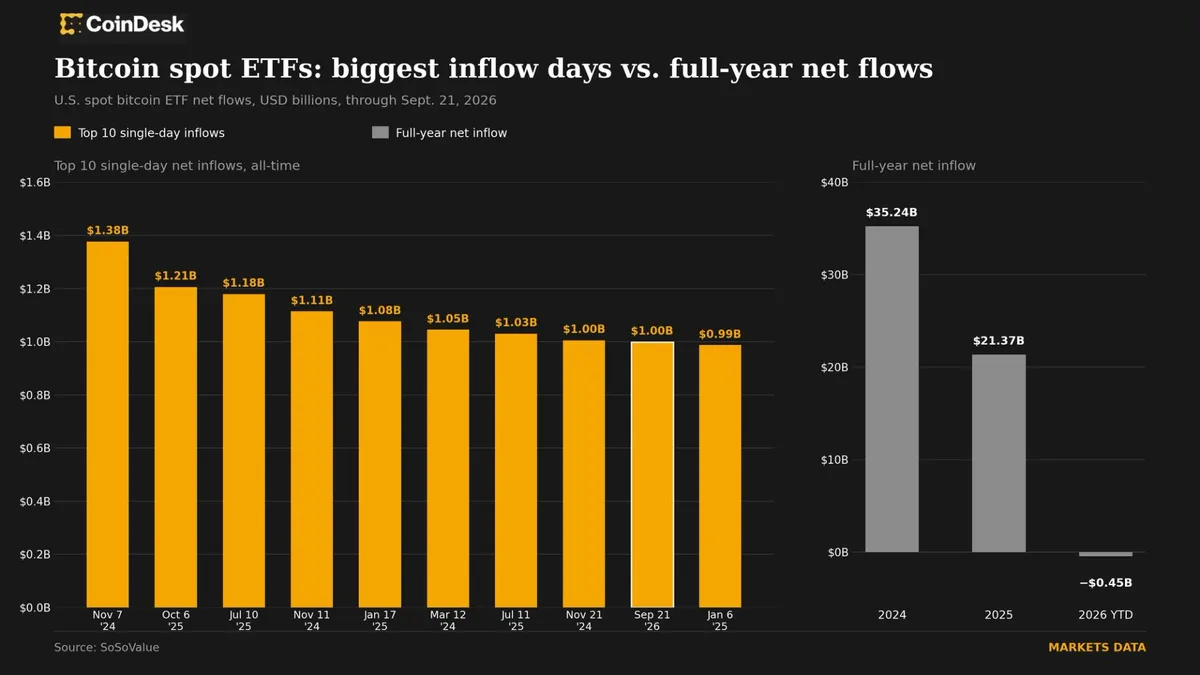
Spot bitcoin ETFs see nearly $1 billion inflow as bitcoin hits January highs

US spot Bitcoin ETFs see nearly $1 billion inflow, highest since October 2025

Bitcoin's rise to $86,000 restores profitability for ETF investors

Apple and Google seek crypto experts, signaling potential stablecoin initiatives

ECB initiates bond purchases using its own funds in crypto-linked system