BlackRock and Fidelity are quietly turning bitcoin ETFs into a two-firm market

In a significant development in the cryptocurrency market, BlackRock and Fidelity have emerged as dominant players in the Bitcoin exchange-traded funds (ETFs) sector. Their respective offerings, BlackRock's IBIT and Fidelity's FBTC, are capturing a substantial share of new investments, effectively sidelining smaller funds in the process. This trend highlights a growing consolidation around these two financial giants, as institutional investors increasingly prefer the stability and reputation associated with established names in the industry. The influx of capital into these funds suggests a shift in market dynamics, with a clear preference for larger, more recognized players.
To understand the implications of this shift, it is important to consider the context of the current Bitcoin ETF landscape. Historically, the market has been characterized by a diverse array of funds, each vying for investor attention. However, the rise of BlackRock and Fidelity has coincided with increased regulatory clarity around Bitcoin ETFs, particularly in the United States. This regulatory environment has created a fertile ground for institutional investment, allowing larger firms to leverage their resources and expertise to attract significant capital. As a result, smaller funds are finding it increasingly challenging to compete for investor interest and capital.
The implications of this consolidation for the market are profound. The dominance of BlackRock and Fidelity in the Bitcoin ETF space could lead to a more concentrated market, which might limit options for investors seeking diversity. Furthermore, as these firms continue to attract substantial inflows, they may wield increased influence over Bitcoin's price and market sentiment. This trend could lead to greater volatility as the actions of a few large players become more impactful on the overall market. Additionally, the success of these funds may set a precedent, encouraging other institutional investors to follow suit and further entrenching the two-firm dynamic.
Industry reactions to this development have been mixed. Some experts herald the arrival of BlackRock and Fidelity as a positive sign of institutional acceptance of Bitcoin, viewing it as a validation of the cryptocurrency's legitimacy. Others express concern about the potential for reduced competition, warning that a two-firm market could stifle innovation and lead to less favorable conditions for smaller players. The debate highlights the complexity of the evolving landscape, as market participants grapple with the balance between institutional stability and the need for diversity in investment products.
Looking ahead, it remains to be seen how this dynamic will unfold. If BlackRock and Fidelity continue to dominate, we may witness an even more pronounced shift toward institutional investment in Bitcoin, which could further influence the cryptocurrency's trajectory. Conversely, smaller firms may seek innovative strategies to differentiate themselves and re-establish their presence in the market. As the landscape evolves, all eyes will be on this two-firm market and its implications for the future of Bitcoin and the broader cryptocurrency ecosystem.

CoinMagnetic Team
Crypto investors since 2017. We trade with our own money and test every exchange ourselves.
Updated: June 2026
From our insights:
Related news
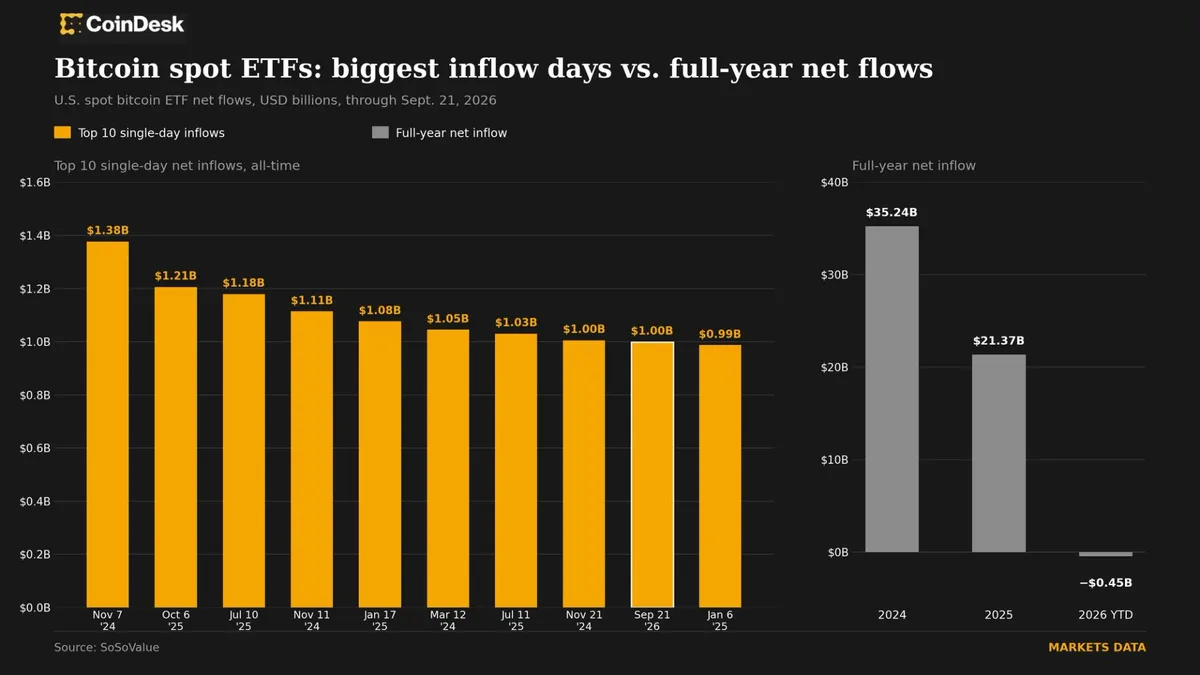
Spot bitcoin ETFs see nearly $1 billion inflow as bitcoin hits January highs

US spot Bitcoin ETFs see nearly $1 billion inflow, highest since October 2025

Bitcoin's rise to $86,000 restores profitability for ETF investors
Apple and Google seek crypto experts, signaling potential stablecoin initiatives

ECB initiates bond purchases using its own funds in crypto-linked system