Bitcoin Shrugs off CLARITY gains as Institutions Sell Amid Surging Treasury Yields

In recent weeks, Bitcoin has shown resilience despite facing significant selling pressure from institutional investors. As 10-year Treasury yields surged, reports indicated that profit-taking was occurring rather than a widespread panic sell-off. This phenomenon coincided with the sharpest outflows from Bitcoin exchange-traded funds (ETFs) since February, suggesting that while institutional interest remains, many are opting to cash in on recent gains amid the changing economic conditions.
To understand this situation, it's essential to consider the broader economic backdrop. The rise in Treasury yields often signals a shift in investor sentiment, as higher yields can attract capital away from riskier assets like cryptocurrencies. Historically, Bitcoin has often mirrored trends in traditional finance, particularly in relation to interest rates and inflation. With central banks adjusting monetary policies to combat inflation, investors are reassessing their portfolios, leading to a wave of profit-taking in the crypto space.
The implications of this trend for the cryptocurrency market are significant. While Bitcoin has historically been viewed as a hedge against inflation and economic uncertainty, the rising Treasury yields could challenge that narrative. If institutional investors continue to divest from Bitcoin in favor of safer, yield-bearing assets, it could create downward pressure on prices. Conversely, if Bitcoin manages to maintain its value amid these conditions, it may reinforce its status as a store of value in uncertain times.
Industry experts are weighing in on the situation, with many emphasizing the importance of distinguishing between profit-taking and panic selling. Analysts suggest that while the outflows from ETFs are noteworthy, they are not indicative of a fundamental shift in the market's long-term outlook. Some believe that this could present a buying opportunity for retail investors who may view the current price levels as attractive. Others caution that sustained high Treasury yields could continue to influence market dynamics, creating volatility in the short term.
Looking ahead, the cryptocurrency market will likely remain sensitive to economic indicators, particularly those related to interest rates and inflation. As institutions recalibrate their strategies, it will be crucial for Bitcoin to demonstrate resilience and attract new investment. The coming weeks may reveal whether the current profit-taking is a temporary response to external pressures or part of a more extensive market correction. As always, we will continue to monitor these developments closely to provide insights into their potential impact on the cryptocurrency landscape.

CoinMagnetic Team
Crypto investors since 2017. We trade with our own money and test every exchange ourselves.
Updated: May 2026
From our insights:
Related news

Solstice CEO predicts less volatile future for crypto cycles amid liquidity growth

Pragma flags 6 price feeds as critical risk following $3.5M Starknet lending exploit

Ethereum's $120 billion in staking masks underlying supply dynamics

NEAR price surges 80% weekly as Intents volume approaches $30 billion
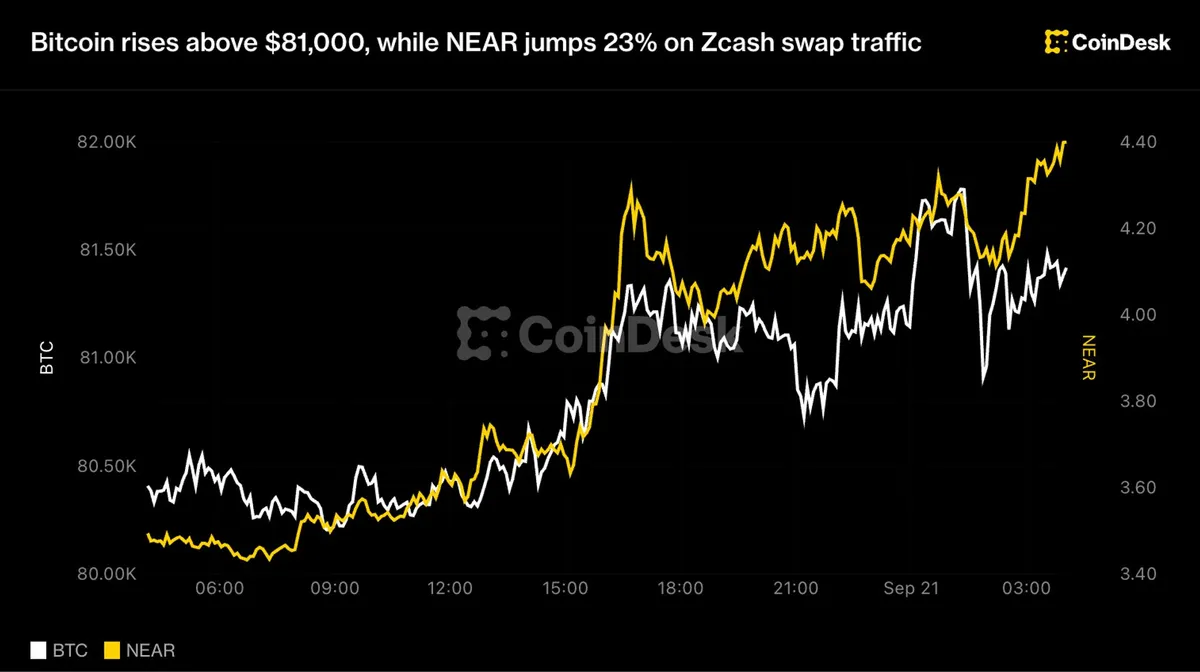
Bitcoin surpasses $81,000 as NEAR surges 23% amid Zcash swap activity