Bitcoin's recent drop below $60,000 signals Fed, ETF and AI pressures: Deutsche Bank

Bitcoin's recent decline below the $60,000 mark has raised significant concerns in the crypto community. According to a report from Deutsche Bank, this downturn, which marks the lowest level for Bitcoin since late 2024, is attributed to a confluence of factors including a hawkish stance from the Federal Reserve, outflows from cryptocurrency exchange-traded funds (ETFs), and a notable shift in investment capital towards artificial intelligence (AI). This perfect storm of influences has not only shaken investor confidence but also left many questioning the sustainability of Bitcoin's previous bull run.
To understand this situation, it's essential to consider the backdrop against which Bitcoin is trading. The Federal Reserve's recent monetary policy decisions have leaned towards tightening, which typically exerts upward pressure on interest rates and can dampen risk appetite among investors. Meanwhile, the landscape for cryptocurrency ETFs has been changing. The outflows from these funds suggest that investors may be reallocating their assets in search of greater stability or returns elsewhere. Additionally, the burgeoning interest in AI technologies has diverted some of the capital that could have flowed into cryptocurrencies, as investors chase the latest trends in tech.
This development is significant for the cryptocurrency market as a whole, as Bitcoin often serves as a bellwether for other digital assets. A sustained drop below the $60,000 threshold could lead to increased selling pressure across the market, as trader sentiment shifts towards bearishness. Furthermore, the interplay of traditional financial markets and the crypto sphere is becoming more pronounced, with traditional asset classes influencing crypto prices in ways that were less evident during previous market cycles.
Industry experts have weighed in on the situation, noting that the current pressures reflect a broader trend of risk aversion among investors. Some analysts suggest that the shift towards AI may be temporary, as the hype surrounding new technologies often leads to cycles of investment enthusiasm and subsequent corrections. Others caution that the Federal Reserve's policies may continue to pose challenges for riskier assets, including cryptocurrencies. The overall sentiment is cautious, with many calling for a wait-and-see approach to gauge whether this drop is a short-term blip or indicative of a more prolonged downturn.
Looking ahead, the cryptocurrency market will likely remain volatile as it grapples with these multifaceted pressures. Investors will be closely monitoring upcoming Federal Reserve meetings for hints at future monetary policy directions, as well as tracking ETF performance and the broader tech landscape. How Bitcoin and other cryptocurrencies respond to these external factors will be crucial in determining their market trajectories in the coming weeks and months. The convergence of traditional finance and the crypto space is becoming increasingly evident, and stakeholders must navigate this evolving landscape with care.

CoinMagnetic Team
Crypto investors since 2017. We trade with our own money and test every exchange ourselves.
Updated: June 2026
From our insights:
Related news
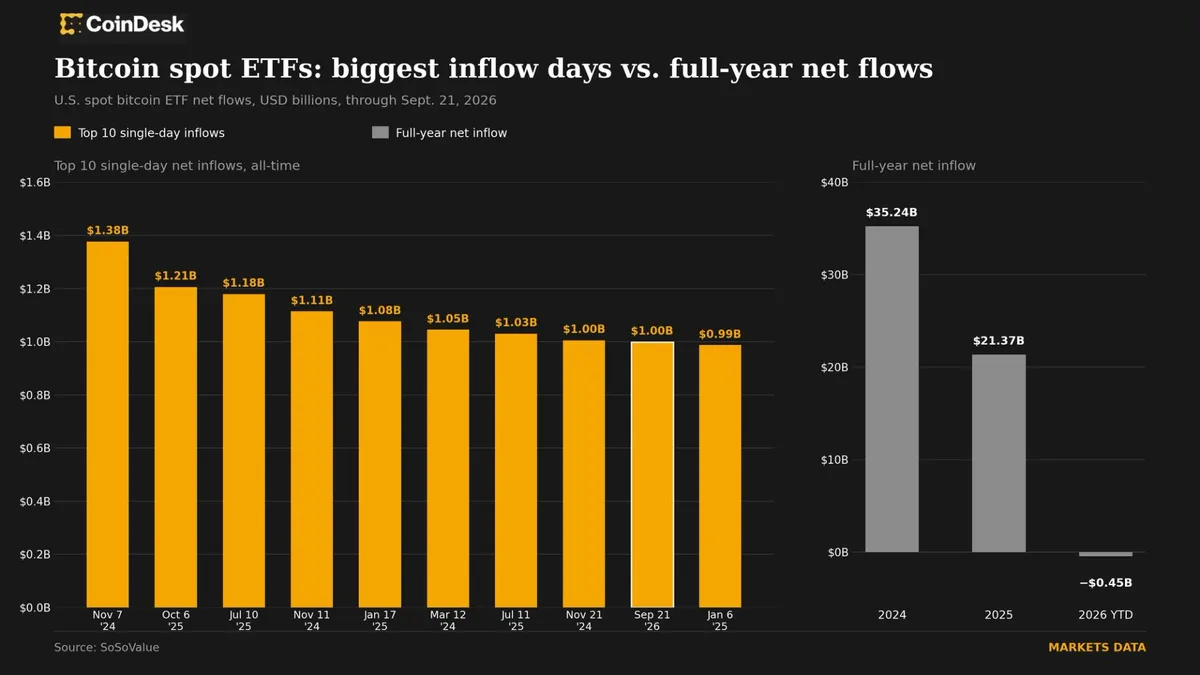
Spot bitcoin ETFs see nearly $1 billion inflow as bitcoin hits January highs

US spot Bitcoin ETFs see nearly $1 billion inflow, highest since October 2025

Bitcoin's rise to $86,000 restores profitability for ETF investors

Apple and Google seek crypto experts, signaling potential stablecoin initiatives

ECB initiates bond purchases using its own funds in crypto-linked system