Bitcoin ETFs shed a record $6.4B in 30 days amid crypto winter chill

In a striking development for the cryptocurrency landscape, US-listed spot Bitcoin exchange-traded funds (ETFs) have experienced their largest net outflow since their inception in 2024, totaling an alarming $6.4 billion over the past 30 days. This trend coincides with a notable downturn in Bitcoin's price, which has plummeted by 17% during the same period. The combination of these factors has raised concerns among investors and analysts alike, as the market grapples with the implications of such a substantial withdrawal from ETFs that were expected to bolster institutional interest in Bitcoin.
The backdrop of this situation is rooted in a broader “crypto winter,” a term that describes a prolonged period of stagnant or declining prices in the cryptocurrency markets. Since the peak valuations seen in late 2021, the market has been under pressure, with Bitcoin and other cryptocurrencies experiencing significant volatility. The recent downturn has been attributed to a series of macroeconomic factors, including rising interest rates, regulatory uncertainties, and shifting investor sentiment, all of which have contributed to a more cautious approach towards cryptocurrency investments.
The implications of these ETF outflows are significant for the market. ETFs have historically been viewed as a gateway for institutional investors, providing a regulated and accessible means to invest in Bitcoin. A substantial decline in assets under management could indicate waning interest from institutional players and potentially lead to further price declines. Additionally, it raises questions about the overall health of the cryptocurrency market and whether the current bearish sentiment could persist or deepen in the coming months.
Industry experts have expressed a range of reactions to this development. Some analysts believe that the outflows are a temporary reaction to current market conditions and that long-term fundamentals for Bitcoin remain strong. Others caution that sustained outflows could undermine confidence in Bitcoin as an investment vehicle. Notably, several thought leaders in the crypto space have suggested that the current environment might prompt regulators to address the framework surrounding cryptocurrency investments more decisively, which could have long-term implications for market dynamics.
Looking ahead, the crucial question remains: what will the future hold for Bitcoin and its associated financial products? As the market navigates this challenging period, investors will be closely monitoring price movements and ETF inflows or outflows. If the trend of outflows continues, it could signal deeper issues within the market, prompting a reevaluation of investment strategies. Conversely, any signs of recovery in Bitcoin’s price might lead to renewed interest in ETFs, potentially helping to stabilize the market in the long run. As always, the cryptocurrency landscape remains fluid, and we will continue to keep a close eye on these developments.

CoinMagnetic Team
Crypto investors since 2017. We trade with our own money and test every exchange ourselves.
Updated: June 2026
From our insights:
Related news
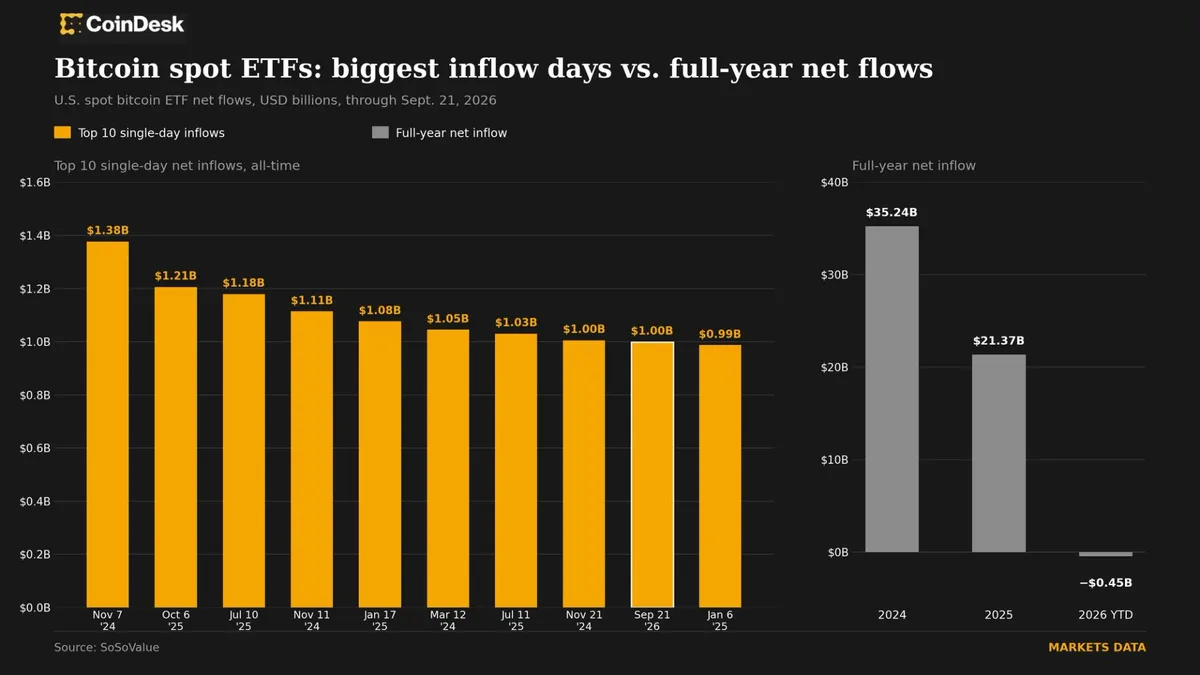
Spot bitcoin ETFs see nearly $1 billion inflow as bitcoin hits January highs

US spot Bitcoin ETFs see nearly $1 billion inflow, highest since October 2025

Bitcoin's rise to $86,000 restores profitability for ETF investors

Apple and Google seek crypto experts, signaling potential stablecoin initiatives

ECB initiates bond purchases using its own funds in crypto-linked system