Bitcoin ETFs are no bigger today than when Trump won the election

Recent data reveals that the net assets of U.S.-listed spot Bitcoin exchange-traded funds (ETFs) have plummeted to levels reminiscent of early November 2020, coinciding with Donald Trump's re-election campaign. This decline has raised eyebrows in the crypto community as investors grapple with the implications of such a downturn. The assets under management (AUM) for these ETFs have not only decreased significantly but have also sparked concerns regarding investor confidence and market momentum in the face of a challenging economic landscape.
The context for this decline can be traced back to a series of macroeconomic factors, regulatory scrutiny, and evolving market sentiments. Following the initial hype surrounding Bitcoin ETFs, which were seen as a gateway for mainstream adoption of cryptocurrencies, the market has faced numerous hurdles. Regulatory uncertainties, changing consumer behavior, and broader economic factors, including inflation and interest rate hikes, have all contributed to a cooling-off period in the crypto space. The stark contrast between the optimism of late 2020 and the current state of the market highlights the volatility and unpredictability inherent in the cryptocurrency ecosystem.
This situation matters for the market not only because of the direct impact on Bitcoin pricing but also due to the psychological effects on investors. The significant drop in AUM indicates a loss of faith in Bitcoin ETFs as viable investment vehicles, potentially discouraging new investors from entering the market. Additionally, the stagnation in growth may deter institutional players who were initially poised to engage more seriously with Bitcoin. As these dynamics play out, they could lead to a prolonged bearish sentiment in the market, affecting Bitcoin's price trajectory and overall market structure.
Industry reactions have varied, with some experts expressing concern about the sustainability of Bitcoin ETFs in their current form. Analysts have pointed to the need for clearer regulations and a more stable macroeconomic environment to restore confidence. Others contend that the decline could be a natural correction, arguing that the initial surge in interest was unsustainable. The general sentiment among industry insiders suggests a cautious approach moving forward, with many advocating for innovations in ETF structures to better align with investor needs and market conditions.
Looking ahead, the future of Bitcoin ETFs remains uncertain. Market participants are closely monitoring regulatory developments and economic indicators that could influence the next phase of growth–or decline. If the downward trend continues, we may see a reevaluation of Bitcoin ETFs by both investors and asset managers. The path forward will likely depend on how effectively the industry can address these challenges and adapt to the evolving landscape of cryptocurrency investing.

CoinMagnetic Team
Crypto investors since 2017. We trade with our own money and test every exchange ourselves.
Updated: June 2026
From our insights:
Related news
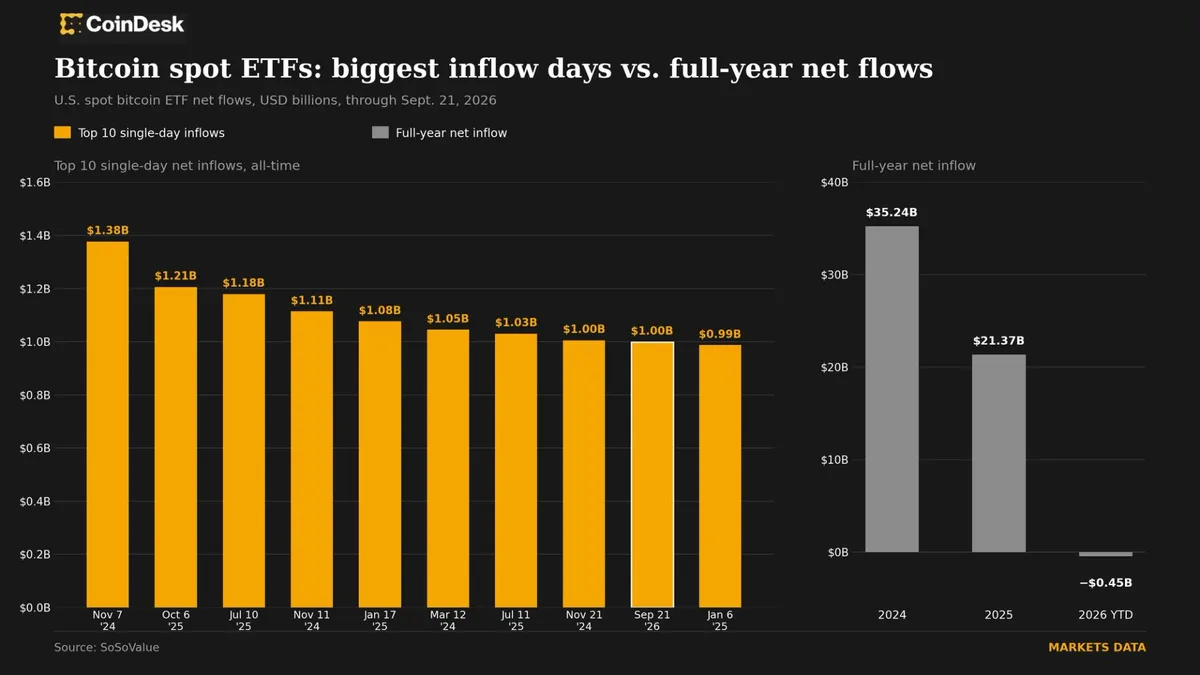
Spot bitcoin ETFs see nearly $1 billion inflow as bitcoin hits January highs

US spot Bitcoin ETFs see nearly $1 billion inflow, highest since October 2025

Bitcoin's rise to $86,000 restores profitability for ETF investors

Apple and Google seek crypto experts, signaling potential stablecoin initiatives

ECB initiates bond purchases using its own funds in crypto-linked system