Bitcoin broke away from AI stocks but now $96 oil could turn its escape into a trap
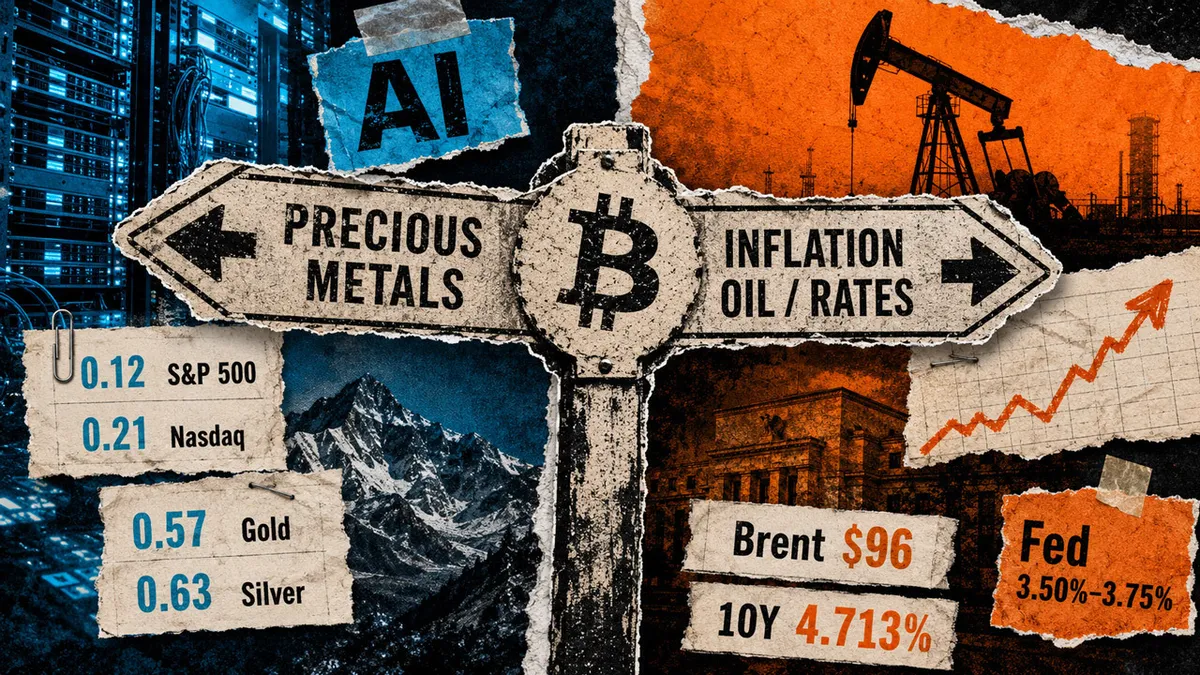
Bitcoin has recently showcased a notable shift in its market dynamics, as its correlation with traditional financial indices has significantly diminished. A joint report from Coinbase Institutional and Glassnode revealed that Bitcoin's daily correlation with the S&P 500 has plummeted to 0.12 during the second quarter, down from 0.58 recorded in the fourth quarter of 2022. Similarly, its correlation with the Nasdaq has also dropped to 0.21. This divergence indicates that Bitcoin is moving independently from equities, particularly AI stocks, which have been a focal point of investment enthusiasm. However, the recent surge in oil prices, now hovering around $96 per barrel, raises concerns that this newfound independence could quickly become a precarious situation for Bitcoin and the broader crypto market.
This shift in correlation is particularly significant as it reflects a broader trend in how Bitcoin is perceived and traded. Traditionally seen as a risk asset closely tied to the stock market, Bitcoin's recent movements suggest that investors may be reevaluating its role as a hedge against inflation and economic uncertainty. The rise in oil prices could potentially exacerbate inflationary pressures, which would impact investor sentiment across various asset classes, including cryptocurrencies. With geopolitical tensions and supply chain issues contributing to these oil price hikes, the context surrounding Bitcoin's performance is more complex than ever.
The implications of this shift are profound for the cryptocurrency market. A lower correlation with traditional stocks could mean that Bitcoin is carving out a unique space in the financial ecosystem, potentially attracting a different cohort of investors who value its decentralized nature and perceived scarcity. However, the looming threat of high oil prices could also lead to increased market volatility, as investors reassess their risk appetites. If oil prices remain elevated, the fear of inflation could prompt a flight to safety, potentially impacting Bitcoin's price and causing it to revert to a more correlated state with traditional assets.
Industry experts have weighed in on this development, noting that while Bitcoin's independence from AI stocks is a positive sign, the external pressures from surging oil prices cannot be overlooked. Analysts suggest that while the correlation with traditional markets has lessened, Bitcoin is still vulnerable to macroeconomic factors that can prompt sudden shifts in investor sentiment. As one prominent analyst put it, “The market is still in a phase where external factors can significantly sway investor behavior. We must remain cautious about how these dynamics play out.”
Looking ahead, the potential for Bitcoin to maintain its independence from traditional financial markets will hinge on a variety of factors, including the trajectory of oil prices, inflation rates, and broader economic conditions. If oil prices stabilize or decline, Bitcoin could continue on its path of divergence. Conversely, if geopolitical tensions persist and oil prices remain high, the cryptocurrency may face renewed pressure as investors navigate a complex economic landscape. As we move forward, all eyes will be on how Bitcoin adapts to these changing market conditions and whether it can solidify its status as a distinct asset class.

CoinMagnetic Team
Crypto investors since 2017. We trade with our own money and test every exchange ourselves.
Updated: July 2026
From our insights:
Related news
SEC highlights tokenization and artificial intelligence as major regulatory focus areas

Israel targets blockchain integration to bypass banking sanctions, Netanyahu reveals

Senate subcommittee requests Tether records following reports of a deal with former Trump adviser

Initia halts network following security incident involving $2.7 million in ether

Securities regulators spotlight asset tokenization risks for 2027