Why major crypto asset manager’s 25% buyback plan might recycle shares to employees instead of shrinking supply
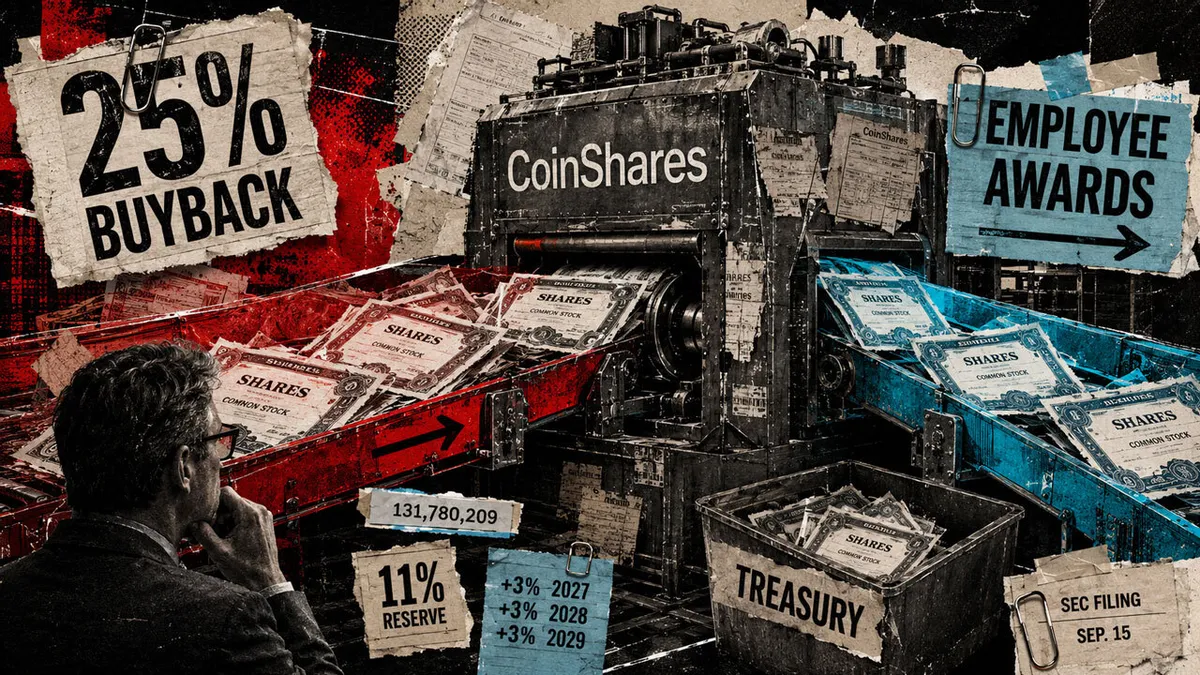
A recent announcement from a prominent crypto asset manager has revealed a potential 25% buyback plan that may not lead to a reduction in supply as initially expected. Instead of shrinking the overall share count, the firm might opt to recycle these shares for employee compensation and incentives. The buyback authority granted on September 15 is optional, suggesting that the company has flexibility in how it implements this strategy. With plans extending through 2029, the treasury stock could serve as a resource for future employee compensation programs.
This buyback scheme is noteworthy as it highlights a shift in how companies in the crypto sector are approaching share repurchase programs. Traditionally, buybacks are intended to decrease the number of outstanding shares, which can increase the value of remaining shares and provide a return to shareholders. However, this unique approach by the asset manager suggests a focus on investing in human capital and incentivizing employees rather than merely boosting stock prices.
For the market, this decision could have mixed implications. On one hand, the recycling of shares for employee compensation could foster loyalty and drive performance among staff, potentially leading to better long-term results for the company. On the other hand, if the market perceives the buyback as a lack of commitment to shareholder value, it could dampen investor enthusiasm and affect the stock price negatively. The overall response will depend on how stakeholders interpret the rationale behind this strategy.
Industry experts have weighed in on the potential outcomes of this buyback plan. Some analysts view the move as a progressive step in recognizing the value of human capital in the crypto sector, where talent acquisition and retention are critical. Conversely, others caution that by not reducing supply, the firm risks alienating traditional investors who favor buybacks as a means of returning value directly to shareholders. This divergence in opinions underscores the evolving nature of asset management in the cryptocurrency space.
Looking ahead, it will be essential to monitor how the asset manager moves forward with this buyback plan and the subsequent impact on employee morale and stock performance. If the firm can strike a balance between rewarding employees and maintaining shareholder confidence, it could set a precedent for other companies in the industry. As we approach 2029, the effectiveness of this strategy will become clearer, shaping the future approaches of asset managers in the crypto market.

CoinMagnetic Team
Crypto investors since 2017. We trade with our own money and test every exchange ourselves.
Updated: August 2026
From our insights:
Related news

US Treasury targets Iran with planned digital asset seizures this week

Robinhood Chain explores priority trading technology after Arbitrum's changes
Bitcoin bounces near $80,000 as traders bet on deeper October losses

HSBC and Ant Digital trial tokenized deposit payments for autonomous AI agents

Starknet targets layer-1 transition by 2027 to achieve quantum resistance