Solana's fee vote failure highlights Anatoly Yakovenko's control over governance
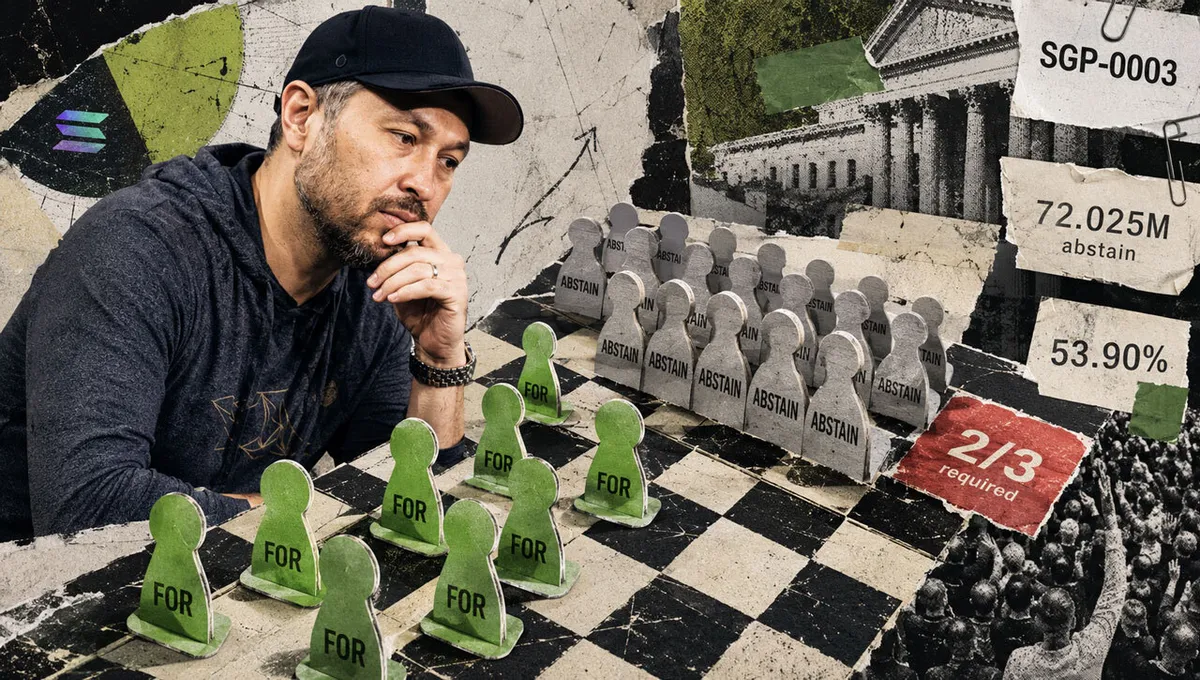
In a recent turn of events, Solana's governance process faced a setback when a proposed fee reform garnered majority support but ultimately failed to pass due to the supermajority rule. This voting structure requires a higher threshold of approval, leaving the final decision-making power in the hands of validators and stakers. The failed vote has raised questions about the balance of power within the Solana ecosystem, particularly regarding Anatoly Yakovenko, the project's co-founder and a prominent figure in its development.
The background of this situation lies in the governance framework established within the Solana network, designed to allow stakeholders to have a say in protocol changes. However, the reliance on a supermajority creates a scenario where a simple majority is insufficient for enacting reforms. This incident has sparked discussions among community members about the effectiveness of the current governance model and how it impacts the decision-making processes that affect the network's future.
This incident matters for the market as it highlights underlying tensions between decentralization and the concentration of power within the Solana ecosystem. The inability to implement a majority-supported fee reform may lead to frustrations among users and investors, which can influence market sentiment. As governance structures play a critical role in the sustainability of blockchain projects, the implications of this failed vote could resonate beyond Solana, prompting other networks to reevaluate their own governance mechanisms.
Industry experts have weighed in on the ramifications of this failed vote. Some analysts argue that the incident underscores the need for more inclusive governance models that empower a broader range of stakeholders, while others point to the challenges inherent in balancing efficiency and decentralization. The perspectives offered by professionals in the space suggest a growing awareness of the importance of governance dynamics in shaping the future of blockchain networks.
Looking ahead, the Solana community may need to consider adjustments to its governance structure to prevent similar occurrences in the future. Engaging in open discussions about governance reforms could help restore confidence among users and investors. As the ecosystem evolves, the lessons learned from this incident could drive meaningful changes that enhance both the decision-making process and the overall health of the Solana network.

CoinMagnetic Team
Crypto investors since 2017. We trade with our own money and test every exchange ourselves.
Updated: September 2026
From our insights:
Related news

Crypto.com, Novig sue Missouri over sports event contracts; Kalshi, Polymarket, Robinhood hold off
Patrick Witt exits White House crypto role as administration policy shifts
VIX and bitcoin point to a quick recovery from Friday stock market panic
Attacker mints 10 million CYS before bridge suspension and Ethereum transfer
Allium reports stablecoin payments reached $482 billion this year amid 45% growth