Turkish lira stablecoins show why Europe’s regulated euro tokens may struggle
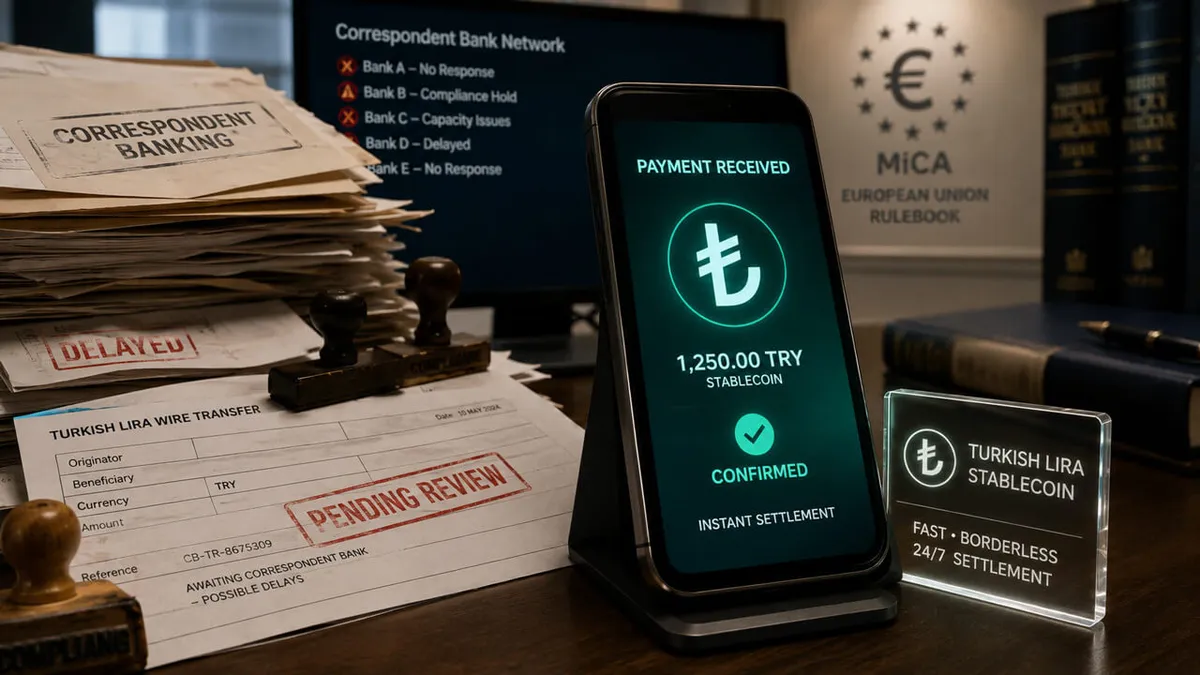
Recent data reveals that Zodia Markets, the crypto subsidiary largely owned by Standard Chartered, processed an impressive $3.4 billion in transactions involving Turkish lira stablecoins in 2025. This substantial figure establishes the lira as the second-most-used stablecoin currency globally, following only the US dollar. Notably, the lira surpassed the euro and other major G10 currencies, underscoring a growing trend of adoption for stablecoins tied to emerging market currencies. While the dollar-pegged tokens, particularly Tether and Circle's USDC, still dominate the market with a staggering $110.5 billion in transactions, the rise of the Turkish lira stablecoins raises questions about the future of euro-pegged stablecoins.
The emergence of Turkish lira stablecoins can be understood in the context of Turkey's economic challenges, which have driven users to seek stability through digital assets. As the lira has faced significant depreciation, many citizens have turned to stablecoins to preserve value and facilitate transactions. This trend has highlighted the potential for stablecoins to serve as a bridge between traditional finance and the digital economy, especially in regions where local currencies may be volatile. In contrast, the European Union has been working on regulatory frameworks for euro-pegged stablecoins, aiming to create a stable and compliant digital currency environment.
The implications of this shift are significant for the broader market. The success of Turkish lira stablecoins suggests that users are willing to adopt alternative currencies in response to local economic conditions, which could challenge the dominance of established currencies like the euro. As European regulators develop their frameworks, they may face hurdles in gaining user trust and adoption, especially if existing alternatives like the lira stablecoin continue to thrive. This situation could potentially lead to a fragmented market, where euro-pegged stablecoins struggle to gain traction against more established and widely used options.
Industry experts have weighed in on the situation, emphasizing both the opportunities and challenges presented by the rise of Turkish lira stablecoins. Some analysts view this trend as a clear signal for European regulators to expedite their efforts in creating a competitive euro-pegged stablecoin, while others caution that regulatory hurdles and compliance requirements could stifle innovation. Moreover, there are concerns about the implications for financial stability in Europe, as the success of alternative stablecoins could lead to increased volatility and risk in the financial system.
Looking ahead, the landscape for stablecoins in Europe will likely continue to evolve as regulators and market participants respond to the growing influence of alternative currencies. As the Turkish lira stablecoins gain traction, it will be crucial for European authorities to assess their regulatory strategies and adapt to the changing dynamics of the stablecoin market. The next few years could prove pivotal for both euro-pegged stablecoins and the broader cryptocurrency ecosystem, as various stakeholders navigate this rapidly shifting environment.

CoinMagnetic Team
Crypto investors since 2017. We trade with our own money and test every exchange ourselves.
Updated: June 2026
From our insights:
Related news
Iran hints at reopening Strait of Hormuz, WTI oil drops to $89
New altseason signal emerges as Bitcoin market cap stays under 60%

Bitcoin nears $86,000 as crypto market cap surpasses $3 trillion

Bitcoin's weekly close above $81,000 signals potential rise to $90,000

Elon Musk's X integrates bitcoin trading options for U.S. users