Trump claims he can ‘future proof’ crypto regulation with CLARITY Act
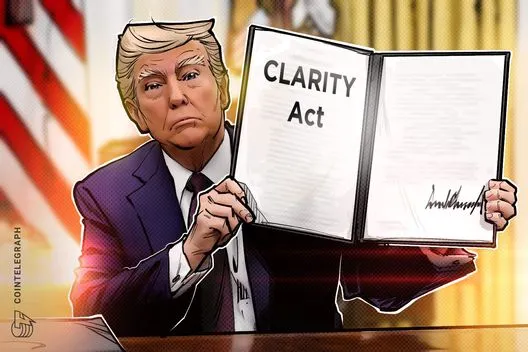
Former President Donald Trump has recently made headlines by asserting that he can “future proof” cryptocurrency regulation through the proposed CLARITY Act. This legislation, which aims to establish a clear framework for the regulation of digital assets, has sparked significant debate in Congress, especially given the ongoing scrutiny surrounding Trump's connections to the crypto world. His comments come amid a backdrop of uncertainty regarding the bill's passage, primarily due to concerns over its ethics provisions and the implications these may have on market stability and investor protection.
To understand the significance of Trump’s endorsement, it’s important to consider the context surrounding the CLARITY Act. Introduced in 2023, this bill is designed to clarify the definitions of digital assets and streamline the regulatory process, which has been a contentious issue within the crypto space. The lack of a cohesive framework has left many market participants in a state of confusion, with different states implementing their own regulations, leading to a patchwork of rules that can stifle innovation and investment. Trump's involvement highlights the political dimensions of cryptocurrency regulation, where opinions are sharply divided along party lines.
The implications of the CLARITY Act are considerable, especially for the broader cryptocurrency market. If passed, it could provide much-needed clarity and stability, potentially attracting institutional investors who have been hesitant to engage with a volatile regulatory environment. The promise of a uniform regulatory approach could also serve to legitimize the crypto industry in the eyes of mainstream investors, fostering growth and innovation. However, the bill's uncertain fate raises questions about whether it can address the concerns of lawmakers while maintaining the flexibility that the rapidly evolving digital asset landscape demands.
Industry experts have voiced mixed reactions to Trump's claims and the CLARITY Act itself. Some view the proposed legislation as a step in the right direction, arguing that clearer regulations could pave the way for increased investment and adoption of cryptocurrencies. Others, however, express skepticism about the feasibility of "future proofing" regulations in such a fast-paced sector. They caution that overly rigid frameworks may hinder the very innovation that the industry thrives on, thus leading to calls for a more adaptable regulatory approach.
As the debate continues, the next steps for the CLARITY Act will be crucial. It remains to be seen how lawmakers will respond to the concerns raised and whether the bill can be amended to gain broader bipartisan support. The political landscape is dynamic, and with the 2024 elections on the horizon, crypto regulation may become a pivotal issue as candidates seek to position themselves on this high-stakes topic. For now, the crypto community watches closely, hopeful that progress can be made toward a regulatory environment that fosters growth without stifling innovation.

CoinMagnetic Team
Crypto investors since 2017. We trade with our own money and test every exchange ourselves.
Updated: May 2026
From our insights:
Related news

Stand With Crypto’s 4 million registered advocates couldn’t get the CLARITY Act through the Senate

Kakao Pay, KakaoBank to explore stablecoin opportunities with Fireblocks

US Attorney's investigation into Binance focuses on Iran sanctions compliance

ECB initiates wholesale digital euro for banks and tokenized bond purchases

X files lawsuit against two influencers over $278,000 payout scheme