Binance incident drives THORChain volume as RUNE gains 13 percent

At CoinMagnetic, we have been closely tracking recent market movements, particularly the notable 13 percent surge in THORChain's native token RUNE. This price action follows a massive security breach involving Binance, where attackers made off with a record $6.3 billion in digital assets. As the wider cryptocurrency market reacted to the sheer scale of the exploit, on-chain activity spiked significantly across decentralized exchange aggregators and cross-chain liquidity protocols like THORChain as participants adjusted their portfolios.
This latest development brings renewed attention to the structural role that cross-chain liquidity networks play during major market events. THORChain has historically positioned itself as a permissionless engine for swapping native assets across disparate blockchains without wrapping. However, this architectural design has also placed the protocol under intense scrutiny from security analysts and compliance advocates who monitor illicit fund flows across decentralized infrastructure.
For the broader digital asset market, this event underscores the complex relationship between decentralized finance platforms and large-scale security incidents. When centralized exchanges experience major breaches, trading volume often migrates rapidly to decentralized alternatives. While this dynamic can generate short-term bullish momentum and heightened transaction fees for protocols like THORChain, it also amplifies regulatory and operational pressures on privacy-preserving and cross-chain systems.
Industry observers and security researchers have previously voiced concerns regarding how cross-chain bridges and liquidity pools are utilized during major exploits. North Korean threat actors, for instance, have previously leveraged THORChain's permissionless nature to obfuscate and move funds stolen from platforms like Bybit and Bitget. These incidents prompted widespread calls from various corners of the crypto community for the protocol to implement circuit breakers or stronger intervention mechanisms to freeze suspicious transactions.
Looking ahead, the market will likely monitor how core developers and node operators respond to ongoing security challenges while maintaining the decentralized ethos of the network. Balancing the demands of open access with the pressing need for robust defensive measures remains one of the defining trials for cross-chain infrastructure. As liquidity continues to shift in response to macroeconomic and security catalysts, protocols that successfully navigate these friction points will dictate the next phase of decentralized exchange evolution.

CoinMagnetic Team
Crypto investors since 2017. We trade with our own money and test every exchange ourselves.
Updated: October 2026
From our insights:
Related news
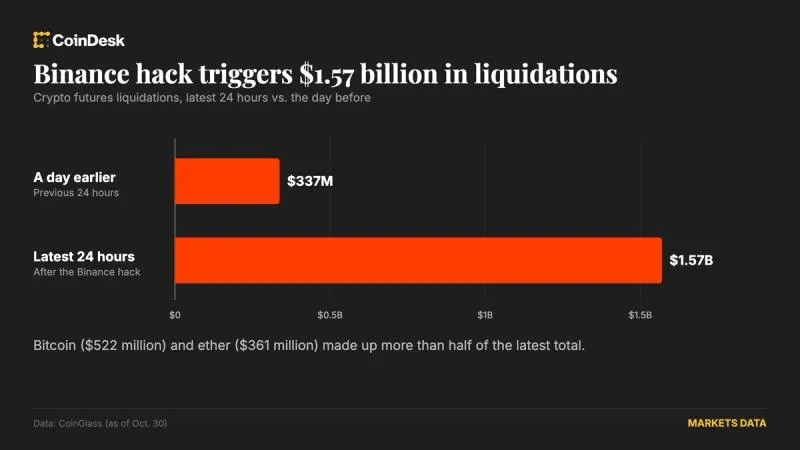
Binance security breach triggers $1.57 billion in crypto liquidations as bitcoin drops

Ethereum EIP-7702 upgrade did not trigger Binance exploit but worsened losses

Binance CEO Richard Teng confirms $3 billion frozen following complex $6.3B exploit

Binance $6.3 billion hack raises crypto concerns as QQQ drops over 2%
Binance reports $6.3 billion stolen in major security breach linked to North Korea