The 2020 signal returns: Why the copper-to-gold breakout could point to bitcoin breakout
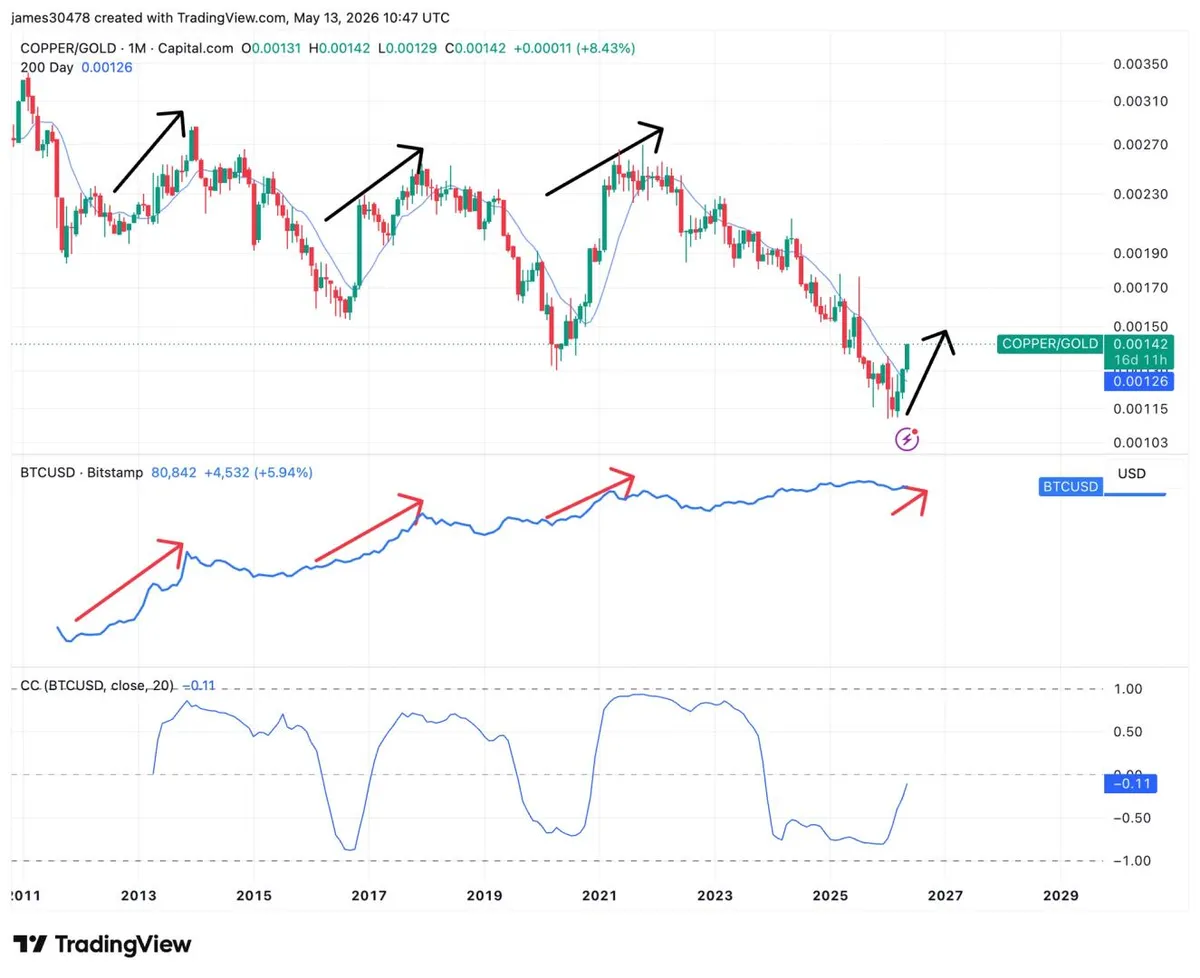
Recent market analysis indicates that the copper-to-gold ratio has broken above its 200-day moving average for the first time in a significant manner since September 2020. This development has garnered attention as it has historically been a precursor to substantial rallies in Bitcoin's price. The copper-to-gold ratio is often viewed as an indicator of economic health, with copper representing industrial demand and gold serving as a safe-haven asset. This shift suggests a renewed optimism in economic activity, potentially laying the groundwork for increased investor interest in riskier assets like Bitcoin.
To understand the implications of this breakout, we need to look back at historical trends. In 2020, the copper-to-gold ratio's upward movement coincided with a remarkable surge in Bitcoin's price, which saw it rally from around $10,000 to over $60,000 in the following months. The ratio reflects market sentiment, where rising copper prices indicate confidence in industrial growth while declining gold prices suggest a shift away from safe-haven investments. The current breakout signals a similar sentiment shift, which could be indicative of a broader market trend favoring riskier assets, including cryptocurrencies.
The significance of this breakout for the cryptocurrency market cannot be overstated. When traditional markets show signs of bullishness, they often rekindle interest in Bitcoin and other cryptocurrencies. Investors frequently look to Bitcoin as a hedge against inflation and currency devaluation, especially when traditional markets exhibit volatility. If the upward momentum in the copper-to-gold ratio continues, it may draw more investors into the crypto space, potentially leading to significant price movements for Bitcoin.
Industry experts are weighing in on this development, with many expressing cautious optimism. Analysts suggest that while the copper-to-gold ratio breakout is a positive sign, it should be viewed in conjunction with other market indicators. Cryptocurrencies are notorious for their volatility, and while historical patterns can provide insight, they do not guarantee future performance. Some experts emphasize the importance of broader economic indicators, such as interest rates and inflation, which could also impact Bitcoin's trajectory.
Looking ahead, market participants will be closely monitoring the copper-to-gold ratio and its implications for Bitcoin in the coming weeks. Should the ratio maintain its upward trend, it could pave the way for renewed bullish sentiment in the cryptocurrency market. Investors will likely keep an eye on other economic indicators as well, seeking convergence between traditional markets and crypto trends before making significant investment decisions. The interplay between these assets could create a dynamic environment for traders and investors as they navigate potential opportunities in the evolving landscape.

CoinMagnetic Team
Crypto investors since 2017. We trade with our own money and test every exchange ourselves.
Updated: May 2026
From our insights:
Related news

OpenAI cuts prices 50% on mid-tier models as Anthropic unveils Claude Opus 5.5

Bernstein revises prediction markets to $10 trillion by 2035, up from $1 trillion

New Fed data reveals potential dangers in Bitcoin's rally

Anthropic’s New Claude Opus 5.5 Matches Fable at 60% the Price

Elon Musk's influence drives Dogecoin to highest price in months